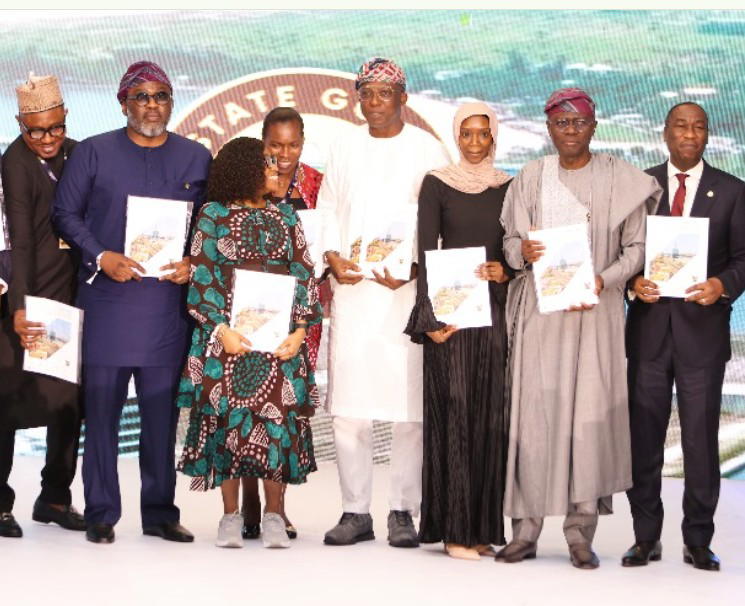
.As Lagos launches policy document on climate investment opportunities
By Olasunkanmi Akoni and Jeffery Akpabor
The Federal and Lagos State Governments on Thursday, reaffirmed their commitments to harness the potential of blue economy for sustainable growth and job creation.
Meanwhile, the State Governor, Babajide Sanwo-Olu, has launches policy document, the Climate Investment Opportunities Diagnostic, aimed to bridge between urgent environmental priorities and provide tangible investment pathways needed to build a resilient, low-carbon future for all residents.
Speaking at the 11th Lagos International Climate Change Summit themed: “The Blue Economy, Green Money: Financing Africa’s Coastal Resilience and Ocean Innovation,” Sanwo-Olu said “the discussions at the summit are not just peripheral but t pivotal.”
He added that the state government approach to the climate era is anchored on three interconnected pillars of Resilience, Innovation and Financing.
“We are building coastal resilience to protect lives and livelihoods. We are driving ocean innovation to reimagine commerce and mobility. And we are unlocking green and blue finance to power both.
“The Great Wall of Lagos, one of Africa’s most ambitious coastal defense systems, has transformed what could have been an Atlantic wasteland into the thriving Eko Atlantic City — a living testament to human ingenuity and Lagos’ defiant optimism. What was once threatened by erosion now stands as a beacon of renewal,” Sanwo-Olu stated.
He added that transportation by water, which the state government just launched refers to as the Omi Èkó Initiative, was meant to redefining urban mobility with a low-carbon water transport network, powered by partnerships with the French Development Agency (AFD) and the European Investment Bank (EIB). This system — with clean-energy ferries, solar.
The Minister of Marine and Blue Economy, Adegboyega Oyetola, represented by Director-General, Nigerian Maritime Administration and Safety Agency, NIMASA, Dayo Mobereola, said, ‘’Nigeria’s coastline and inland waterways form one of West Africa’s most strategic frontiers. Supporting vital sectors, including fisheries, shipping, tourism, energy and biodiversity conservation, which collectively possesses the potential to redefine Nigeria’s growth model.
‘’It presents a unique opportunity for Nigeria to transition from oil dependency to a diversified, innovative-driven and environmentally resilient economy. The establishment of the Federal Ministry of Marine and Blue Economy in 2023 marked a major policy breakthrough under the administration of President Bola Ahmed Tinubu’’
He said the ministry of Marine and Blue Economy has implemented wide-ranging reforms to strengthen governance, integrate policies and position Nigeria as a continental leader in sustainable maritime development.
Earlier, the state commissioner for environment and water resources Tokunbo Wahab said, “Lagos sees opportunity, with this summit we have the chance to redefine our relationship with the ocean, not as a resource to be exploited but as a living system to be nurtured, one that sustains both our people and our planet. The blue economy represents more than just water-based industries; it embodies a new frontier for sustainable prosperity.
“Also, Mr. Governor, officially launched Lagos latest policy document, the Climate Investment Opportunities Diagnostic.
“This landmark document serves as a vital bridge between our urgent environmental priorities and the tangible investment pathways needed to build a resilient, low-carbon future for all Lagosians.
“It reflects our commitment to turning climate ambition into action, and action into lasting impact. Lagos recognizes that our challenges transcend borders.
“Other coastal African cities face similar vulnerabilities. This is why we must work together sharing data, expertise and resources to build a united African front for coastal resilience. The future of our coastlines depends on the decisions we make today.”
Disclaimer
Comments expressed here do not reflect the opinions of Vanguard newspapers or any employee thereof.