By Alumona Ukwueze
NSUKKA —The Africa Centre of Excellence for Sustainable Power and Energy Development (ACE-SPED), University of Nigeria, Nsukka (UNN), has unveiled 10 new professional short courses designed to equip Nigerians and other Africans with specialized skills for advancing sustainable energy and technological development across the continent.
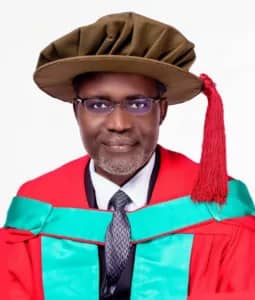
Announcing the new programmes, the Director of ACE-SPED, UNN, Engr. Professor Emenike Ejiogu, said the initiative is part of the Centre’s commitment to bridging the skills gap in energy technology, innovation management, and digital education, key areas, he said, are driving industrial growth and sustainable development globally.
According to him, the newly introduced professional short courses include Management of Technology and Innovation, Industrial Automation and Instrumentation, Energy Management, Policy and Regulation, and Material Characterisation.
Others are : Bio-energy Technologies, Design and Installation of Solar PV Mini-grid and Stand-alone Systems, Renewable Energy Applications for Improved Agricultural Production, Digital Education, 3D Printing (Addictive Manufacturing,) and Digital Content Creation and Editing.
Each of the courses, Professor Ejiogu explained, is carefully structured to meet emerging global standards in energy and technology while addressing Africa’s peculiar developmental challenges.
“Unlike the core regular post-graduate courses (Masters’ and Ph.D), the professional short courses are aimed at providing hands-on and practical training within a short time-frame, typically over a 40-hour period that may last from one week to three months or more, as the case may be, at the end of which the participants get a certification for the acquired skills.
“Accordingly, the professional short courses would be scheduled regularly throughout the year, starting from the first quarter of 2026,” Professor Ejiogu explained.
He further explained that Management of Technology and Innovation focuses on equipping participants with strategic tools for integrating technology into organizational processes, fostering creativity, and improving competitiveness in both public and private sectors, while Industrial Automation and Instrumentation provides hands-on training on control systems, robotics, and sensor technologies that enhance industrial productivity, safety, and efficiency.
He further explained that Energy Management, Policy and Regulation prepares participants to understand the dynamics of energy policy formulation, implementation, and compliance, which are critical in ensuring sustainable power supply and energy security in Africa, while Material Characterisation introduces learners to modern techniques for analyzing materials used in energy systems, from solar cells to battery technologies, ensuring efficiency, durability, and environmental sustainability.
“Bio-energy Technologies explores renewable energy solutions derived from biological sources, such as biomass and biofuels, offering alternative clean energy options that reduce dependence on fossil fuels.
“Design and Installation of Solar PV Mini-grid and Stand-alone Systems provides technical knowledge on solar system installation, design, and maintenance, empowering professionals to develop reliable and affordable energy solutions for off-grid and rural communities.
“Renewable Energy Applications for Improved Agricultural Production integrates renewable technologies into agricultural processes, such as solar-powered irrigation and processing systems to enhance food security and rural livelihoods.
“Digital Education focuses on developing digital literacy, online pedagogy, and technology-driven teaching methods to modernize Africa’s educational systems and improve learning outcomes.
“3D Printing, also known as Additive Manufacturing, is a revolutionary production technology that builds three-dimensional objects layer by layer from digital models. Originating in the 1980s as a rapid prototyping method, it has evolved into a key industrial process across sectors such as healthcare, aerospace, automotive, and construction. The technology promotes innovation by enabling customized, cost-effective, and sustainable manufacturing solutions.
“Also, Digital Content Creation is the process of producing material such as text, images, videos, graphics, or audio for online platforms and digital media. It involves using digital tools and software to design, record, or write engaging content tailored to specific audiences, while Digital content editing, on the other hand, focuses on refining, improving, and optimizing that content for clarity, accuracy, consistency, and audience impact before publication ,” he also explained.
Professor Ejiogu emphasized that the inclusion of these courses within the University of Nigeria’s academic framework represents a major stride in aligning higher education with industry and market demands.
He noted that universities must evolve beyond conventional teaching to provide professional and practical competencies that respond to current global challenges.
“These professional short courses are tailored not only for students and researchers but also for industry practitioners, policymakers, and entrepreneurs who seek to deepen their expertise in sustainable energy and innovation management,” he stated.
He added that ACE-SPED’s mission aligns with the Federal Government’s Renewed Hope Agenda and the United Nations Sustainable Development Goals (SDGs), particularly Goal 7, which calls for affordable and clean energy for all.
The ACE-SPED Director further explained that the new short courses are vital in driving Africa’s transition toward cleaner, more sustainable energy systems.
“With the continent’s growing population and industrialization needs, there is a rising demand for skilled professionals capable of developing, managing, and maintaining renewable energy infrastructure.
“These programmes are designed to produce a new generation of engineers, energy managers, and innovators who can provide context-driven solutions to Africa’s power challenges,” Prof. Ejiogu said.
“They will also foster collaboration between academia, industry, and government in addressing the continent’s pressing energy needs,” he further noted.
He stated that the courses would be delivered by seasoned globally-acclaimed experts from academia and industry, using modern laboratories and digital platforms equipped with advanced training facilities available at ACE-SPED.
By introducing these programmes, the University of Nigeria, Nsukka, through ACE-SPED, reinforces its leadership role as a hub for cutting-edge research, training, and innovation in energy systems.
The Centre, which is supported by the World Bank under the Africa Centres of Excellence initiative, has consistently advanced renewable energy research, power systems development, and capacity building in sub-Saharan Africa.
The short courses, according to Prof. Ejiogu, will also enhance Nigeria’s capacity to participate in the global energy transition movement by producing professionals who can design sustainable energy solutions that are affordable, accessible, and adaptable to local contexts.
“Energy is central to industrial growth, education, healthcare, and agricultural productivity. By building the right human capital through these programmes, we are helping to shape a sustainable future, not only for Nigeria but for the entire African continent,” he concluded.
Disclaimer
Comments expressed here do not reflect the opinions of Vanguard newspapers or any employee thereof.