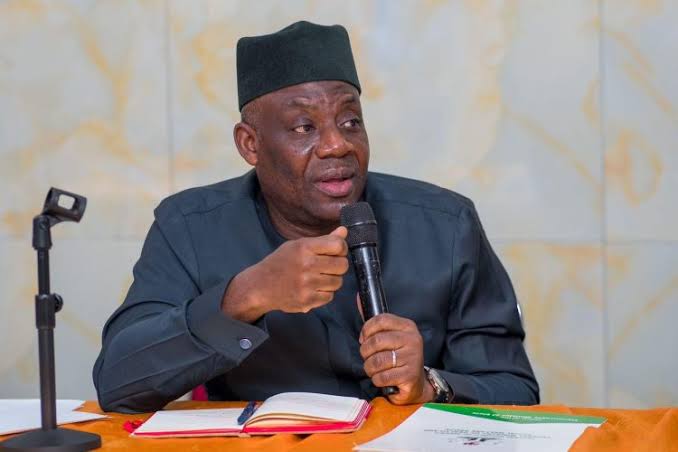
Minister of Education, Dr Tunji Alausa
By Joseph Erunke, Abuja
The Minister of Education, Dr. Tunji Alausa, has emphasized the need for Nigeria’s ongoing education reforms to move beyond policy declarations and deliver practical outcomes that strengthen skills, innovation, and job creation among young people.
Speaking at the National Education Group (NEG) Meeting in Abuja on Thursday, Dr. Alausa said the ultimate goal of the reforms is to ensure that Nigerian students are not only educated but also equipped with the competencies required to thrive in a fast-changing global economy.
He stressed that the future of the country depends on how well its education system produces citizens capable of critical thinking, problem-solving, and innovation.
“Our reforms must go beyond the paperwork of policy; they must impact classrooms, teachers, and ultimately the learners,” the minister said.
According to him, “Education should not end with certificates but open doors to creativity, productivity, and prosperity.”
Dr. Alausa explained that the Federal Government is working to align education with the needs of the labour market through curriculum review, improved teacher training, and investment in science, technology, engineering, and mathematics (STEM) education.
He also noted that the ministry is prioritizing partnerships with the private sector and development agencies to expand opportunities for technical and vocational education, research, and digital learning.
“If we are to build a competitive economy, we must invest in the skills and knowledge base of our young people so that they can become drivers of innovation and entrepreneurship,” he added.
The NEG Meeting brought together key stakeholders in the sector, including policymakers, education administrators, academics, and development partners, to deliberate on strategies for improving education delivery and learning outcomes across all levels.
Participants also reviewed implementation progress on existing policies and explored sustainable models for financing and accountability in the education sector.
Dr. Alausa reaffirmed the Federal Government’s commitment to inclusive and equitable education, assuring that reforms would focus on improving access, quality, and relevance to meet the aspirations of a growing youth population.
The minister emphasized that education remains the foundation of national prosperity, urging all stakeholders to work collaboratively to ensure that reforms produce tangible benefits for learners and the nation as a whole.
Disclaimer
Comments expressed here do not reflect the opinions of Vanguard newspapers or any employee thereof.