By Adesina Wahab
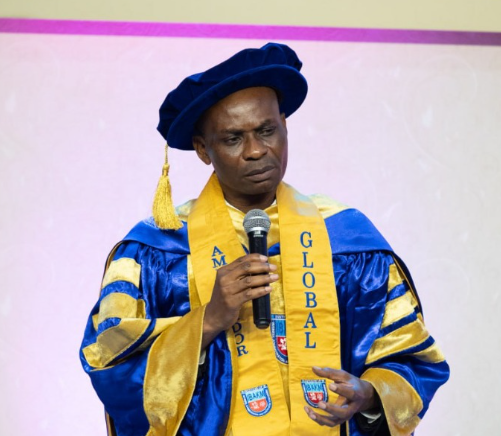
The Global President of World Innovators University (WIU) and the World Innovators University Institute (WIU-Institute), Prof. Monday Anyairo, has called for a bold shift from dependence to self-reliance as the only sustainable path to growing and sustaining Nigeria’s economy.
Speaking on the theme “From Dependence to Self-Reliance: A Practical Roadmap for Growing and Sustaining Nigeria’s Economy,” Prof. Anyairo said Nigeria is at a turning point where decisive leadership and innovative policies are urgently required to unlock its vast human and material potential.
He lamented that despite being richly endowed with resources and talents, Nigeria has remained trapped in an import-dependent economic model that undermines productivity and limits self-sufficiency.
“We have lived for decades with the burden of being richly endowed but poorly managed,” he said. “The time has come for real, measurable change anchored on structure, focus, and accountability.”
According to him, the Nigerian economy can only thrive when its policies prioritize local production, innovation, and export diversification over consumption and importation. “No sustainable economy can grow on consumption and importation alone,” he stressed.
Prof. Anyairo emphasized that economic transformation must begin from the grassroots, with local governments taking the lead in driving community-based development. He urged councils to explore innovative revenue generation, provide essential amenities such as roads, clean water, electricity, and digital access, and ensure transparency by publishing budgets and involving citizens in project selection.
At the state level, he called on governors to harness their regional strengths by developing industrial and agro-processing zones, offering investment incentives, and prioritizing vocational and digital education to make young people more productive.
For the Federal Government, Prof. Anyairo highlighted the need for fiscal and monetary stability, effective infrastructure, and reforms that simplify regulations and strengthen investor confidence. He advocated a renewed national drive for infrastructure, backed by public-private partnerships to accelerate growth without overburdening public finances.
He also urged diversification beyond oil into agriculture, manufacturing, technology, and services, arguing that Nigeria’s arable land and youthful population offer immense opportunities.
“Our young innovators have already shown what is possible. With proper infrastructure and digital investment, Nigeria could become a continental leader in Fintech, digital education, and renewable energy innovation,” he said.
Prof. Anyairo identified human capital as the foundation of any sustainable development effort, stressing that education must go beyond paper qualifications to promote creativity and problem-solving.
He called for a stronger link between education, industry, and emerging technologies, and for more investment in healthcare to ensure a healthy and productive workforce.
On governance, he underscored the importance of transparency, accountability, and merit-based leadership as the anchors of economic progress.
“The Naira will not rise by decree but through productivity,” he declared, noting that Nigeria’s currency will only strengthen when the country produces and exports more than it imports. He encouraged support for domestic industries and a national commitment to patronize locally made products, describing it as both patriotic and economically strategic.
Prof. Anyairo further emphasized the role of innovation as the bridge to national prosperity. He called for collaboration among government, universities, and the private sector to commercialize research and develop technologies suited to Nigeria’s needs.
He concluded by asserting that nation-building is a shared responsibility that requires the active participation of all sectors — government, private enterprise, academia, and citizens alike. “Nigeria’s story is still being written,” he said. “To change the ending, we must change the narrative — from dependence to self-reliance, from consumption to production, and from potential to performance.”
Disclaimer
Comments expressed here do not reflect the opinions of Vanguard newspapers or any employee thereof.