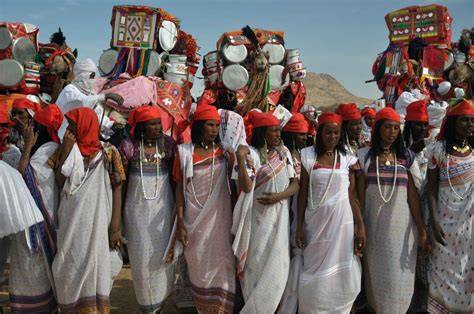
DARFUR, SUDAN — In the heart of Darfur, where conflict and displacement have reshaped entire communities, the Zaghawa tribe — spread across Sudan and Chad — faces one of its gravest crises in decades. Once a symbol of resilience against marginalization, the tribe is now caught in the crossfire of Sudan’s protracted war between the Sudanese Armed Forces (SAF) and the Rapid Support Forces (RSF).
Human rights observers and historical records suggest that the Zaghawa, estimated at about 400,000 people, have endured long years of persecution and displacement dating back to the rule of former president Omar al-Bashir.
The suffering of the Zaghawa people intensified after the 1989 coup that brought Omar al-Bashir to power. During that period, the tribe reportedly faced ethnic and political discrimination.
According to a 2003 U.S. Commission on Human Rights report, dozens of Zaghawa were detained during security operations in Darfur, while international organizations later documented forced displacement and violence in the region.
In her memoir Tears of the Desert, Halima Bashir, a survivor from Darfur, recounted attacks on Zaghawa communities in the early 2000s, describing widespread atrocities. The International Criminal Court (ICC) subsequently issued an arrest warrant for al-Bashir in 2009 for alleged war crimes and crimes against humanity in Darfur.
A Human Rights Watch report from 2004 estimated that over 100,000 Zaghawa fled to neighboring Chad to escape violence.
Following al-Bashir’s ouster in 2019, many Sudanese hoped for a new beginning. However, political instability and renewed armed clashes have deepened internal divisions, including within the Zaghawa community.
The International Crisis Group (ICG) reported in 2023 that some Zaghawa leaders found themselves supporting opposing sides in Sudan’s ongoing war — a reflection of the broader fragmentation across the country.
One faction aligned with the Sudanese Armed Forces, while others opposed military intervention, leading to tensions within the community. Local sources told Radio Dabanga that the divisions have caused suffering among civilians in Zaghawa-dominated areas such as El-Fasher.
Analysts say that these divisions are being exacerbated by political interests and the competition for influence and resources in wartime Sudan.
The war that began in April 2023 has taken a devastating toll on the Sudanese population. A United Nations report from August 2025 estimated that over 150,000 people have been killed and more than 10 million displaced within and outside the country.
Economic decline has worsened the crisis, leaving communities — including the Zaghawa — struggling to survive amid scarcity, inflation, and insecurity.
Observers note that many young Zaghawa have been drawn into the conflict, some joining armed groups due to poverty and lack of opportunities.
Human rights experts and community leaders continue to warn that the survival of the Zaghawa people — once at the heart of Darfur’s social fabric — now hangs in the balance.
Sudanese analyst Mohamed Nour al-Din told Sudan Tribune that “tribal divisions in Darfur are being manipulated by the ongoing conflict, leaving ordinary people to bear the brunt of political and military struggles.”
From the genocide years under al-Bashir to the present conflict, the story of the Zaghawa reflects a recurring tragedy — a people striving to preserve their identity amid decades of violence, displacement, and neglect.
As researcher Alex de Waal once observed, “The Zaghawa are not just a tribe; they represent the conscience of a torn Sudan, struggling to survive on the frontlines of its own history.”
Disclaimer
Comments expressed here do not reflect the opinions of Vanguard newspapers or any employee thereof.