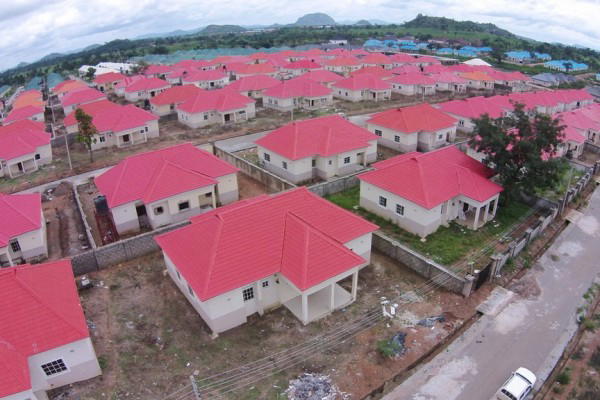
FILE IMAGE
By Ailara Owolabi Abdulrafiu
In the hierarchy of human needs, housing is a basic necessity, widely accepted as the second most important after food. Everyone deserves shelter and a place to call home—a cornerstone of well-being and human dignity that reflects one’s identity and values.
Speaking about his single-storey, red-brick house built in 1945 in Soweto, the late Nelson Mandela said, “It was the opposite of grand, but it was my first true home of my own and I was mightily proud. A man is not a man until he has a house of his own.”
Beyond being a key social determinant of health, education, and community cohesion, housing has a direct link to production, productivity, employment, wealth generation, and overall national economic development.
However, as a basic human need, housing development is capital-intensive. Regardless of the standard, size, or scope, putting up a structure requires significant capital, which the majority of citizens in any country cannot afford. Ensuring the availability and affordability of housing is, therefore, a fundamental goal for governments worldwide.
Historically, the government of the United States has played a vital role in its housing finance system, both supporting and regulating it. In the lead-up to the last U.S. presidential election, housing affordability was a key issue, with candidates from both parties outlining plans to increase the supply of affordable homes and enhance people’s ability to buy them. The unique characteristics of the United States mortgage system provide substantial benefits for American homeowners and contribute to the overall stability of the country’s economy. Active government policy has been key to driving the U.S. market toward the 30-year fixed-rate mortgage. This system is characterized by fixed interest rates, long-term loans, and high maximum loan-to-value ratios.
One commonly used benchmark for housing affordability is that no more than 30% of household income should go toward housing costs; households that spend more are considered “cost-burdened” by the U.S. Department of Housing and Urban Development. In the United States, average fixed-rate mortgage interest rates have been around 3.5%, providing homeowners with predictable monthly payments that make budgeting easier. The industry is also heavily regulated, with laws in place to protect consumers and ensure fair lending practices.
In stark contrast, homeownership in Nigeria remains an elusive dream for a large portion of the population, largely due to challenges in accessing affordable mortgage financing. Despite a growing real estate sector, the mortgage industry remains underdeveloped and inefficient, leaving many aspiring homeowners struggling to secure the financial support they need.
The system is further hampered by a lack of clear-cut policies and regulatory thrusts to enhance its effectiveness and efficiency. The Nigerian Mortgage Refinance Company (NMRC) is yet to make its desired impact.
Specific challenges include prohibitively high interest rates offered by Primary Mortgage Institutions (PMIs), which currently range from 15% to 25%—far higher than what is obtainable in more developed economies. The system also suffers from short loan tenures of 10 to 15 years, compared to 30 years in the United States or even longer in the United Kingdom. Other challenges include low access to credit facilities, high housing costs, and a limited number of primary mortgage institutions. Consequently, the average Nigerian finds it extremely difficult to obtain a mortgage, as they cannot afford the monthly repayments, especially in the current climate of economic difficulty and rising inflation.
The issue is purely systemic and, to that extent, requires urgent government intervention and innovative solutions. First and foremost, the government needs to strengthen the legal and regulatory framework for mortgages, including clarifying property rights, streamlining land registration, and defining foreclosure procedures. Unambiguous property rights and efficient processes can give lenders and borrowers better security, potentially leading to increased mortgage lending.
The government’s role is twofold. Firstly, there is an overall need to maintain macroeconomic stability through disciplined fiscal and monetary policies to foster stable growth and low inflation, which naturally supports lower interest rates. Secondly, a direct interventionist role is key: promoting liquidity in the mortgage industry at single-digit interest rates via the Nigeria Mortgage Refinance Corporation (NMRC) and the Family Home Funds (FHF). In this model, the private sector, via mortgage banks, would retain the role of underwriting mortgages directly. This would boost effective demand for homes, which is far lower than the often-touted 28 million housing shortfall. It is important to stress that the government’s core focus should be on controlling inflation in the long run to facilitate single-digit interest rates, rather than relying solely on short-term intervention policies.
Homeownership should be a reality for all Nigerians, not just the privileged few. We deserve a more inclusive, efficient, and robust mortgage system. This would empower Nigerians to own their homes and ensure the real estate market flourishes.
•Abdulrafiu, an Estate Surveyor and Valuer, writes from Lagos.
Disclaimer
Comments expressed here do not reflect the opinions of Vanguard newspapers or any employee thereof.