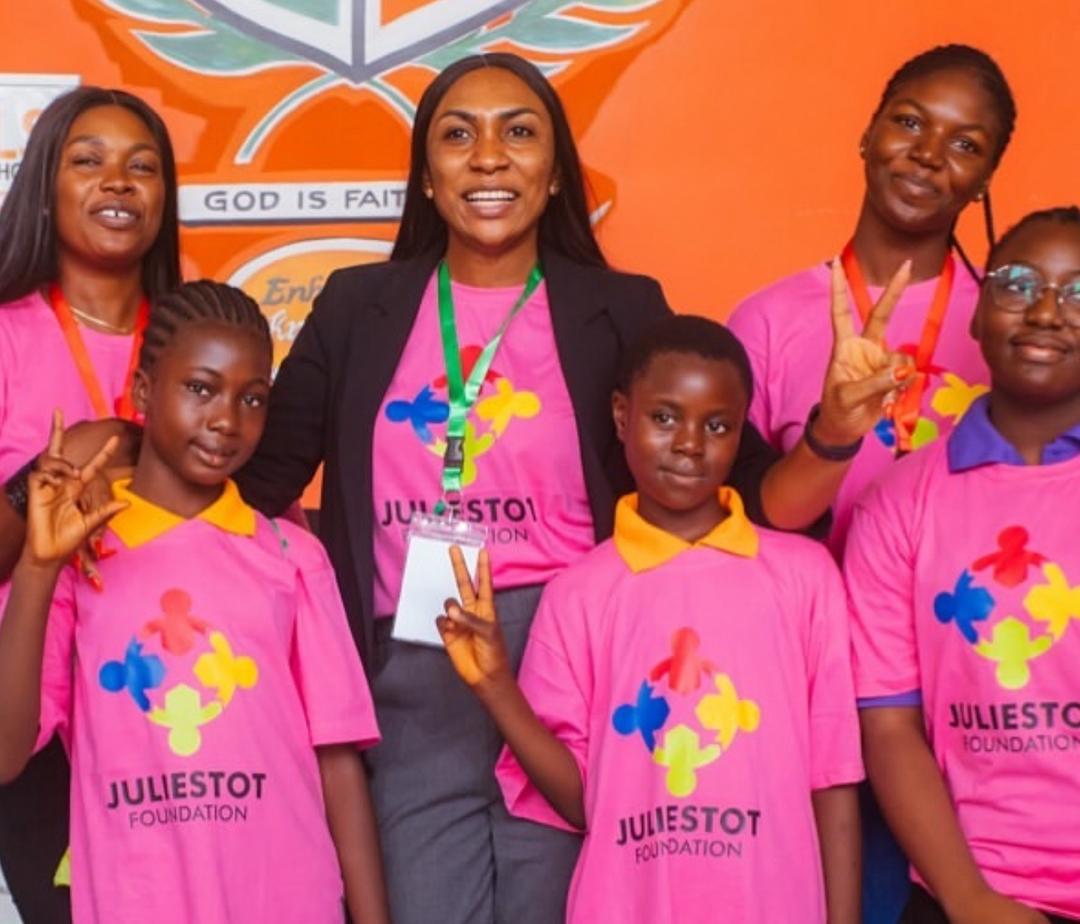
In commemoration of the International Day of the Girl Child, renowned entrepreneur and humanitarian, Faith Owolona, has reiterated her unwavering commitment to the empowerment and protection of the girl child across Africa.
Through her extensive philanthropic work and educational investments, she continues to champion equal access to education, skills development, and leadership opportunities for girls, especially those in underserved communities.
As the founder of the Juliestot Foundation for Women and Girl Child, Owolona has led multiple initiatives aimed at transforming the lives of vulnerable young girls. Her flagship educational institutions—Juliestot Girls Secondary School and Juliestot Vocational Center—provide free, high-quality education and vocational training for girls in Otukpo, Benue State, with expansion plans underway in Abuja. These schools are designed not only to educate but to uplift and equip the next generation of female leaders with the tools needed to succeed in life.
Owolona’s impact extends beyond Nigeria. Her foundation has implemented empowerment programmes and outreach efforts across Kenya, Rwanda, and the Benin Republic. With a vision rooted in service and social change, she continues to break barriers that limit girls’ potential, offering them pathways to independence and dignity.
In recognition of her work, Owolona has received several accolades, including the Inspiring Youths Africa Magazine Seal Award, the Global Change Maker Award, and commendations from religious and civic bodies. Her model of philanthropy is deeply personal, having founded the Juliestot initiative in memory of her late mother, whose legacy inspires her commitment to education and service.
This year’s observance of the International Day of the Girl Child emphasises the need to eliminate systemic obstacles that hinder girls from accessing education, digital resources, healthcare, and protection from gender-based violence. In line with this, Owolona’s foundation is expanding its programmes to include leadership training, digital literacy, menstrual hygiene support, and mentorship initiatives to empower girls both intellectually and socially.
“When you educate a girl, you transform a generation,” said Owolona. “These young girls are not just beneficiaries—they are future leaders, innovators, and change agents. Our work is not charity; it is investing in potential. The barriers are many—but each barrier we break frees one more dream.”
Owolona is calling on government agencies, civil society, corporate organisations and individuals to collaborate in scaling up support for girl-child-focused initiatives. She emphasises the importance of advocacy, policy reform, and increased funding to create safer, more inclusive environments where every girl can thrive.
The International Day of the Girl Child, declared by the United Nations and marked annually on October 11, highlights the unique challenges girls face globally and advocates for their empowerment and the fulfilment of their human rights.
As the world reflects on the progress made and the work yet to be done, Owolona’s enduring dedication stands as a powerful example of what is possible when one woman dares to build a better future for the next generation.
Disclaimer
Comments expressed here do not reflect the opinions of Vanguard newspapers or any employee thereof.