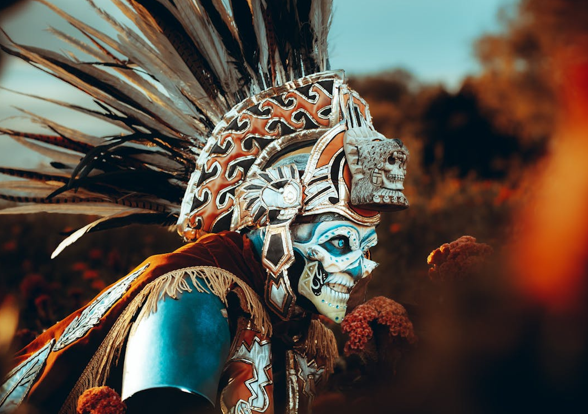
The Aztec world didn’t disappear into legend. It left records on screenfold books made from bark paper and animal hide. Reading them today matters because they are the Aztecs’ own self-portrait, created by Indigenous artists and scribes for both their own people and for new colonial rulers. In a time when images often spread faster than words, these codices feel surprisingly modern.
They organize information visually, they track time and inventory, and they set rituals to a measured cadence. Digital editions now let anyone zoom into brushstrokes and follow iconography across pages, which has reshaped how scholars, teachers, and the public learn.
Pop culture’s Aztec lens, from streetwear to gaming lobbies
Modern culture keeps circling back to Mexica imagery because the codices themselves are built from memorable signs. Step pyramids, serpents, solar discs, year signs, and warrior attire move easily from page margins to album covers, sneaker patches, and esports logos. That portability is the point. The original books were information-dense pictures, so their visual language thrives in a media landscape where symbols must be read at a glance.
Nowhere is the pull stronger than in gaming. Slot and adventure designers lean on the codex palette and on ritual timekeeping to promise quest structure, treasure logic, and boss battles. You land on a day sign or a temple icon, and the game treats it as a pivot, much like a divinatory page does. This is also where casino culture intersects with heritage themes. As games are a big part of pop culture, in popular casinos like Joe Fortune Australia we see many gambling games featuring the Aztec theme. Titles such as Aztec Fire 2 and Aztec Sun are familiar in online lobbies because their symbols read fast, their art hints at maps and ritual calendars, and their “collect and release” features echo tribute metaphors.
The point is not that these games teach history. It is that they borrow a design language built for efficient meaning. As a result, the look and feel of a reel set or bonus trail can invite players to ask where those motifs come from, then lead them back to the source material. That loop, from screenfold to screen time, keeps Aztec images alive in the mainstream.
What the books record, in the codices’ own terms
At the center of the Aztec book collection is practical knowledge. One group of books explains calendars, especially the 260-day ritual cycle built from 20 day signs grouped into trecenas (13-day periods). Another lists tribute goods sent to the capital, showing provinces and amounts in half-year cycles. Others record details about people, crafts, and social roles in organized sections. Together, these books form an atlas of time, economy, and community.
Only about twenty pre-Columbian Mesoamerican books survive, and most Aztec ones we have today were made in the early colonial era. They were painted in Indigenous styles but often include added notes. Because so few survive, every manuscript is hugely important for studying time, economy, and rituals. The Codex Borbonicus shows sacred time in pictures. The Codex Mendoza records tribute payments as numbers, places, and schedules, helping researchers estimate logistics and local specializations.
How scholars decode them today
Reading a codex is less like reading a book and more like following a map. You trace footprints and speech scrolls, look at bundles and name signs, and follow storylines that bend across folded pages. Digital versions have made this process easier to teach and check. For example, the Digital Florentine Codex project calls the manuscript “the most reliable source of information about Mexica culture, the Aztec Empire, and the conquest of Mexico,” and it backs that up with full-text search in both Nahuatl and Spanish, plus high-quality images.
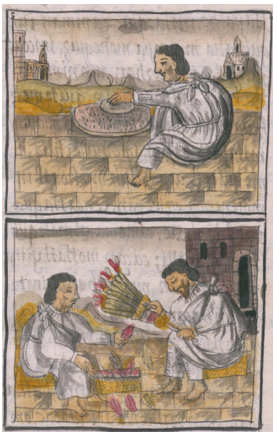
Scale is important here. The Florentine Codex covers 12 books and almost 2,500 images, which lets researchers cross-check a tool or piece of clothing across chapters, then connect words to images and colonial translations. That richness has also allowed new computer methods, like icon recognition and building word lists, that were not possible in print. At the same time, the tribute charts in the Codex Mendoza remain a base for economic history. Its second section lists regular payments from 39 provinces, which scholars use to study distance, volume, and value along Aztec trade and tribute routes.
The outcome is a sharper picture of what these books actually tell us. Calendar pages show how ritual time organized festivals and fortune-telling, not just artistic style. Tribute lists reveal a tax and transport system, not just exotic objects. Illustrated chapters on merchants, healers, and artisans show how skills and status were ordered in society. With open access platforms and classroom-ready tools, students today can compare a gaming icon with a real codex page and see how symbols fit into a working system of signs and schedules. That step, from just recognizing a symbol to truly understanding it, is the reward of reading codices on their own terms.
Disclaimer
Comments expressed here do not reflect the opinions of Vanguard newspapers or any employee thereof.