By James Ogunnaike, Abeokuta
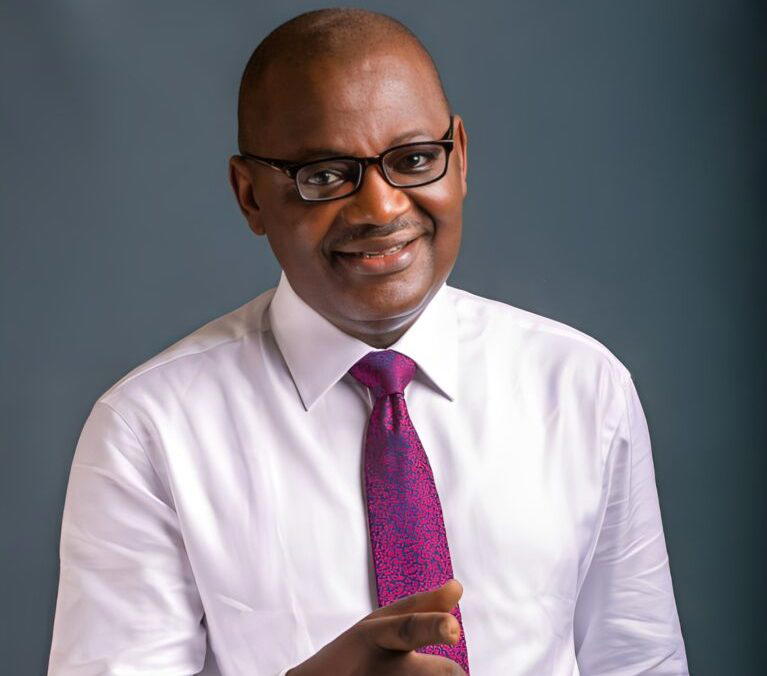
The Chairman, House Committee on National Development, Gboyega Nasir Isiaka has identified institutional weaknesses, policy reversals, and governance deficits as some of the factors militating against the progress and development of Nigeria as a nation.
Isiaka, stated this in a paper titled, “Nigeria at 65: Pathways for National Development and Economic Sustainability,”, delivered at the October Business Meeting of the Ogun State chapter of the Nigerian Institute of Public Relations (NIPR), in Abeokuta, the State capital.
He stated that Nigeria’s pattern of policy reversals across administrations undermines long-term planning and private investment, positing that development plans must be insulated from electoral cycles through statutory backing and bipartisan consensus.
While stressing that “Nigeria’s post-independence trajectory presents a paradox that has confounded development scholars and frustrated its citizenry, Isiaka noted that the country is abundantly endowed with natural and human resources, and yet persistently struggling to convert these assets into broad-based prosperity.
He said, “With a population exceeding 220 million, vast petroleum reserves, fertile agricultural land, and a dynamic entrepreneurial culture, Nigeria should theoretically have emerged as a middle-income economy decades ago”.
“After 65 years of sovereignty and twelve formal development plans, the country remains trapped in what economists term a “low-level equilibrium”—a state where growth spurts are routinely undermined by institutional weaknesses, policy reversals, and governance deficits”.
“Nigeria’s development challenge is less about resource scarcity than about institutional capacity, policy consistency, and political will. The nation has periodically demonstrated the ability to achieve significant gains—in infrastructure, fiscal reform, sectoral growth, and social investment. What has proven elusive is the ability to sustain and consolidate these gains across electoral cycles and commodity price shocks”.
“Sixty-five years after independence, Nigeria stands at an inflection point. The country has demonstrated its capacity for achievement—in democratic governance, cultural exports, entrepreneurial dynamism, and periodic economic growth. Yet, it has also revealed persistent vulnerabilities: institutional weakness, policy inconsistency, and an inability to convert resource wealth into broad-based prosperity.
“The independence generation dreamed of a nation that would be “a beacon of hope and progress in Africa.” That vision remains unfulfilled, but it is not beyond reach. Countries that started with less have achieved more through consistent application of sound policies, investment in people, and accountable governance.
He listed the country’s pathways to sustainable development to include; maintain macroeconomic stability while protecting the vulnerable, diversifying the economy through practical industrial policy, investment in human capital, building infrastructure that enables productive sectors, strengthening of institutions and reduce corruption, ensure policy consistency across electoral cycles as well as fostering social cohesion and equitable development across regions.
He equally charged all those in positions of authority to prioritize national interest over personal enrichment, and that citizens should demand and sustain accountability.
“The voices of Awolowo, Balewa, and Azikiwe in 1960 called us to a great adventure. Sixty-five years later, that adventure continues. The covenant with posterity remains unfulfilled. But each generation has the opportunity and the obligation to move the nation closer to its promise”.
“As we commemorate Nigeria at 65, let us commit not merely to celebration but to re-dedication: to building the strong, united, and prosperous nation our founders envisioned, and to ensuring that the next 65 years tell a story not of squandered potential but of realized promise”.
“The pathways are clear. The choice is ours”, he concluded.
In her welcome address, the Chairman Ogun State chapter of NIPR, Mrs. Oluwaseun Boye said the task of nation-building requires fresh thinking, renewed commitment and deliberate actions from every sector, including public relations.
“As public relations professionals, our role is to shape narratives that build trust, promote unity, and inspire collective action. We must use our platforms to bridge divides, amplify truth, and galvanize every stakeholder toward nation-building”.
“Nigeria’s greatness lies in the commitment of its people. If truly all hands are on deck, then a stronger, more prosperous Nigeria is not just possible, it is inevitable, so I charge you all to join hands together to achieve a Nigeria of our dreams that we can all be proud of”.
Disclaimer
Comments expressed here do not reflect the opinions of Vanguard newspapers or any employee thereof.