By Emmanuel Okogba
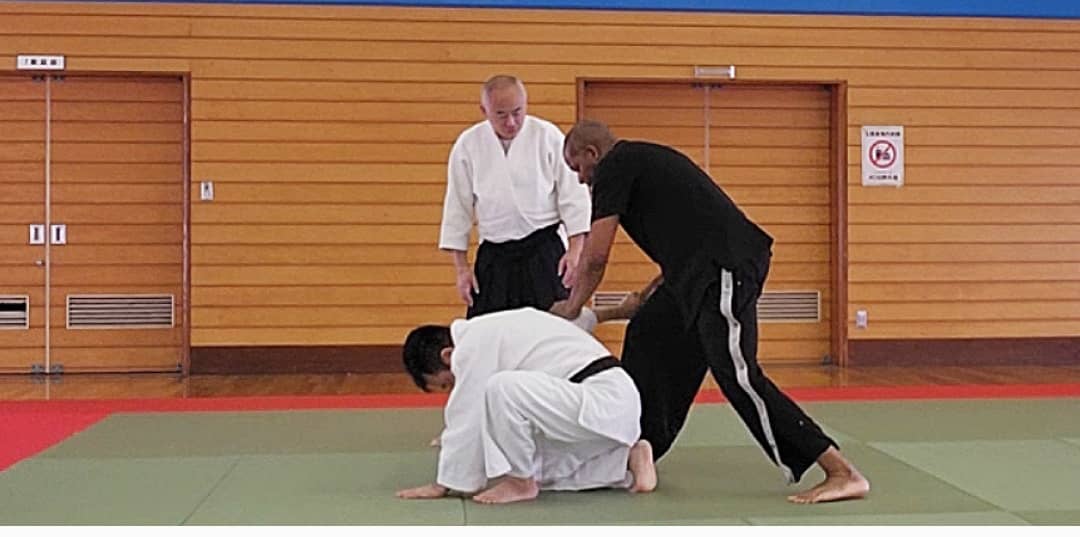
Ade Abayomi Olufeko, an American technologist and West African cultural advocate, entered the disciplined world of Japanese martial arts to deepen his practice of discipline, perception, and strategic control. His time in Tokyo brought him into direct engagement with two distinct traditions: the sword art of Iaido and the flowing, energy-guided practice of Aikido.
Olufeko is no stranger to martial arts. For more than five years he has trained in Chinese Kung Fu, studying both Wing Chun and Wudang Tai Chi Chuan. In Lagos he established the Wing Chun Foundation Lagos for Executives, Workers, and Children, an institution that fuses martial discipline with STEM education.
The foundation teaches children logic, spatial reasoning, and problem-solving, while instilling discipline and personal growth in adults. It also serves a deeper purpose: preparing youth in Sub-Saharan Africa to engage with the wider world through cultural exchange. By introducing global martial traditions at an early age, the foundation cultivates respect, adaptability, and cross-cultural awareness that endure long after the lessons on the training floor.
In Asakusa, a district steeped in Edo-period history, Abayomi trained in Muso Shinden-ryū under the guidance of the graceful Master Fujiwara, one of Iaido’s most respected instructors. The art of unsheathing the sword there became less about combat than about the decisive moment between stillness and action. The narrow streets, paper lanterns, and the imposing Sensō-ji Temple framed a setting where timing, anticipation, and awareness converge, qualities that extend far beyond the dojo.
Across the Sumida River, in the modern ward of Sumida, Olufeko stepped onto the mats of a dojo under Terumasa Hotta, a high-ranking dan of Aikido Ryu Takehaya and a teacher of teachers. In Aikido he encountered balance and redirection as living strategy, observing how energy can be guided and transformed rather than resisted. The lessons reinforced principles relevant not only in martial practice but also in navigating social, technological, and educational systems.
Abayomi’s years in New York City prepared him for such contrasts. The cultural and social complexity of that environment demanded observation, adaptation, and fluid interaction. Those instincts became a bridge, allowing him to engage naturally with Japanese spaces where silence, gesture, and respect convey meaning beyond words. In Tokyo, the coexistence of Asakusa’s historical depth and Sumida’s futuristic skyline revealed how tradition and innovation can operate simultaneously, a principle that informs both martial practice and professional problem-solving.
Taken together, these experiences demonstrate that martial arts are more than physical disciplines. They are frameworks for developing focus, perception, and strategic thinking. For Olufeko, the journey confirmed that integrating multiple traditions, Chinese Kung Fu, Japanese Iaido, and Aikido, provides balance, adaptability, and insight, qualities essential in a world where technology, culture, and human behavior intersect.
Through the Wing Chun Foundation Lagos these lessons are being institutionalized. The foundation ensures that cultural exchange and discipline will endure, nurturing future generations across the Sub-Sahara to value global perspective, resilience, and authentic cultural connection.
Disclaimer
Comments expressed here do not reflect the opinions of Vanguard newspapers or any employee thereof.