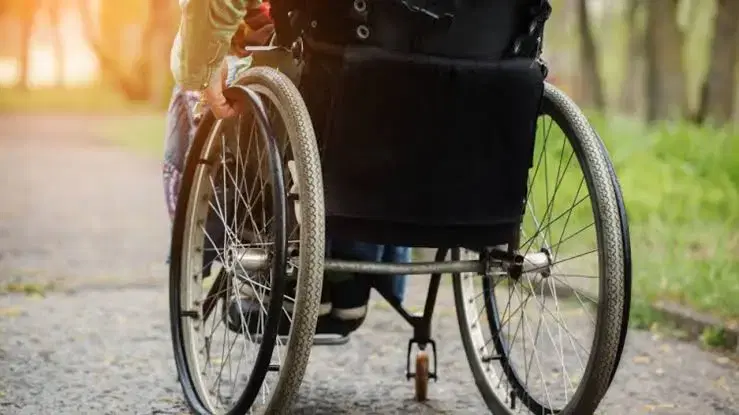
File image.
The foreword to the National Reproductive Health Policy 2010 reads in part: “We shall vigorously pursue the implementation of this policy with measurable outcomes that demonstrate impact at all levels of our health care system.”
This policy document represents part of the legal and policy framework of sexual and reproductive health (SRH) in Nigeria and it recognises the special reproductive health concerns of people with special physical and mental needs highlighting the fact that they face the challenge of higher likelihood to experience sexual and reproductive health violations as a result of their conditions.
Additionally, the Discrimination Against Persons with Disabilities (Prohibition) Act, 2018 prohibits discrimination, mandates accessibility, and requires government agencies to ensure inclusion in all sectors, including health. The Act promises equal opportunities for Persons With Disabilities (PWDs) to access services without barriers.
However, despite their bold promises, neither the policy nor the act has translated into any significant progress in the sexual and reproductive health outcomes of persons with disabilities in Nigeria. On paper, Nigeria’s commitments seem impressive. In practice, however, the policy framework is riddled with loopholes and weak implementation that leave PWDs invisible in SRH programming.
As advocacy for Sexual and Reproductive Health becomes more mainstream, more people are speaking up about contraception, consent, and the right to quality healthcare. Yet, for the over thirty-five million Nigerians living with disabilities, their needs are hardly centred as access to quality sexual and reproductive health information and services is limited.
Persons with disabilities have specific sexual and reproductive health needs and it is important that these needs are centred in policy design and implementation. For persons with disabilities, access to sexual and reproductive health information and services is often hindered by several factors including the lack of accessible primary health centres, the absence of sexual and reproductive health information in accessible formats, limited qualified healthcare personnel and inadequate training of available ones among other issues.
While the National Reproductive Health Policy recognises the special needs of persons with disabilities, the overall policy hardly provides any guiding framework, objectives, or even implementation responsibilities that are geared at improving the reproductive health of persons with disabilities.
For example, the National Reproductive Health Policy saddles the Ministry of Works among other things with the responsibility of providing and maintaining public infrastructure to create a healthy, safe, and enabling environment. Unfortunately, this responsibility does not expressly speak to the need for making public infrastructure accessible for persons with disability. A similar trend is observable through the policy document creating a gap in implementation of sexual and reproductive health programming for persons with disabilities.
While Nigeria’s reproductive health policies acknowledge the needs of PWDs, these needs are rarely effected in policy implementation. This invisibility means disability inclusion is often treated as optional rather than essential. These gaps can have devastating consequences in the lives of persons with disabilities who more often than not are presumed asexual or hypersexual, or demonised in religious settings as sex and reproduction with persons with disabilities is presumed to have paranormal implications.
Closing these gaps require intentional, urgent action. Nigeria cannot continue to pass progressive laws and policies that gather dust in archives while millions remain excluded. It is the opinion of this writer that for inclusion to be the norm in sexual and reproductive health programming, it must be expressly provided for within our laws and policies.
Nigeria must explicitly integrate disability into all SRH policies and strategies. The National Reproductive Health Policy should be revised to include specific measures for PWDs, with clear accountability mechanisms and implementation responsibilities for each ministry, department, and agency of government with a responsibility in reproductive health.
Additionally, budgetary allocations for sexual and reproductive health should have a percentage reserved to manage the needs of persons with disabilities. This is to ensure that resources are being set aside to help provide the needed aids, instructional materials, and even specialised training for health workers to deal with persons with disabilities, especially those who are at the intersection of multiple special groups such as adolescents with disabilities and women with disabilities.
Over the years, civil society organisations and private sector initiatives have tried to pick up the slack by implementing small, targeted initiatives aimed at the sexual and reproductive health policies of persons with disabilities. The government can explore partnerships to scale some of these projects that have recorded measurable impact.
Finally, nothing about PWDs without PWDs. Persons with disabilities must be at the table when SRH policies are being designed, implemented, and evaluated. This would ensure that the policies being put forward are reflective of the true needs of persons with disabilities and not just serving the interests of a few.
Nigeria has signed the laws and ratified the treaties. The next step is simple but urgent —to act. Until we close the gaps in policy and practice, persons with disabilities will remain second-class citizens in our healthcare system. We cannot achieve our target under the sustainable development agenda by leaving an entire demography behind. In other words, our goal of being a healthier nation is hinged on including every group.
It is time for Nigeria to match words with action because inclusive reproductive health is not just about health, it is about dignity and justice.
Bó̩ládalẹ́ Tèmítọ́pẹ́ Maryam is an AU Bingwa Plus Fellow and the Project Lead at Ìlera Lójù. This editorial is part of advocacy efforts to improve sexual and reproductive health outcomes for persons with disabilities under The Curriculum Project supported by the Africa CDC, GIZ African Union, and YouthHub Africa.
Disclaimer
Comments expressed here do not reflect the opinions of Vanguard newspapers or any employee thereof.