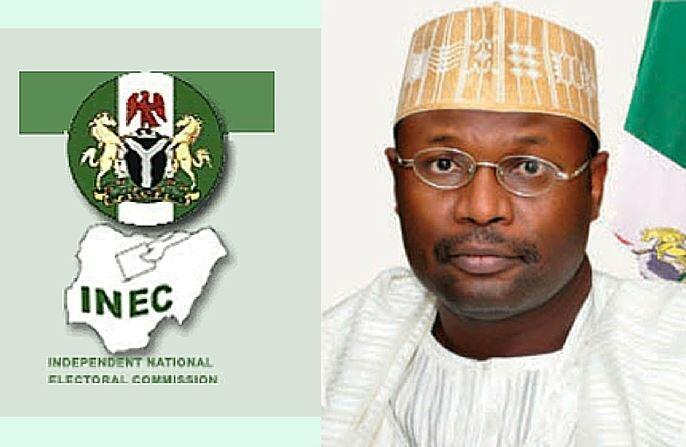
INEC boss, Mahmood Yakubu.
By MAXWELL IRABOR
As Professor Mahmoud Yakubu concludes his second term as Chairman of the Independent National Electoral Commission, INEC, he steps down as one of the most consequential figures in Nigeria’s democratic history.
Appointed on November 9, 2015 and reappointed on December 9, 2020, Yakubu became the first Nigerian to serve two consecutive terms in the role. His decade-long stewardship has been marked by reforms, innovations and controversies, but also by a determination to modernise the electoral process.
From the outset, Yakubu faced the daunting task of leading an institution that has always been under intense public scrutiny. Every election cycle in Nigeria brings with it high expectations, political tension, and inevitable criticism. Yet, despite the challenges, he has built a record that speaks to persistence and reform. His critics have been many, but his achievements have often served as his strongest defence.
Electoral Reforms
One of Yakubu’s earliest priorities was to simplify the voting process. He introduced the Continuous Accreditation and Voting System, CAVS, which aimed to reduce disenfranchisement and streamline procedures on election day. This reform was designed to make voting more accessible and efficient, especially in a country where logistical challenges often hinder participation.
In June 2021, Yakubu oversaw the expansion of voter access by creating 56,872 new polling units. This was the first expansion since 1996 and represented a major step in bringing polling stations closer to communities across the country. For many Nigerians, this reform reduced the long distances previously required to reach polling units and helped to ease congestion on election day.
Yakubu also regularised election dates, introducing a predictable calendar that placed presidential and national assembly elections on the third Saturday in February, followed two weeks later by governorship and state assembly elections. This reform brought order and consistency to the electoral timetable, making planning easier for political parties, voters and election observers alike.
Technology and Transparency
Perhaps Yakubu’s most enduring legacy lies in his embrace of technology. In August 2020, INEC launched the INEC Result Viewing Portal, IReV, which allowed Nigerians to view polling unit results in real time. This innovation was widely seen as a step toward greater transparency, giving citizens direct access to results as they were uploaded.
In 2021, the commission introduced the Biometric Voter Accreditation System, BVAS, which used fingerprint and facial recognition to verify voters. This technology was designed to reduce impersonation and multiple voting, long-standing problems in Nigeria’s elections. Alongside BVAS, INEC deployed the INEC Voter Enrolment Device, IVED, and the Automated Biometric Identification System, ABIS, to strengthen voter registration and verification.
Between 2018 and 2025, INEC rolled out a suite of digital platforms that transformed its operations. These included INEC PRESS for ad-hoc staff recruitment, the Candidate Nomination Portal, the Media Accreditation Portal, the Polling Agents’ Portal, the Observers Group Portal, and the Political Finance Reporting and Auditing System. Each of these platforms was designed to improve efficiency, reduce human error, and enhance transparency.
Yakubu also established the Election Monitoring and Support Centre, EMSC, which used over 1,000 indicators for predictive monitoring, and activated the INEC Security Alert and Notification System, INEC-SANS, in 2021 to provide real-time threat reporting. These tools gave the commission greater capacity to anticipate and respond to challenges during elections.
For every allegation of inefficiency or bias, Yakubu pointed to these technological innovations as evidence that INEC was not static but evolving. In many ways, technology became his shield against the “lynch mob” of critics who demanded perfection in an imperfect system.
Inclusivity and Voter Access
Yakubu’s INEC also made inclusivity a priority. In 2016, the commission offered employment to a visually impaired ex-NYSC member who had been injured on election duty. This symbolic act set the tone for broader reforms in inclusivity.
By 2021, INEC had created a Gender and Inclusivity Department, promoted women into leadership roles, and celebrated their contributions, including during International Women’s Day in 2024. Assistive devices such as braille ballot jackets and magnifiers were deployed to help persons with disabilities participate more fully in elections.
Priority voting was introduced for the elderly, pregnant women, and persons with disabilities. The commission also reviewed and strengthened the framework for Internally Displaced Persons, IDPs, ensuring that they could register and vote in both the 2019 and 2023 General Elections. These measures reflected Yakubu’s commitment to widening access and ensuring that no group was left behind in the democratic process.
Elections Conducted
During his tenure, Yakubu presided over two general elections, in 2019 and 2023. He also oversaw 19 off-cycle governorship elections, three FCT Area Council elections, and numerous bye-elections, re-runs, and supplementary polls.
These elections were not without controversy. Logistical challenges, security threats, and disputes over results were common. Yet, Yakubu consistently pointed to the reforms and innovations under his leadership as proof that INEC was making progress. His argument was that while perfection remained elusive, the commission was steadily improving.
Institutional Development
Beyond the conduct of elections, Yakubu focused on strengthening INEC as an institution. He developed and implemented Strategic Plans for 2017–2021 and 2021–2026, along with detailed Election Project Plans.
In 2024, he established an Artificial Intelligence Division within the ICT Department, signalling a forward-looking approach to electoral management.
Construction of a new INEC headquarters commenced under his watch, and staff welfare was improved, including the creation of a creche at headquarters for nursing mothers. These initiatives reflected his recognition that a strong institution requires not only technology and reforms but also motivated and supported staff.
International Engagement
Yakubu also positioned INEC as a regional leader in electoral management. The commission strengthened collaboration with ECOWAS and the ECONEC network, sharing Nigeria’s innovations with other African electoral bodies. This international engagement enhanced Nigeria’s reputation and demonstrated that its electoral commission could contribute to democratic development beyond its borders.
Silencing Critics with Achievements
Throughout his tenure, Yakubu faced a barrage of criticism. Allegations of bias, inefficiency, and logistical failures were common. Political actors, civil society groups, and ordinary citizens often expressed frustration with INEC.
Yet, Yakubu’s consistent response was to highlight the commission’s achievements. He pointed to the expansion of polling units, the introduction of BVAS and IReV, the creation of digital platforms, and the establishment of inclusivity measures. These achievements became his defence, a way of silencing critics who demanded more than any electoral body could realistically deliver in Nigeria’s complex environment.
By leaning on his record, Yakubu managed to shift the conversation from doubt to progress. His legacy is not one of perfection but of persistence, of trying to move the system forward despite immense pressure.
A Legacy of Persistence
As his second term comes to an end, Professor Mahmoud Yakubu leaves behind a mixed but significant legacy. His tenure was not free of controversy, but it was defined by a determination to modernise Nigeria’s electoral system. From technology to inclusivity, from institutional reforms to international engagement, his achievements stand as evidence of a man who tried his best to leave Nigeria’s democracy stronger than he found it.
In the end, Yakubu’s record speaks louder than his critics. The “lynch mob” may continue to raise questions, but his legacy is one of reform, innovation and resilience. For a nation still perfecting its democracy, that is no small achievement.
Disclaimer
Comments expressed here do not reflect the opinions of Vanguard newspapers or any employee thereof.