By Chioma Obinna
Joy swept through the narrow waterways and makeshift homes of Makoko as a rare blend of corporate goodwill and compassionate healthcare brought a ripple of change to the waterfront community.
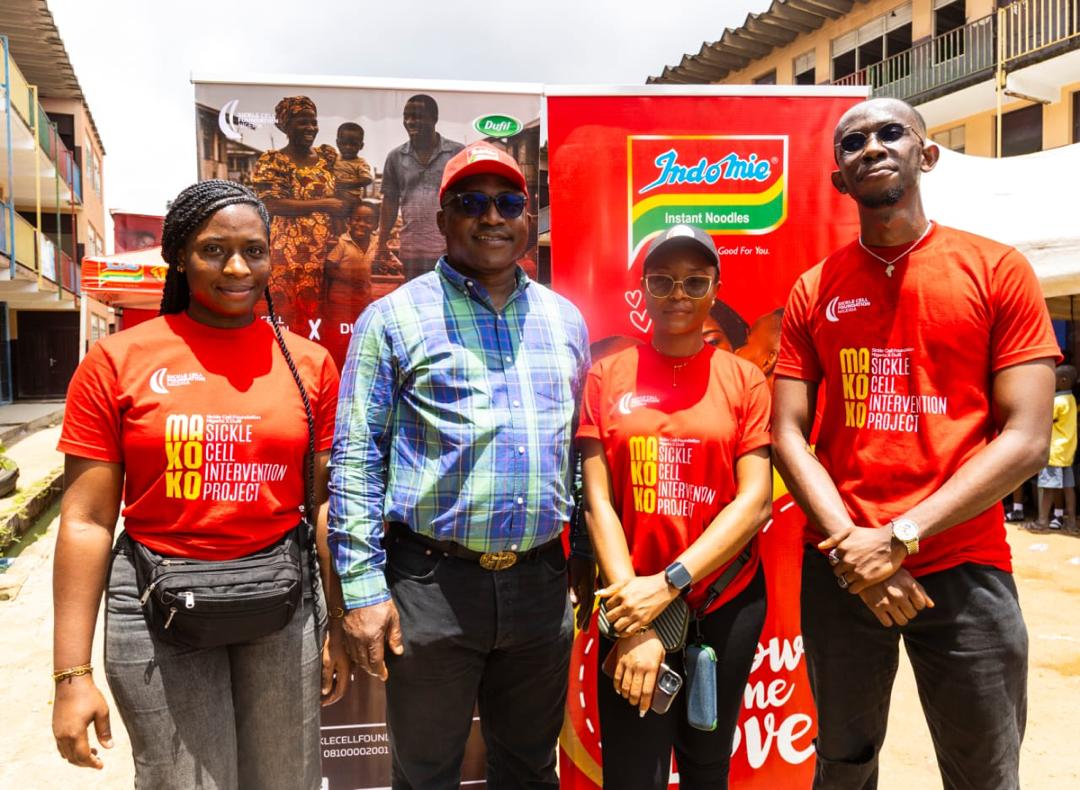
Last Thursday, Dufil Prima Foods Plc, makers of Indomie Instant Noodles, in collaboration with the Sickle Cell Foundation Nigeria, SCFN), launched a health initiative that is transforming lives in one of Lagos’ most overlooked communities.
For many residents of Makoko, who live without reliable access to healthcare, the project is more than an outreach – it is a lifeline.
“I never knew my child had sickle cell,” said Mrs. Abike, a mother of three who brought her children for free genotype screening during the outreach.
“We have always just managed, thinking it was malaria. But today, I understand, and now we know what to do. This means everything to me.”
More than 300 children and adults were screened as part of the Makoko Health Intervention Project, which combines free medical services with deeply rooted community education. But the project is not just about numbers — it’s about stories like Abike’s, and about rewriting the health narratives of families who have never had access to this kind of care.
With health workers offering free genotype testing, personalized genetic counselling, and routine sickle cell medication, the initiative is addressing the silent spread of sickle cell disease a genetic disorder that continues to affect millions across Nigeria, often without early diagnosis.
“This is more than corporate social responsibility. It’s a gesture of humanity,” said Temitope Ashiwaju, Group Corporate Communications and Events Manager at Dufil Prima Foods.
“Makoko deserves to be seen, heard, and helped. We’re using our platform not just to feed people, but to fuel change.”
Perhaps the most powerful element of the project lies in its cultural sensitivity. Outreach workers deliver education in Yoruba, and trusted community leaders were engaged from the start, creating an atmosphere of trust and openness in a community where skepticism toward outside interventions is common.
Oluwatosin Oluwagbemi-Jacob, Senior Programmes Officer at SCFN, noted: “We meet people here who have lived their whole lives without knowing their genotype. By the time the symptoms appear, it’s often too late. This partnership allows us to change that story not just with medicine, but with knowledge.”
Beyond medical care, the initiative trained local Primary Health Care workers in effective sickle cell diagnosis and management, ensuring that the impact of the program does not end with a single day. By building capacity from within and equipping local facilities, the project is planting seeds of lasting change.
In the eyes of Makoko’s children, the impact is already visible and hopeful. For many, it’s the first time they’re interacting with a doctor. For others, it’s the first time they’re learning what sickle cell disease even is. And for the community at large, it’s a reminder that even in forgotten places, help can come and it can come with dignity.
As the outreach wrapped up, children clutched educational leaflets, mothers whispered prayers of thanks, and health workers promised to return. It wasn’t just another corporate campaign. It was a moment of connection, compassion, and care and for Makoko, it was a reason to believe in better days ahead.
Disclaimer
Comments expressed here do not reflect the opinions of Vanguard newspapers or any employee thereof.