By Nnamdi Ojiego
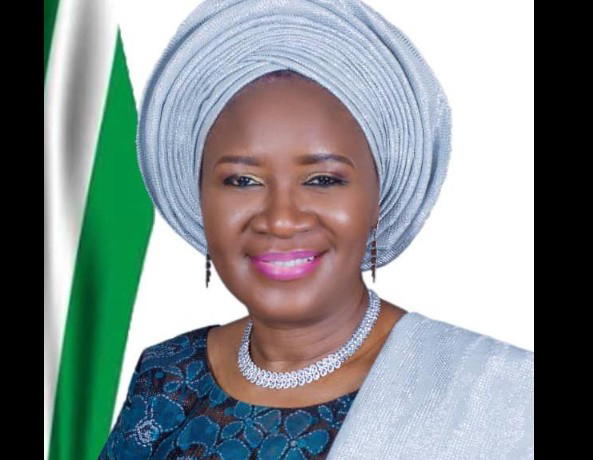
One of Nigeria’s most distinguished envoys, Ambassador Eniola Ajayi looks set to emerge as the first African and first female Director General of the Organisation for the Prohibition of Chemical Weapons, OPCW, having received the nod as Nigeria’s candidate for the position. Armed with experience in public service and private sector, she has served as Nigeria’s ambassador to the Netherlands and Hungary, engaging directly with the Organisation for the OPCW and other institutions of international law. In this interview, she shares insights on her preparedness for the role. Excerpts:
Nigeria has put your name forward for OPCW and Dr Olufemi Elias for the International Court of Justice, ICJ. What do you think this says about the country’s role in global governance, and how does your candidacy fit into that vision?
It is a reaffirmation of Nigeria’s commitment to the issues of security and the rule of law. Nigeria has produced these distinguished luminaries over the ages, and they are no stranger to the institutes in The Hague, especially the courts- International Criminal Court and International Court of Justice. We have also had roles as ambassadors in the Permanent Court of Arbitration. In my own case, I had the distinguished opportunity of holding several key positions while serving as ambassador in the Netherlands to the OPCW. It also shows that Nigeria is really committed to the issues of peace and security across the world, especially when you look at even the role we play also at the African Union, AU, and several other key positions in international organisations. Nigeria is at the forefront of ensuring that there is peace and security, not just in Nigeria, but in Africa and the rest of the world.
Beyond banning chemical weapons, what does the OPCW do, and why should the average Nigerian or African care about this organisation?
Banning chemical weapons is the major work of the OPCW. That is preserving what we call the Chemical Weapons Convention. The average Nigerian should care because guns are scary, they are obvious, and if he or she sees one, he or she can probably run away. But when it comes to the issues of chemical or nuclear weapons, nobody is spared. Worse still, the effect lingers for many years to come. Thousands of people were killed during the Second World War through the use of chemical weapons. If a little bit of an item like Sarin is put in a place, and any human being makes contact with it or it even gets into the blood, the person would be gone without quick intervention. So, every Nigerian should care because chemicals are transported across borders and they are sometimes disguised as chemicals that are for peaceful purposes. So, we should all care about the implications of chemical weapons.
You’ve described yourself as a bridge between science and diplomacy. How would that background help you if you get the OPCW job?
The work of the OPCW is diplomatic in nature, but the basis and the foundation is science. For someone who trained as an eye doctor, I am not a stranger to science. I am not just an eye doctor who does clinical work, I also did research at the Institute of Ophthalmology in London and St. Thomas’ Hospital in London, where I was a research fellow. So, I am conversant with the use of chemicals and the implications even to human beings. Basically, that scientific background makes it easy for me to assume the role of the Director General of the Technical Secretariat for OPCW. Also is being a diplomat, as the work of the DG of the OPCW is tripartite in nature. Number one is that you are the administrator.
You oversee the day-to-day running of the organisation. Number two is that you are the chief representative, and the number one diplomat of the organisation. So you represent the organisation in international organisations like the United Nations, UN, and many other places. As a diplomat also, you bring the state parties together. You are responsible for engendering proper cooperation among the parties. And then the core work of the organisation is verification and inspections. You are the one who oversees that primarily to make sure that chemical weapons are destroyed where they need to be destroyed, and to prevent the emergence of stockpiling for use as well as ensuring that chemicals are used for peaceful purposes only. That is the work of the DG, and that is where I come in. I am a scientist, diplomat and someone who has also led within the executive space. So, I know how to bring people together and lead organisations.
The poll comes up later this month. How many other people are in the race?
11 of us. Four of them are from Africa; four from the East European group; one from the West European group; and two from the Group of Latin American and Caribbean Countries, GRULAC. There is none from the Asia group. Basically, there are 11 of us.
Your six-point vision talks about modernising for impact, especially with the rise of artificial intelligence, AI, new techs. How do you see the OPCW adapting to those realities without losing sight of its core disarmament mission?
Actually, all of these things enhance the work. Artificial intelligence is already used at OPCW, but there is a need for ethical use to ensure that we stay several steps ahead of those who seek to use artificial intelligence to harm us. Basically, this is very crucial in the area of verification and inspections because artificial intelligence, through satellite imagery and all kinds of analysis, can predict what to expect on the field when you go out for inspection. So, OPCW is already using AI, and I intend to continue with the ethical and proper use of artificial intelligence.
If you are elected, you will be both the first African and the first woman to lead the OPCW. Beyond symbolism, what tangible benefits would this bring to the organisation?
Being an African, especially a Nigerian, is of great benefit. Nigeria’s foreign policy rests on the fact that it is enemy to none, and friends to all. So, it makes it easy for us to be neutral, without taking sides. We are bridge builders. In my case, it is not a theory anymore. I already served in that organisation as vice chairperson and a chairperson.
In fact, when I served as chairperson of the organisation, it was a very critical time. It was just like five days after the conflict in Ukraine started, and everybody thought that all hell would break loose in that place. But somehow, I managed to keep us on point. I managed to ensure everyone had their say, but there was no disorderliness. Everyday, we ensured that things were quickly executed. After the three days, we not only finished in record time, we were also able to adopt a report. So, the people in the Hague, especially my colleagues with whom I served, know that I am very friendly.
So my approach is always friendly, firm and fair. And because of that, I know that I will be able to reduce the level of polarisation in the organisation. For Nigeria and Africa, it shows our commitment to international peace and security. It also brings more recognition of how concerned we are as a people to the peace and security architecture of the world. It showcases us in the right light, and also creates more opportunities for us. Like begets like, even without trying. When I become DG of OPCW, the average Nigerian would become aware of an organisation called OPCW.
Disclaimer
Comments expressed here do not reflect the opinions of Vanguard newspapers or any employee thereof.