By Chioma Obinna
Nigeria’s quest to end AIDS by 2030 may be slipping out of reach, as adolescents and young adults remain the weakest link in HIV prevention and treatment, and new drugs still face long safety and validation hurdles, researchers at the Nigerian Institute of Medical Research, NIMR, have warned.
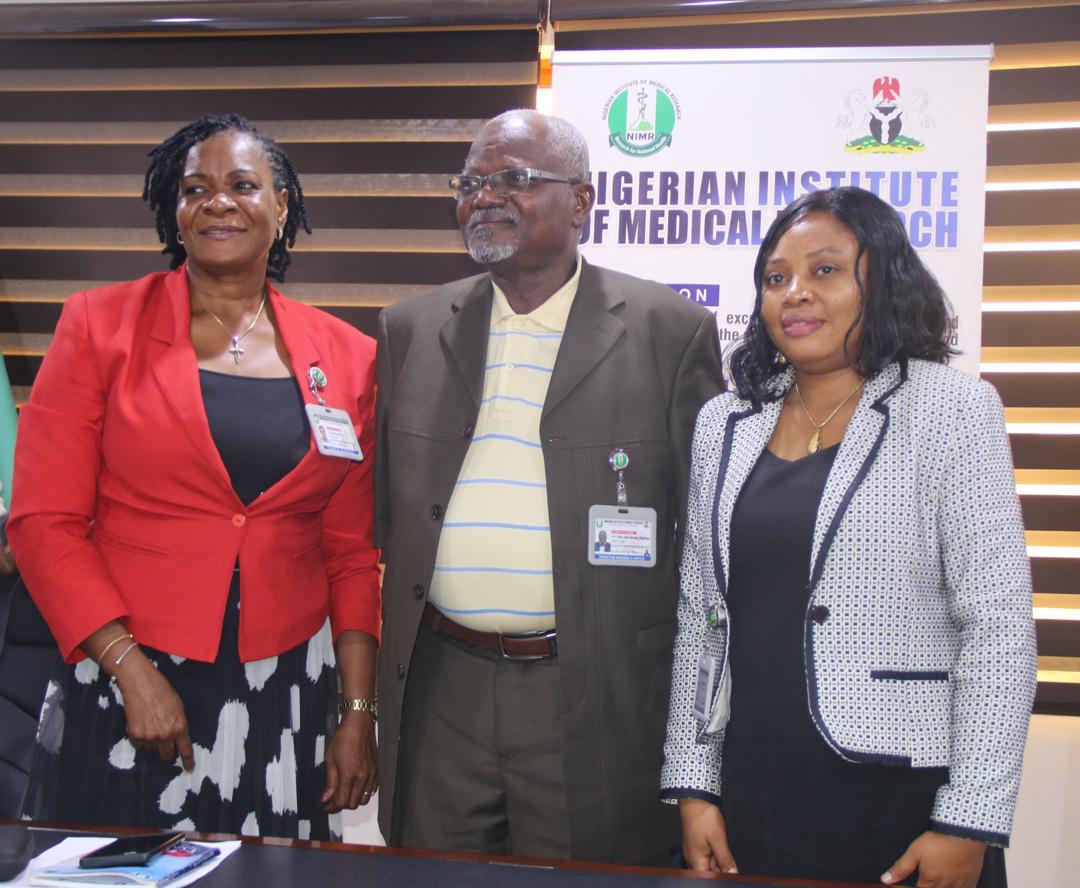
Speaking at the Institute’s monthly media forum in Lagos, the Director of Research and Consultant Paediatrician at NIMR, Dr. Agatha David said that young Nigerians aged 0–24 years continue to record the poorest outcomes in HIV testing, adherence, and viral suppression .
She stressed that such trends threaten the United Nations Sustainable Development Goal (SDG) of ending AIDS by 2030
“Adolescents and young adults living with HIV have the lowest testing rates, the poorest adherence to treatment, and the weakest viral suppression. If we don’t fix this, Nigeria cannot meet the UNAIDS 95-95-95 target for 2025 or the global goal of ending AIDS,” she warned.
The UNAIDS target seeks to ensure that 95 per cent of people living with HIV know their status, 95 per cent of those who know are on antiretroviral therapy (ART), and 95 per cent of those on treatment achieve viral suppression.
David revealed that fewer than one in four Nigerian adolescents have ever taken an HIV test. A NIMR-led field study between 2022 and 2023 tested nearly 1,000 adolescents and young adults who had never been screened before, with shocking results: 12 per cent were HIV positive — almost ten times the national prevalence rate of 1.3 per cent.
Even among those who tested negative, fewer than 10 per cent accepted pre-exposure prophylaxis (PrEP), a daily pill that prevents infection.
“We found that many young people do not perceive themselves as being at risk. Yet, when they contract HIV, adherence to treatment becomes another huge challenge,” she explained.
To tackle adherence gaps, NIMR piloted Directly Observed Antiretroviral Therapy (DOART), bi-directional SMS reminders, and a peer navigation system linking patients to virally suppressed peers. These strategies boosted drug intake and viral suppression but remain absent from the national HIV programme due to limited funding.
NIMR research has also shown that adolescents with HIV face depression, anxiety, suicidal thoughts, and high rates of unplanned pregnancies.
“About 15 per cent of our young female clients had unplanned pregnancies, many ending in unsafe abortions. Others dropped out of school. Without youth-friendly clinics and comprehensive sexuality education, we are setting them up for failure,” David stressed.
While adolescents struggle with adherence and stigma, NIMR scientists are also at the frontline of developing new prevention tools and validating traditional alternatives.
Speaking, a Research Fellow at NIMR’s Clinical Sciences Department, Dr. Sabdat Ekama explained that every new drug or product undergoes rigorous safety checks at multiple levels from laboratory studies to human trials and even post-approval monitoring.
“A safety study is something you carry out all through the phases of drug use. In vitro studies on vaginal cells, animal models, human clinical trials, and even after approval, we continue to monitor for toxicities and side effects. For now, the gel we are working on is not cancerous, but we are still watching for any possible toxicities,” she said.
On alternative and complementary medicine, Dr. Ekama noted that NIMR’s Centre for Alternative and Complementary Medicine, headed by Dr. Oluwabemiga Aino, collaborates with traditional medicine practitioners to scientifically validate their claims.
During the COVID-19 pandemic, the Institute tested a herbal product developed at Afe Babalola University, which showed superior outcomes to standard care in a proof-of-concept study involving 50 patients.
“They recovered faster than those not on it, with no complications. We are also rounding up another proof-of-concept study on prostate cancer products. Such work shows that alternative medicines can be validated, but only through science and clinical trials,” she said.
Since 2002, NIMR has enrolled more than 25,000 patients into its HIV programme, including 3,000 adolescents and young adults, while pushing forward drug innovation and validation studies. But both experts insist that Nigeria needs stronger political will, funding, and collaboration with pharmaceutical companies if research breakthroughs are to move from the laboratory to the people.
“Young people are the face of new infections, and new drugs will only matter if they are safe, accessible, and affordable,” David concluded.
Ekama added: “Safety is not negotiable. For any drug or traditional product to be part of HIV prevention or treatment, it must pass the rigour of science.”
Speaking after the presentations, Director-General of NIMR, Prof. John Obafunwa, commended the Institute’s progress in adolescent HIV care and in drug development research.
“We have listened to what has been achieved in HIV, particularly as it affects children and adolescents. Some of these young people have now grown into adulthood — some have graduated, some are married, and some are living happy lives. The outcome has generally been good, especially for those managed and monitored at our centre,” he said.
Obafunwa added that renewed international support is helping NIMR strengthen its HIV response.
He disclosed that U.S. partners are considering NIMR as a regional centre for HIV drug resistance testing.
“A representative of the U.S. CDC met me this morning, and next month, their leadership will be here to assess our capacity. If satisfied, they will support NIMR to become a regional laboratory for HIV drug resistance testing,” he revealed.
The DG expressed optimism that if the outcomes of current research are scaled up, Nigeria could lower its HIV burden significantly.
“NIMR and its experts are doing a lot to create a healthy environment. With continued research, stronger partnerships, and political commitment, we can change the course of the epidemic,” he stated.
Disclaimer
Comments expressed here do not reflect the opinions of Vanguard newspapers or any employee thereof.