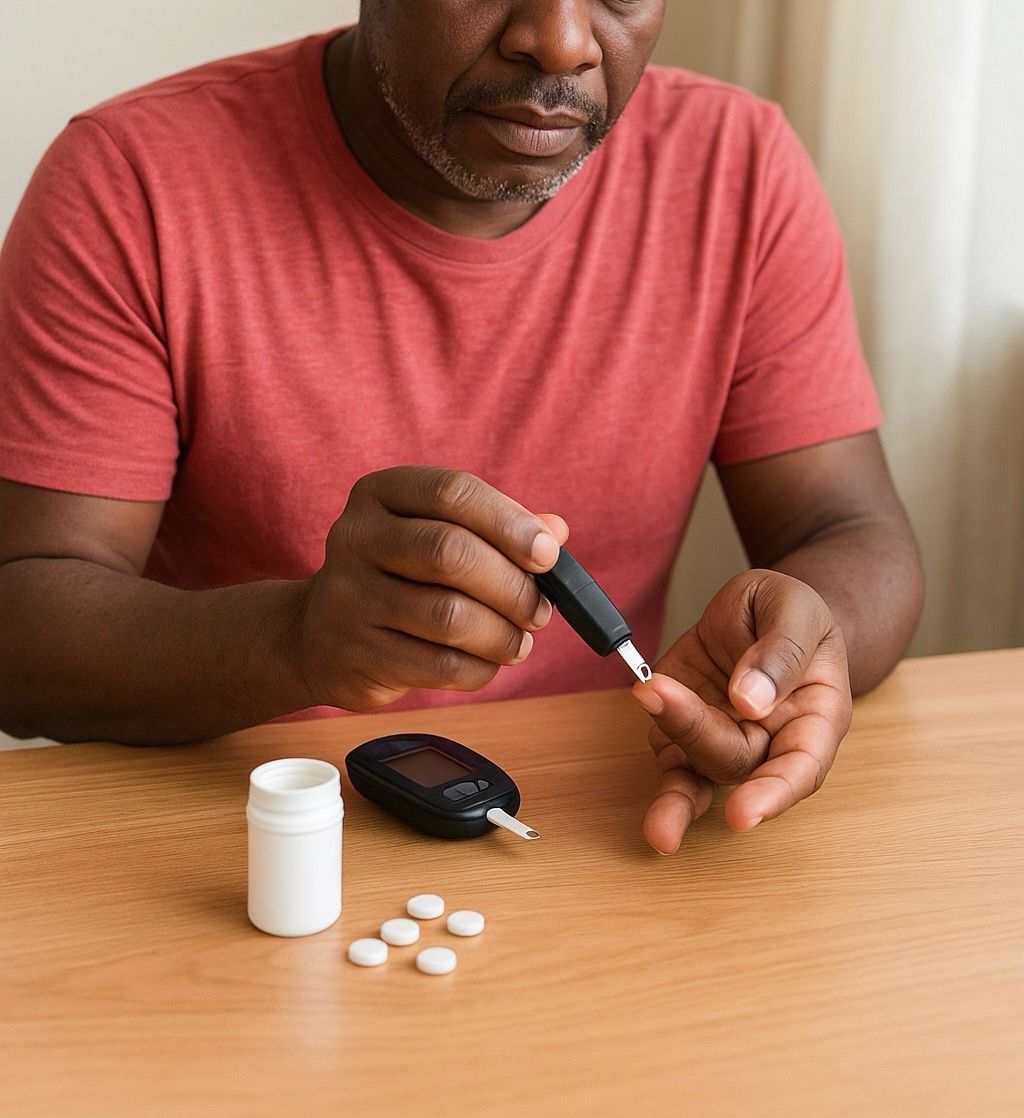
AI-generated image for illustration.
… experts say poor diets, inactivity, high drug costs fuelling disease
By Chioma Obinna
Diabetes is silently cutting short the lives of thousands of Nigerians every year. Once thought to be a disease of the elderly, it is now striking younger adults and even children, leaving in its wake amputations, financial ruin, and untimely deaths. Yet, awareness remains low, treatment is expensive, and government support is almost non-existent.
The International Diabetes Federation’s 2025 Diabetes Atlas reveals that an estimated 11.1 percent of adults globally about one in nine people have diabetes, and more than 40 percent of them are unaware.
Nigeria faces a particularly acute burden.
A 2021 study in Enugu State put diabetes prevalence at seven percent, with nearly three-quarters of those affected unaware.
A 2025 review across the six geopolitical zones showed an overall prevalence of 6.3 percent, ranging from 5.4 percent in the South-West to a staggering 13.1 percent in the South-East.
Altogether, about 8 million Nigerian adults roughly 7 percent of the population are living with diabetes.
The number of cases has almost doubled in less than a decade, reflecting alarming growth.
But prevalence is only part of the crisis. Globally, diabetes was responsible for 3.4 million deaths in 2024 one every nine seconds and accounts for one in 11 deaths among adults aged 20–79 years.
In Nigeria, WHO data reports approximately 22,500 diabetes-related deaths yearly, accounting for 1.5 percent of all deaths, with an age-adjusted death rate of 33.5 per 100,000 people.
Chioma Obinna spoke to diabetic patients whose lives have been dramatically altered physically, emotionally, and financially by the disease.
Jonathan Gbenga, 60, has lived with diabetes for 26 years. Diagnosed at 34 after persistent headaches, he never imagined the condition would one day cost him a leg and his livelihood.
“Living with diabetes has not been easy,” he said.
Once a thriving trader, his life spiralled after an accident worsened his condition. “I used to spend N7,000 monthly on insulin; today, it costs about N11,000. Without a steady income, survival depends on friends and family.”
Jonathan, now an amputee, wants the Federal Government to subsidise diabetes drugs, as it does for HIV, and create opportunities for patients like him to live independently.
For another amputee, Sam Ogbe, the battle began just three years ago. What started as cold and foot pain turned into a severe infection that required emergency surgery.
“When they checked my blood glucose, it was 450. Within hours, my leg was gone,” he recalled.
Insulin became his lifeline, but financial strain soon forced him to ration treatment.
“For weeks, I couldn’t afford insulin or test strips. My children had to go without so I could buy drugs.” Eventually, his doctors switched him to tablets. His message to fellow patients: “Control is everything. Without it, you invite complications.”
Jonathan and Sam’s stories reflect a bigger tragedy diabetes patients in Nigeria often face amputation, poverty, or death due to late diagnosis and unaffordable care. Hospital records show many Nigerians die from hyperglycaemic events that could have been prevented with early detection.
Experts warn that the surge is driven by poor diet, low physical activity, and ignorance. “Many Nigerians eat more and move less, fuelling both diabetes and its complications,” said Dr. Afoke Isiavwe, Project Coordinator, Diabetes Podiatry Initiative of Nigeria. “Sadly, half of patients with Type 2 diabetes already have complications at diagnosis.”
Also, a professor of endocrinology and expert in the diagnosis and management of diabetes at the College of Medicine and Lagos University Teaching Hospital, LUTH, Professor Olufemi Fasanmade who acknowledged that the disease ways on the increase said there was need for urgent intervention by both the Federal and state governments on the control of diabetes in the country. He noted the inability of Nigerians living with it to control the condition.
Fasanmade who spoke during a virtual meeting said: “It is believed that in the next two decades that the number will double. In 2021 it is believed that diabetes took away the lives of 48,375 people (in Nigerian), in 2022, if we project, probably 50,000 people died in 2023, probably 52,000 to 53,000 and in 2024, I’m sure more than 54,000 have succumbed.”
Folasade Olufemi-Ajayi, a diabetes care expert, also stressed the importance of structured self-monitoring of blood glucose, noting that it helps patients detect dangerous spikes or drops early and avoid costly complications.
She urged massive public awareness and government-backed subsidies to ease the burden.
For now, Jonathan and Sam continue their fight, with faith and resilience. But unless Nigeria confronts the diabetes epidemic with urgency through awareness, affordable drugs, and stronger healthcare systems many more stories like theirs will end in pain, disability, and premature death.
What is diabetes?
Diabetes, often referred to by doctors as diabetes mellitus, is a group of metabolic diseases in which the person has high blood glucose (blood sugar), either because insulin production is inadequate, or because the body’s cells do not respond properly to insulin, or both. Patients with high blood sugar will typically experience polyuria (frequent urination); they will become increasingly thirsty (polydipsia) and hungry (polyphagia).
Tips on diabetic foot-care
*Take care of your diabetes
*Check your feet every day, look out for colour changes, red spots, cuts, swelling and blisters.
*Be more physically active
*Keep your feet clean with daily washing in clean water, keeping them dry, especially in-between the toes
*Keep your skin soft and smooth by rubbing skin lotion over the tops
*Trim your toe nails when needed
*Never walk barefoot, as it increases your chances of injuring them
*Protect your feet from hot and cold temperatures
*Never use hot water bottles, heating pads, or electric blankets
Disclaimer
Comments expressed here do not reflect the opinions of Vanguard newspapers or any employee thereof.