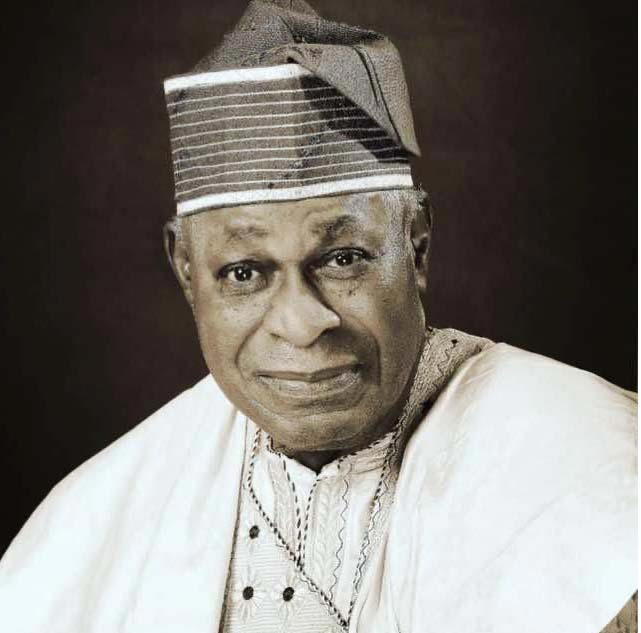
… leaves legacy of service in education, governance, activism
By Epgraim Oseji
Prince Oluwole Emmanuel Adefila Adegboro, a towering figure in Nigeria’s political, academic, and royal circles, has died at the age of 73. The statesman, known for his lifelong dedication to public service, student activism, and progressive governance, passed away on Wednesday, July 27, 2022, in Akure, Ondo State. His death has triggered an outpouring of tributes from political leaders, academics, and community stakeholders across the country.
A member of the Osupa/Odundun Royal Family of Akure, Prince Adegboro’s influence extended far beyond his royal lineage. He was a trailblazer in student leadership, a pioneer in African student movements, a veteran of Nigeria’s military education corps, a reformist commissioner in Ondo State, and a prolific writer and publisher whose works championed democracy, education, and cultural pride.
Adegboro’s leadership journey began during his university years, culminating in his election as National President of the National Union of Nigerian Students (NUNS) in 1971. At the height of Africa’s student liberation movements, he broke new ground by becoming the first Continental President of the All-Africa Students Union based in Accra, Ghana. His activism helped position Nigerian student leadership on the global stage.
Commissioned into the Nigerian Army in 1974, Adegboro served with distinction in the Education Corps, eventually attaining the rank of Captain. After retiring from military service, he transitioned into tertiary education administration, holding senior roles at The Federal Polytechnic, Ado-Ekiti, and the Federal University of Technology, Akure (FUTA), where he served as Deputy Registrar and Governing Council member.
Prince Adegboro’s political career reflected Nigeria’s shifting democratic landscape. From the Unity Party of Nigeria (UPN) in the Second Republic to the All Progressives Congress (APC) in recent years, he remained an influential strategist and policy driver. His legislative acumen was cemented when he represented Akure Federal Constituency at the 1988–89 National Constituent Assembly.
He held key appointments in Ondo State, including Commissioner for Information, Youth, Sports and Culture; Commissioner for Commerce and Industry; and Special Adviser on Education and Special Duties. One of his most impactful contributions was his role in relocating Adekunle Ajasin University to its permanent site in Akungba Akoko, an achievement praised across party lines.
Adegboro was also a respected voice in Nigeria’s intellectual and media spheres. As founder of Odua Voice Newspaper and Black Pride Magazine, he provided platforms for progressive discourse. His authorship of several critical texts, most notably Michael Adekunle Ajasin: The Story of a Legend, further cemented his place as a chronicler of Nigeria’s political evolution.
His widely read column “Platform” became a reference point for citizens seeking nuanced commentary on national issues.
Meanwhile, the governor of Ondo State, senior political figures, former student leaders, and traditional institutions have paid glowing tributes to the late statesman.
In a statement, a former colleague described him as “a disciplined public servant and unshakable advocate of education and good governance.” Another tribute noted that “his name will remain etched in the history of Ondo State for his service to the people and his love for truth.”
Prince Adegboro was married to Margaret Adefila Adegboro for 48 years. He is survived by children and grandchildren who described him as “a father who lived by the values he taught, honesty, dignity, and relentless pursuit of justice.”
His burial arrangements will be announced by the family in the coming days.
With a career spanning student leadership, military service, university governance, politics, and publishing, Prince Oluwole Adegboro embodied the ideal of principled public life. His passing marks the end of an era for Akure and Ondo State, but his ideas, writings, and legacy continue to shape discourse in Nigeria’s democratic and educational spaces.
Disclaimer
Comments expressed here do not reflect the opinions of Vanguard newspapers or any employee thereof.