By Dickson Omobola
Stakeholders in Delta State have expressed commitment to the creation of Anioma State, stressing their origin lies with the Igbo people.
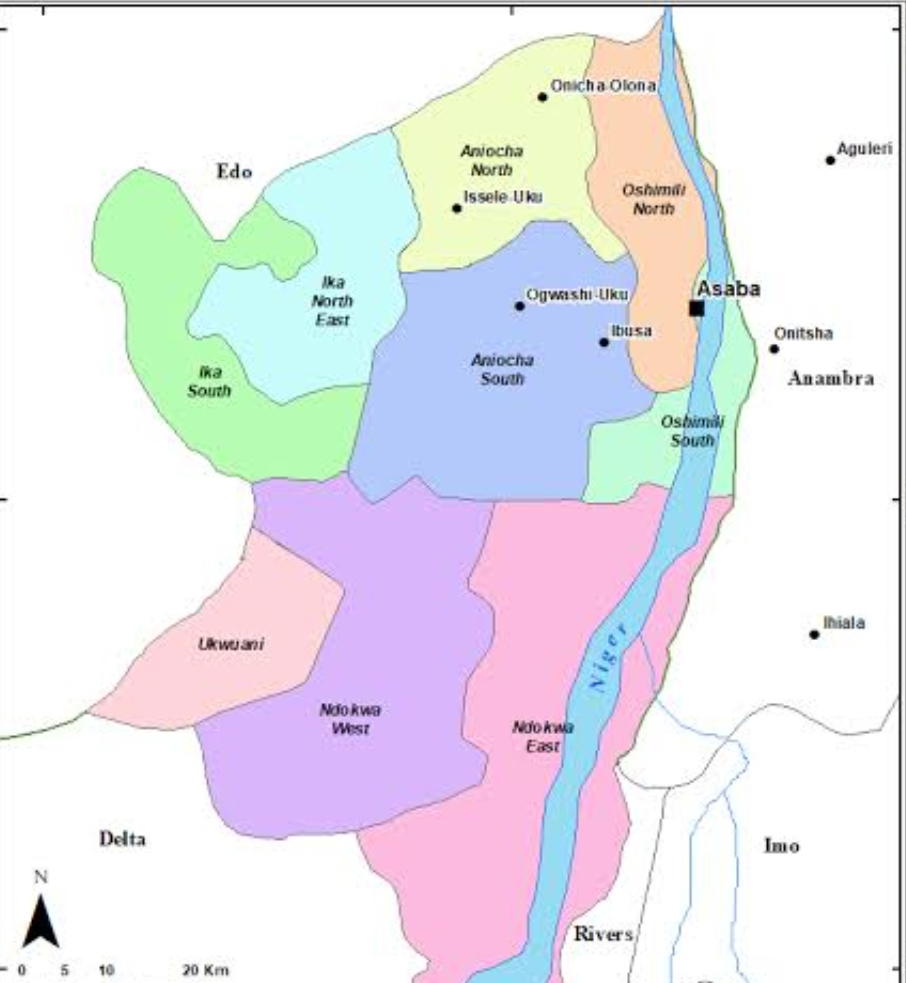
Chief Chiedu Odiakose, in a statement, said Anioma was a collection of sovereign kingdoms, with its own monarch and council of chiefs and should not be under Asaba
The statement reads: “Ogwashi-Uku, Onicha-Ugbo, Obior, Issele-Uku, Igbodo, Ubulu-Uku, and others are not vassal states of Asaba. The suggestion that a single monarch can bind the entire region by fiat runs contrary to our customs and democratic norms.
“It’s true that Anioma culture is enriched by contact with Benin, Igala, and other neighbours. But our linguistic, ancestral, and spiritual foundations are firmly Igbo. Ogwashi-Uku Kingdom, for example, traces its roots directly to the ancient Nri Kingdom in present-day Anambra State. Our naming customs, spiritual systems, title structures, and linguistic patterns overwhelmingly align with the broader Igbo civilization.
“His Royal Majesty Professor Chukwuka Okonjo, the late Obi of Ogwashi-Uku, who was not only a renowned academic but also a Brigadier in the Biafran Organisation of Freedom Fighters (BOFF)—a key arm of the Biafran military command, fought with honour and conviction for the Igbo cause during the civil war.
“To suggest now, decades later, that Anioma people were never part of the Igbo nation, or that they were culturally alien to Biafra, is to erase the sacrifices of men like Professor Chukwuka Okonjo and many others who stood firm for justice, self-determination, and ethnic identity.
“It’s astonishing that a titled man would cite the ill health of the Obi of Akwukwu-Igbo or the brutal assassination of the Obi of Ubulu-Uku as punishments for failing to uphold certain taboos.
“These are real human tragedies, not supernatural morality tales. This kind of commentary is indecorous, disrespectful, and unbecoming of anyone who claims to speak for our people. We must always show dignity to the stool, regardless of who occupies it.
“The movement for Anioma is not merely about political alignment, it’s about cultural restoration. Anioma people speak Igbo, live Igbo, and have suffered alongside the Igbo. The Asaba Massacre, the pogroms, and the systemic marginalisation of Anioma communities didn’t occur because we were different from our eastern brothers. They occurred because we were seen as the same. No historical revisionism can erase this blood-linked solidarity.
“Anioma people deserve to choose their future freely. We cannot be hostages to fears of IPOB or the actions of past military leaders. Inclusion in the South-East offers us unity, economic synergy, and political weight. Inclusion in the South-South, dominated by other ethnic groups with their own ambitions, leaves Anioma isolated and fragmented.
“Anioma’s future cannot be dictated by nostalgia for pre-colonial alliances or political maneuvering by a few. It must be decided by open consultation, historical truth, and the will of the people. No one traditional ruler speaks for all of Anioma.”
Disclaimer
Comments expressed here do not reflect the opinions of Vanguard newspapers or any employee thereof.