By Gabriel Ewepu
ABUJA – ON the heels of the Africa Primary Health Care Forum (APHCF) 2025, the Country Director, PharmAccess, Njide Ndili, has called on the government to take drastic measures to change the narrative in the nation’s primary healthcare sector with new innovations as the world advances.
Ndili while speaking at the APHCF 2025 with the theme ‘Reimagining Primary Health Care for Universal Health Coverage and Health Security in Africa’, lamented that the system has not received the maximum attention to make many things work for the sake of Nigerians.
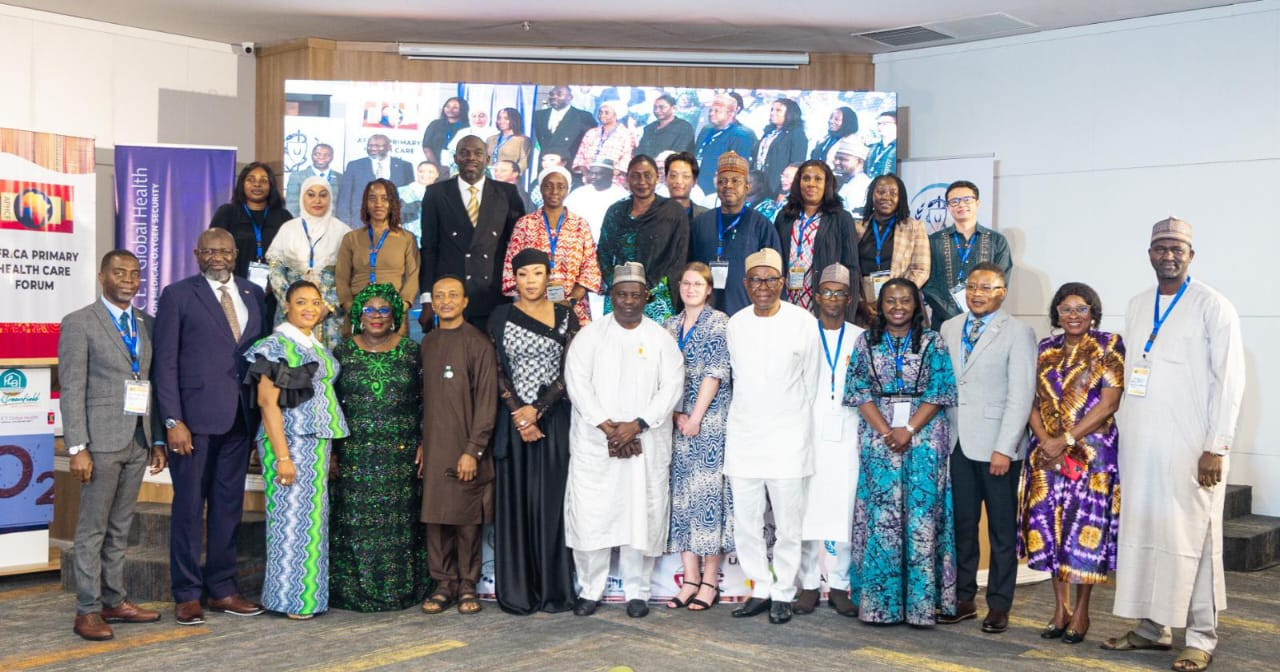
The Forum had in attendance the Chairman of the National Health Insurance Authority, NHIA) and former Chair of the Senate Committee on Health, Senator Ibrahim Oloriegbe; the Vice President of Nigeria and the Minister of Health and Social Welfare, along with private sector leaders, development partners, and community representatives.
She said: “Primary healthcare must be reimagined. It needs to operate like a successful franchise, with clear systems, standardized processes, and consistent quality that people can trust.”
Meanwhile, she also expressed optimism that it is achievable if the sector is prioritized by injecting innovations in every strata of the sector.
“This is not a dream; it is achievable if we act boldly, stop doing the same things, and embrace innovation. Our communities deserve no less”, she said.
PharmAccess, serving as a faculty partner for the Forum, facilitated a session titled ‘Strengthening Primary Health Care Through Locally Owned Improvement Models’.
Meanwhile, a panel session, moderated by the Country Director, PharmAccess Ghana, Dr Maxwell Antwi, explored how public-private partnerships, innovative management approaches, and structured quality frameworks empower local actors to lead PHC reforms.
According to the panelists – Dr. Yakubu Agada-Amade, Director of Standards and Quality Assurance, NHIA; Dr. Olusegun Fadipe, Head, Ilera Eko Medicals, LASHMA; Pharm Joy Bako, Department of Primary Health System Development, Gombe SPHCDA, Dr. Lawrence Ofori-Boadu, Director, Institutional Care Division, Ghana Health Service; and Dr. Ifunanya Ilodibe, CEO of EHA Clinics. Sharing Lagos State’s experience, Dr. Olusegun Fadipe, acknowledged that, “In Lagos, we have domesticated the SafeCare tool, and we are now moving into value-based care and performance-based financing to strengthen accountability and sustainability. If there’s no equality in the quality of services, there shouldn’t be equality in payments.”
Pharm Joy Bako from Gombe State called for community engagement.
“We discovered that quality is not a luxury. When communities feel they have a stake, they support facilities, hold them accountable, and become advocates. Empower Ward Development Committees and training local assessors has been key”, Bako added.
Private sector leader, Dr. Ifunanya Ilodibe of EHA Clinics observed that, “Trust is the currency of healthcare. We embedded our Community Health Extension Workers and empowered them with digital tools to connect the community to PHCs.
“Being private doesn’t diminish our responsibility, if the community is unhealthy, everyone suffers.”
Ghana’s Dr. Lawrence Ofori-Boadu, highlighted the government’s unique partnership with faith-based providers.
“When government and trusted community actors work together, PHCs become stronger. SafeCare has helped us harmonize fragmented quality initiatives into one consistent standard that patients can rely on”, Ofori-Boadu said.
Also, speaking was the representative of NHIA, Dr. Yakubu Agada-Amade to saying digitization is driving accountability.
“We have developed and digitized over 4,500 assessment criteria. Scoring and ranking facilities creates transparency, and when money is tied to quality, the stakes get higher, but so does ownership”, Agada-Amade added.
The session underscored a shared lesson: that locally led PHC improvement depends on data-driven accountability, empowered communities, innovative partnerships, and enabling policies. Panelists agreed that quality is not a luxury but an imperative, and that trust, backed by measurable standards, is the foundation of resilient PHC systems.
PharmAccess remains committed to supporting governments, private sector actors, and communities across Africa to strengthen PHC systems through sustainable, locally led solutions.
Disclaimer
Comments expressed here do not reflect the opinions of Vanguard newspapers or any employee thereof.