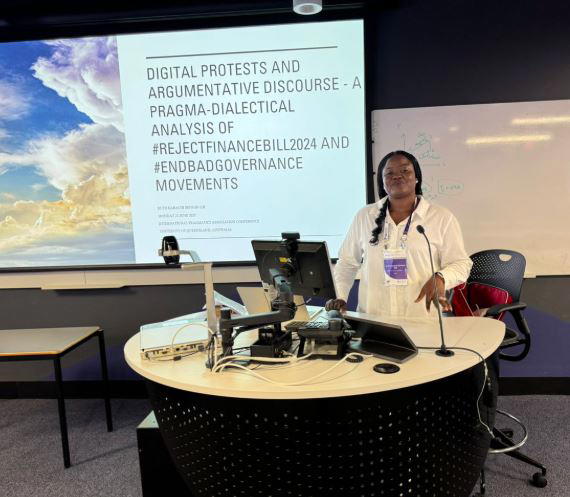
*Dr. Ruth Oji’s Revolutionary Analysis of #EndBadGovernance and #RejectFinanceBill2024 Movements Transforms Understanding of Online Activism
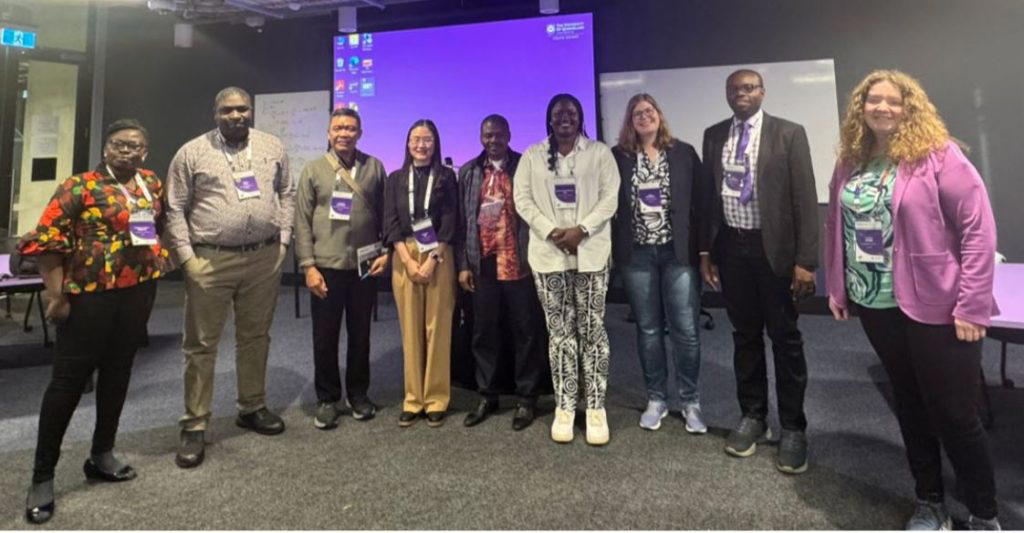
By Agbonkhese Oboh
Dr. Ruth Karachi Benson Oji, Associate Professor of Pragmatics and Digital Media Discourse at Pan-Atlantic University, has fundamentally reshaped how academics and policymakers understand digital activism across Africa with pioneering research that offers unprecedented insights into how citizens use social media platforms to construct sophisticated political arguments and challenge governmental authority.

The comprehensive study, titled “Digital Protests and Argumentative Discourse: A Pragma-Dialectical Analysis of #RejectFinanceBill2024 and #EndBadGovernance Movements,” represents a watershed moment in the academic study of African digital politics. Dr. Oji’s innovative application of advanced argumentation theory to analyse thousands of social media posts from Kenya and Nigeria reveals the remarkable intellectual sophistication underlying contemporary protest movements. This research was presented at the 19th International Pragmatic Conference held at the University of Queensland, in Brisbane, Australia, from 22-27 June, 2025.
The research has garnered international attention for its practical methodology and theoretical contributions. Drawing on expertise in both pragmatics and digital media discourse, her work completely transforms understanding of digital activism by demonstrating that online protesters engage in highly strategic, reasoned argumentation that follows sophisticated patterns of logical discourse.
Her innovative application of pragma-dialectical theory, which is a framework traditionally used to analyse formal debates, to social media discourse has drawn acclaim from international scholars. By examining how protesters navigate four critical stages of argumentation (confrontation, opening, argumentation, and concluding), the research illuminates the intellectual rigour underlying movements that mobilised millions across both countries.
The study identifies distinct argumentative patterns that characterise African digital activism. Dr. Oji’s analysis reveals how protesters strategically employ “economic hardship as a catalyst for protest,” construct arguments around “political legitimacy,” and navigate the complex “tension between religious faith and pragmatic action”. These are insights with profound implications for understanding political participation across the continent.
Her methodology is profound. By systematically analysing 700 social media posts across Twitter and Facebook, employing both qualitative discourse analysis and pragma-dialectical reconstruction, the research establishes new standards for rigorous analysis of digital political communication.
The research has particular relevance for understanding how marginalised populations use digital tools to participate in democratic processes, offering valuable insights for scholars studying political participation across Africa, Asia, and Latin America.
The work’s practical implications extend beyond academic circles. Dr. Oji’s research reveals how successful digital movements balance “emotional appeal with logical argumentation while navigating cultural, religious, and ethnic complexities”. Such knowledge could inform more effective citizen engagement initiatives worldwide.
Dr. Ruth Oji’s expertise in pragmatics proves particularly valuable in analysing how context, cultural nuance, and implied meanings shape argumentative effectiveness in digital spaces. This specialised knowledge enabled the identification of subtle linguistic strategies that previous research had overlooked.
Her research provides essential analytical tools for understanding contemporary political phenomena as digital platforms continue transforming political participation across the Global South. The work’s combination of theoretical sophistication, methodological rigour, and practical relevance positions Dr. Oji as a leading voice in understanding democracy’s digital future.
The study demonstrates how African scholars are leading global conversations about digital democracy. By centring African cases while employing sophisticated theoretical frameworks, Dr. Oji’s research exemplifies the rigorous, locally grounded scholarship that international academia increasingly recognizes as essential for understanding contemporary political phenomena, and leading academic journals have expressed interest in publishing her research.
As digital activism continues to evolve globally, Dr. Ruth Karachi Benson Oji’s compelling research provides the theoretical foundation necessary for understanding its most sophisticated manifestations. The work is expected to influence academic discourse for years to come, and it is hoped that several universities will plan symposiums dedicated to exploring its implications.
Disclaimer
Comments expressed here do not reflect the opinions of Vanguard newspapers or any employee thereof.