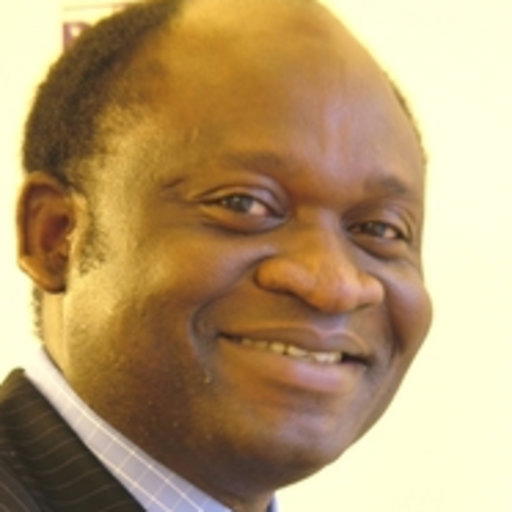
Olu Fasan
Any foreigner who visited Nigeria last week and saw the front pages of the national newspapers on May 29 would think President Tinubu had turned Nigeria into a Nirvana or a modern-day El Dorado. The presidency took front and inside-front pages to blandish Tinubu “achievements” in his two years in office.
But while the advertorial was a boon to the newspapers, they were an insult to millions of Nigerians overloaded with misery over the past two years. It was pure hagiography and propaganda. George Orwell famously said that political propaganda is “designed to give an appearance of solidity to pure wind.” Tinubu’s self-referential mid-term scorecard was an exercise in utter sophistry and self-praise.
I went through the two-page advertorial with a fine-tooth comb, looking for evidence of millions of Nigerians lifted out of poverty over the past two years; of private sector dynamism leading to hundreds of thousands of new jobs; of marked improvements in living standards; and of an abatement in the killings of Nigerians in their hundreds across the country every week. Alas, I saw no such evidence in the curated and whitewashed accounts of Tinubu’s “achievements”. The scorecard belies the realities. For instance, according to the IMF, the number of Nigerians in extreme poverty rose by 24 per cent over the past two years. Furthermore, hunger is ravaging most Nigerians, with food inflation averaging 40 per cent since May 29, 2023, when Tinubu came into office. And, of course, life is “nasty, brutish, and short”, to quote Thomas Hobbes, as insecurity continues to take ordinary lives in droves.
Okay, for balance and fairness, there are some positives: oil production rose from the low base of 1.19 million barrels per day, mbpd, in 2023 to nearly 1.5 mbpd in April this year; foreign exchange reserves surged from a nadir of $3.99bn in 2023 to $23bn in 2024 as increased crude sales and portfolio investments raked in foreign exchange; and tax revenue rose significantly from 8.8 per cent of GDP in 2023 to 13.3 per cent in 2024. These are no mean achievements. However, there is no serious country where a government is judged only by increased tax revenues and higher foreign reserves when millions of citizens are in the throes of extreme poverty, when rising cost of living and hunger dehumanise people and when terrorists, bandits, kidnappers, name it, savage and exterminate ordinary lives.
Universally, governments are judged by their abilities to improve living standards and protect lives and property. I can’t stop quoting Thomas Jefferson: “The care of human life and happiness is the only legitimate object of good government.” Or Harold Macmillan: “The central aim of domestic policy must be to tackle unemployment and poverty.” A country where tackling unemployment and poverty, where the care of human life and flourishing, is not front and centre of government policy and performance lacks a social contract.
Unfortunately, there’s no social contract in Nigeria. That’s evident from Tinubu’s mid-term scorecard, suffused with vacuous words like Tinubu “launched” this, “commissioned” that; “approved” this, “announced” that; “established” this, “signed” that – all intended to show he was active over the past two years, even though, during the same period, people’s well-being deteriorated unprecedentedly, businesses faced enormous distress that undermined their viability, and ordinary lives fell prey to the gripping fear and reality of widespread insecurity. Yet, some are pouring fulsome praise on Tinubu, hailing him as Nigeria’s “saviour” who has stemmed the country’s decline and is on the verge of turning its fortunes around! But what has Tinubu done to change Nigeria for the better and how much does he deserve kudos for it?
Let’s start with the first question. All the praise Tinubu has received internationally derives from his economic reform which, though has not benefitted ordinary Nigerians, has produced a sliver of positive results, such as the surge in Nigeria’s foreign exchange reserves, triggered largely by the forex liberalisation and high interest rates that attracted portfolio investors. In a recent editorial, the Financial Times said: “The tiny green shoots (of recovery) have come because Tinubu’s government has tackled – albeit in often haphazard fashion – debilitating structural distortions.” Those critical reforms are the fuel subsidy withdrawal; naira’s floating; and the lifting of foreign exchange restrictions on the importation of 43 items.
Tinubu himself credited his reforms for the economy’s “right trajectory” and bragged about his courage. He said: “Going by experience of the past and the need to depart from old ways, our reforms have been hard. I made tough decisions so that we could grow.” Olubunmi Tunji-Ojo, Minister of Interior, said on Channels TV that the Tinubu government was “taking decisions that should have been taken decades ago.”
Well, that’s a nice segue to the second question: how much credit should Tinubu get for his “tough decisions”? To answer that question, we must ask another first. If the “tough decisions” should have been taken decades ago and if “old ways” prevented those decisions from being taken in the past, what role did Tinubu himself play in those “old ways”?
Take the fuel subsidy. Imagine if Tinubu had supported then-President Goodluck Jonathan’s decision to remove the fuel subsidy in 2012, would he need to take the “tough decision” to remove the subsidy in 2023? Wouldn’t the acclaimed benefits of removing the fuel subsidy have accrued to Nigeria since 2012? But it was Tinubu himself who mobilised nationwide opposition against the removal of the subsidy in 2012; he even wrote an article titled “Removal of oil subsidy: President Jonathan breaks social contract with the people.” So, what “old ways” was Tinubu talking about when he embodied those old ways? And what “tough decision” is he now claiming credit for taking when he vehemently opposed that tough decision 13 years ago for political advantage? When a politician opportunistically opposed a sensible policy in opposition only to adopt the same policy in power, he’s guilty of hypocrisy!
What about Buharinomics – President Buhari’s economic policies, including currency peg, that “bankrupted” Nigeria? Tinubu himself said: “I made Buhari president”. But did Tinubu in his heart of hearts not know that Buhari would destroy Nigeria’s economy? Of course, he knew, if only from Buhari’s economically calamitous first dispensation as military head of state. But Tinubu also knew that unless he helped Buhari to become president, he would never become president himself. So, self-servingly, Tinubu was happy for Buhari to become president and destroy Nigeria for eight years, following which he too would be president and then “take tough decisions” to undo the damage inflicted by Buhari.
The foregoing brings to mind the “hero syndrome”. The term describes someone who seeks praise for trying to fix the problem he intentionally created. Truth is, the problems Tinubu claims to be tackling over the past two years arose from the decisions he opportunistically took in the past, namely: opposing and thwarting the fuel subsidy removal in 2012 and “making” Buhari president in 2015. In nations where political accountability matters, Tinubu won’t get kudos for “fixing” the problems he intentionally created!
Disclaimer
Comments expressed here do not reflect the opinions of Vanguard newspapers or any employee thereof.