By Favour Ulebor, Abuja
As the world races toward artificial intelligence (AI) integration, Nigeria has taken a bold step to ensure it does not leave its people behind.
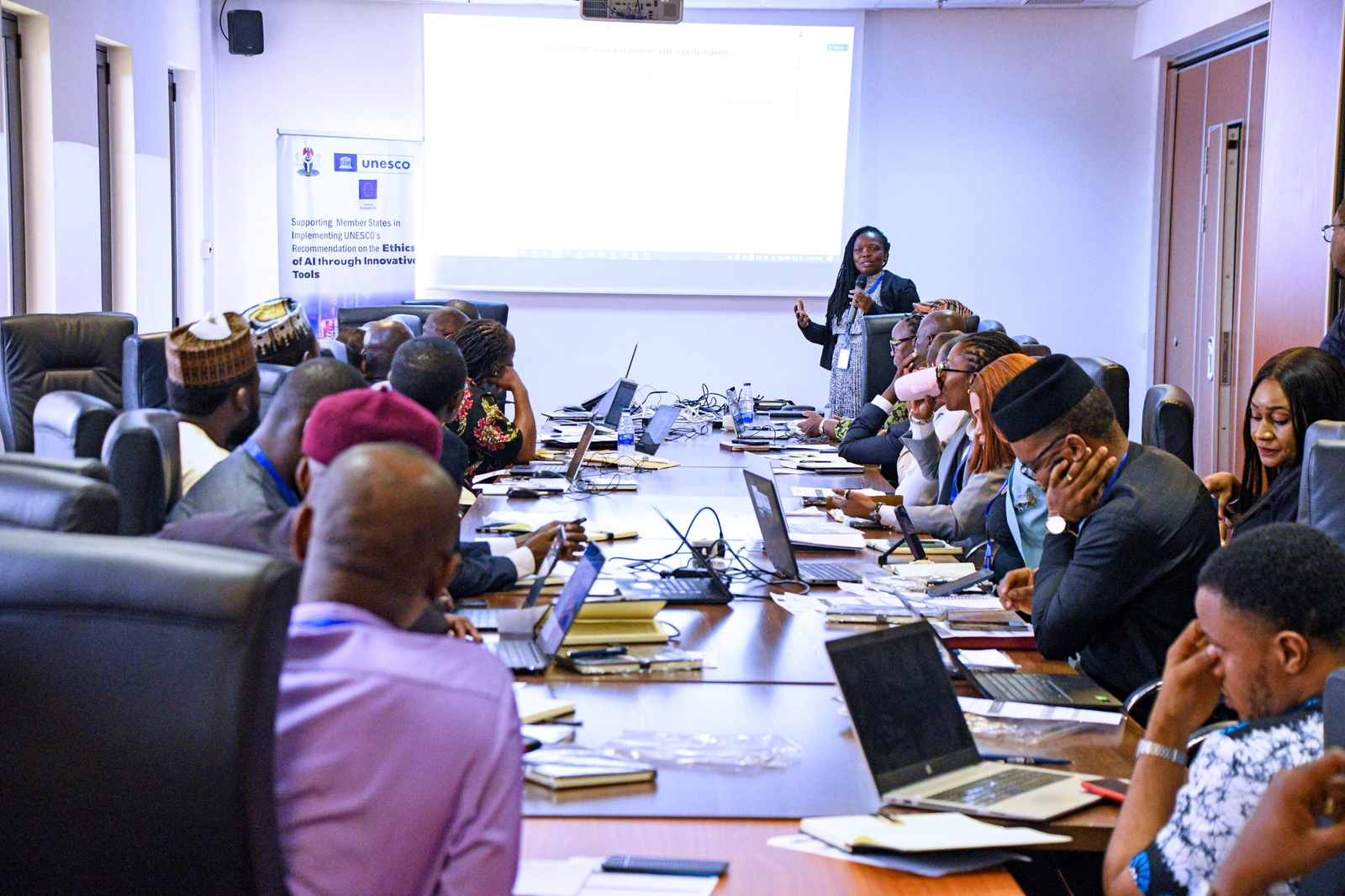
During a two-day high-level policy engagement on Nigeria’s AI Readiness Assessment in Abuja on Wednesday, held by UNESCO in collaboration with the Federal Ministry of Communications, Innovation and Digital Economy and supported by the European Union, the focus was on shaping a national vision that reflects the country’s values while preparing for a technology-driven future.
In a press statement on Wednesday signed by the Communication and Information Officer, Michael Madukwe, UNESCO said the engagement was organized by the UNESCO Abuja Office in collaboration with the Federal Ministry of Communications, Innovation and Digital Economy, and supported by the European Union.
The policy engagement brought together stakeholders from government, civil society, academia, and the private sector to review the draft Nigeria Artificial Intelligence Readiness Assessment Report (NAIRAR) and develop actionable, homegrown policy recommendations.
Speaking at the opening session, Head of the UNESCO Abuja Office, Mr. Albert Mendy, stressed the importance of aligning technology with human values.
He said,, “This engagement is not just about reviewing a report, it is about shaping a national vision for ethical and inclusive Artificial Intelligence.
“Together, we can build a digital future that reflects Nigeria’s values, strengths, and aspirations while ensuring that no one is left behind,” he said.
The AI Readiness Assessment Methodology (RAM), developed by UNESCO, serves as a diagnostic tool for countries to evaluate their preparedness to adopt AI systems in a way that is ethical, inclusive, and aligned with global standards.
Nigeria is among the first African countries to launch the RAM process, which began in July 2024.
The draft report under review highlights the country’s current strengths and gaps across five key areas: governance, infrastructure, data, inclusion, and ethics.
The final report, expected after this week’s engagement, will contribute to building a future-ready AI policy framework for Nigeria.
The initiative supports the broader goals of the UNESCO Recommendation on the Ethics of Artificial Intelligence, adopted by 193 Member States in 2021.
Disclaimer
Comments expressed here do not reflect the opinions of Vanguard newspapers or any employee thereof.