By Chioma Obinna
For over two years, young Ifeoluwa’s life has been a blur of pain, hospital visits, and a daily struggle with medication.
Her journey began at just four years old with unexplained joint pain, swelling in her feet, and fatigue. But it wasn’t until May 2024, at age six, that she was finally diagnosed with lupus.
Now, her family faces a different kind of battle: the financial and emotional toll of managing a disease that remains widely misunderstood in Nigeria.
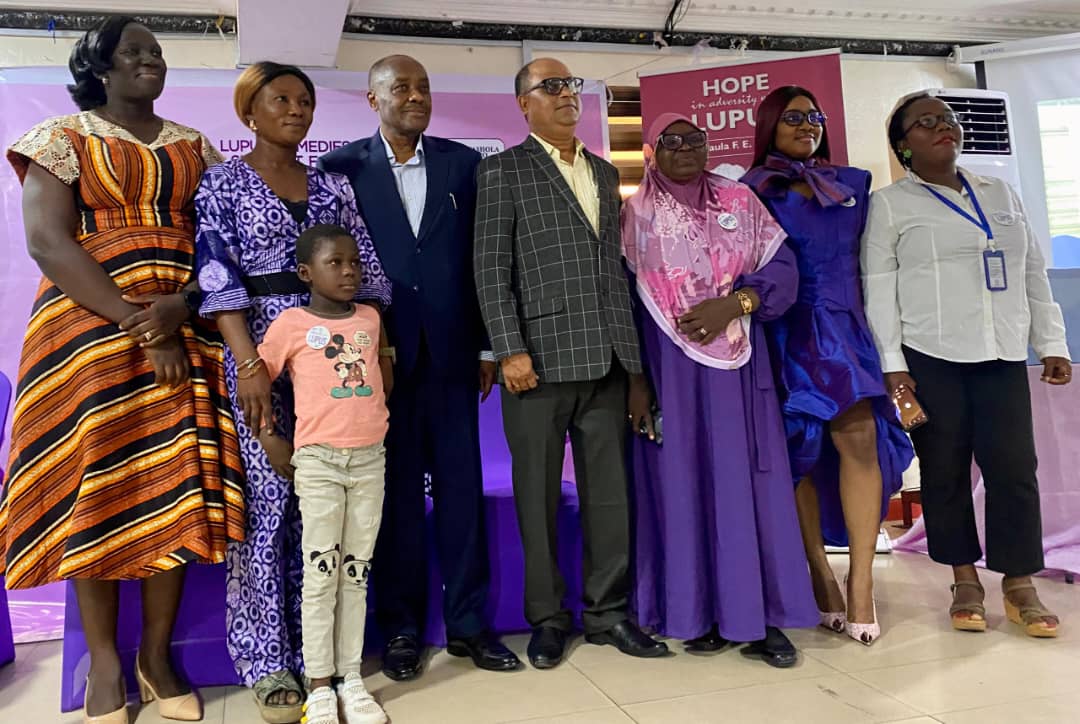
“It hasn’t been easy,” her mother, Mrs Oyindamola onifade said during a symposium organised by the Lupus Remedies Global Support Foundation (LRGSF) in Lagos.
“Sometimes we have to force her to take her medicine. She cries. She doesn’t understand why she has to suffer like this. Even as adults, we get tired.”
As Nigeria joined the rest of the world to mark the 2025 World Lupus Day, families like hers called on the government to invest in research and public awareness about the disease.
“We need a cure. We are begging the government, the health sector—this thing is not friendly. It feels like a death sentence,” she pleaded.
Lupus is an autoimmune disease in which the body’s immune system, meant to protect against infections, turns against its own organs—attacking the kidneys, heart, brain, lungs, and more. The disease has no cure, only long-term treatment plans that are both costly and difficult to sustain.
Speaking at the symposium organised by the Lupus Remedies Global Support Foundation (LRGSF), medical experts and stakeholders called on the Federal Government to prioritise lupus care and invest in awareness campaigns to combat widespread misdiagnosis, limited treatment options, and high mortality associated with the disease in Nigeria.
The experts warned that late diagnosis is often a result of ignorance both within communities and among healthcare professionals.
In the view of a rheumatologist and consultant at Lagos State University Teaching Hospital, LASUTH, Prof. Olufemi Adelowo explained that by the time many patients are finally diagnosed, they have gone from one hospital to another, one pharmacy to another, one prophet to another—thinking it’s typhoid, malaria, or even a spiritual attack.
Adelowo described lupus as “a confounding disease”, often mistaken for other tropical infections. The recurring fevers, rashes, fatigue, and swelling are dismissed until internal organs—particularly the kidneys—begin to fail.
“There are many misconceptions. People think it’s caused by food, by a curse, or by something spiritual. But lupus is none of that. It is an autoimmune disease. The immune system turns its ammunition against the body itself,” he explained.
“Lupus is not a curse. It is a medical condition. And ignorance must not be the reason we continue to lose lives.”
Also speaking, a consultant paediatric rheumatologist at LASUTH, Dr. Ayodele Faleye said the disease is particularly severe in children and often misdiagnosed.
“Children come to us with symptoms that mimic malaria or typhoid—fever, tiredness, weight loss, joint pain. Some lose their hair or develop butterfly rashes on their cheeks. Sadly, by the time we do the right tests, we sometimes lose them before results arrive,” she said.
She explained that tests for lupus are not widely available in Nigeria as most of them would be sent abroad to countries like Germany or South Africa, adding that “this delay can be fatal.”
“Children hate the repeated blood draws, the endless medication. They ask: ‘Why me? Why do I take drugs every day when my friends don’t?’ They become withdrawn. They need more therapy than adults,” Faleye added.
Speaking the Director of LRGSF and a lupus survivor herself, Fauzat Sanusi said: “Managing lupus is expensive. Nothing is easy—from testing to treatment. And with most drugs imported, even the dollar exchange rate becomes a life-or-death issue.”
Sanusi urged the government to subsidise treatment and increase local capacity for diagnosis. But beyond financial support, she stressed the need for nationwide awareness campaigns especially in rural communities and within medical schools.
“Even some doctors don’t recognize lupus until it’s too late, that has to change.”
Despite the challenges, the event’s them “Unseen Battle, Unbreakable Soul” reflected the resilience of patients and families fighting lupus in silence.
The experts further urged Nigerians to learn the symptoms, get informed, and stop dismissing unexplained illnesses as spiritual or trivial.
Disclaimer
Comments expressed here do not reflect the opinions of Vanguard newspapers or any employee thereof.