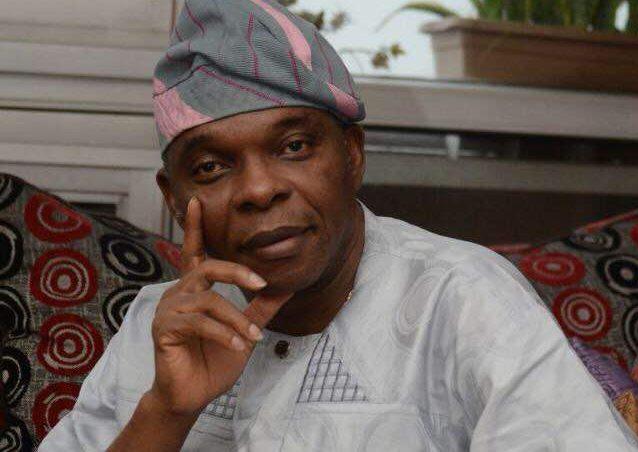
Muyiwa Adetiba
I saw a lot of C.Vs during my years of ‘Face To Face’ interviews. Some were captioned, many were not. But almost all were impressive because they were meant to be; after all, many were acclaimed achievers. One C.V struck me however because of the uniqueness of its title, and it has since stayed in my consciousness. It simply said ‘The Humble Man of Power’.
It belonged to Alhaji Babatunde Jose. Alhaji Jose was widely known in our profession and even beyond, as the doyen of Journalism in Nigeria. It was a fitting appellation. He was the Chairman/Managing Director of the Daily Times and many of the famous journalists of the time went through his tutelage. He was also at the helm when this newspaper group was at the zenith of its influence.
The Daily Times under his watch, was Africa’s largest selling newspaper and about the most successful. But his influence went beyond journalism. He was on the board of quite a few blue chip companies. He also handled many sensitive assignments for governments. He was in charge of the country’s move to Right Hand Drive in the 70s for example. He was a decisive leader who gave his celebrated journalists latitude but reined in excesses.
He was an adroit user of power who was friendly with various governments of his time but guarded the independence of his newspapers. He was a principled man who could not be compromised professionally or materially. I asked him what next was in store for him during my interview. He gave a reflective pause before saying ‘no, this is the peak. It is like being the Prime Minister of the country’. Yes, he was a humble man of power. Yet, he never forgot his humble beginnings. He also never accumulated wealth – what drove him was different. The Daily Times was rich but he was not. The Daily Times was propertied, but he was not. For all his power, he was not transactional. He never peddled influence for contracts or money. I went to visit him after he was ousted through a palace coup. His home was comfortable but simple.
What brought about this tribute to the man I always admired and wished I had a better relationship with was seeing the funeral of Pope Francis on TV last week. One might wonder at the connection because the difference between the two, on the face of it, could not have been more stark; almost black to white, like the colour of their skin. One was a strong Muslim and a prominent voice of his Islamic sect. The other, the leader of the Christian faith. But beneath the surface come similarities encapsulated in their strength of character, commitment to ideals, effective use of influence and simplicity, especially the latter.
Pope’s funeral shocked the world in its simplicity. The coffin was one of the simplest, most basic, many would ever see, even by clerical standards. It was the kind of coffin used for victims of war or of communicable diseases or the very poor in the society. In short, a coffin used for those shorn of prestige. Last week, the while world beheld the wooden coffin differently. The message of this coffin was in its simplicity; the grandeur of the coffin in its occupant. In a world ruled by consumerism and the pomp of power; in a world where people seek validation through acquisition and exhibition of wealth, the message of the simple coffin was a reminder of the essence of life.
Just as a tiger does not proclaim its tigritude, a Pope does not need to proclaim his power. Being a Pope makes him the sovereign Head of a small but rich State and the spiritual leader of a billion and a half adherents. The attainment of that position can get into people’s head and some Popes in the past had not been as saintly as one would expect while some Papal declarations had been largely self-serving. But Pope Francis decided to use his immense influence to speak truth to power while awakening the conscience of world leaders.
Many people were surprised by his decision to identify more with the poor and to live a simple, almost austere life. I was not. I was lucky to have read a biography, ‘Pope Francis: Life and Revolution ‘by Elisabetta Pique at the beginning of his papacy so I knew what to expect. I thumped through the book again after his death and found he was true to himself till the very end. His love for the poor and the marginalized, his humility, his empathy, his near total aversion for the accoutrements of priviledge started in his native Argentina and stayed the whole course of his priesthood.
According to the biography, Pope Francis had his sacrament of confession on the feast day of Saint Mathew as a seventeen year-old. He believed it was not a coincidence that he felt called on feast of the day Jesus called a tax collector. So the prerogative of mercy had been one of his themes throughout his priesthood. Just as Saint Francis of Assisi who embraced the poor and marginalized in the society had been his inspiration. It is a beautiful coincidence that he died on Easter Monday and was buried on the last day of the Divine Mercy Novena. Being a Jesuit meant he was a man of discernment, of knowledge, and it showed in his approach to doctrinal issues. But he wrapped it all in a simple cloak of humility and empathy.
I am not sure there is anybody in the world irrespective of religion, who would not want the love and respect shown the late Pope at his funeral. I am not sure our Daddy G.Os and our prosperity pastors would not want to trade places even if it meant denying themselves of diamond studded caskets for this wooden one. At the last count, Presidents and royalties were among the estimated 250,000 people that came for his funeral. That is discounting the millions, if not billions of people who watched the funeral on cable network. In short, the whole world stood still to honour a man who probably didn’t have more than a couple of shoes and a few dollars to his name. This shows that it is not about your Rolls Royces, your private jets, and your billions. It is about your impact and your place in the hearts of people.
Pope Francis held a warm place in the hearts of millions of people. By so doing and by the simplicity of a funeral which exemplified his entire life, he made the Catholic Church proud. He made Christianity proud. He made humanity proud. He also made the world hopeful.
Disclaimer
Comments expressed here do not reflect the opinions of Vanguard newspapers or any employee thereof.