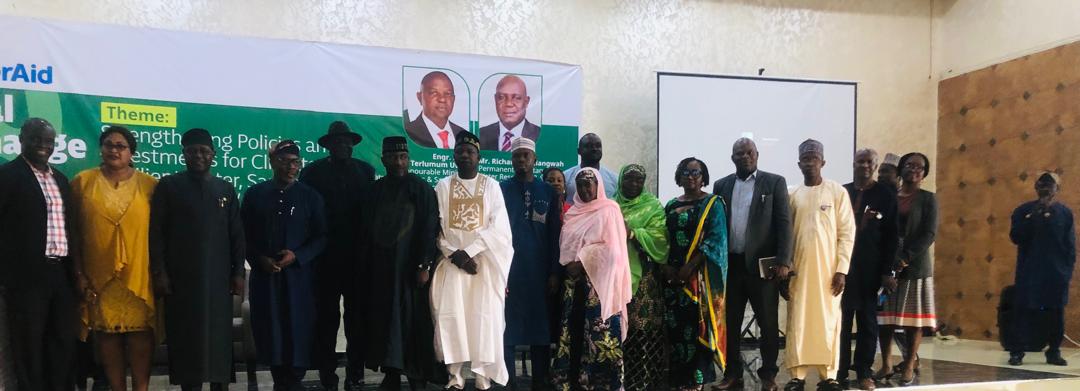
By Emmanuel Elebeke
ABUJA: At the recent National Water Quality Conference in Abuja, stakeholders emphasized the urgent need for Nigeria to bolster its water, sanitation, and hygiene (WASH) policies to combat the escalating threats posed by climate change.
Speaking at the conference, Country Director of WaterAid Nigeria, Evelyn Mere highlighted the critical nature of the conference themed, “Strengthening Policies and Investments for Climate Resilient Water and WASH Services,” and described it as apt, relevant, and urgent, as policies are the underpinning frameworks upon which the planning of any form of effective responses to climate change can be built.”
She drew attention to alarming statistics from the Water, Sanitation, and Hygiene National Outcome Routine Mapping Survey (WASHNORM).
“The statistics are stark, according to the Water, Sanitation and Hygiene National Outcome Routine Mapping Survey (WASHNORM), only 67% of Nigerians have access to basic water supply services, which leaves up to 44 million people without basic access. Access to basic sanitation remains even lower at 46%.”
Mere stressed the importance of building resilience within WASH infrastructure.
“We must remember that climate resilience in WASH is not just about building stronger infrastructure. It is about ensuring that services anticipate, respond to, cope with, recover from, and adapt to climate-related events, while ensuring universal and equitable access for all, including the most vulnerable, even in the face of uncertainty.”
She also outlined the conference’s objectives.
“We also hope to develop a concrete framework for inter-agency and multi-sectoral collaboration to effectively institutionalise WASH into climate change adaptation and mitigation plans, strategies and programmes.”
Permanent Secretary of the Federal Ministry of Water Resources and Sanitation, Richard Pheelangwa
echoed these sentiments, emphasizing the conference’s strategic focus.
He said, “The theme was carefully chosen to tackle policy and investment gaps hindering climate-resilient WASH services. Many communities still face waterborne diseases, poor sanitation, and hygiene issues.”
He highlighted the collaborative nature of the event, saying, “This conference is a platform to share knowledge, explore solutions, and collaborate with experts, policymakers, and advocates committed to sustainable WASH improvements.”
Pheelangwa further underscored the necessity of robust policies to attract investment.
“Strong policies are vital to attracting investments for climate-resilient WASH services. We must review existing frameworks, identify gaps, and strengthen them to support national development.”
The conference brought together a diverse group of stakeholders, including government officials, development partners, and civil society organizations, all committed to enhancing Nigeria’s WASH sector in the face of climate change.
Disclaimer
Comments expressed here do not reflect the opinions of Vanguard newspapers or any employee thereof.