By Adesina Wahab
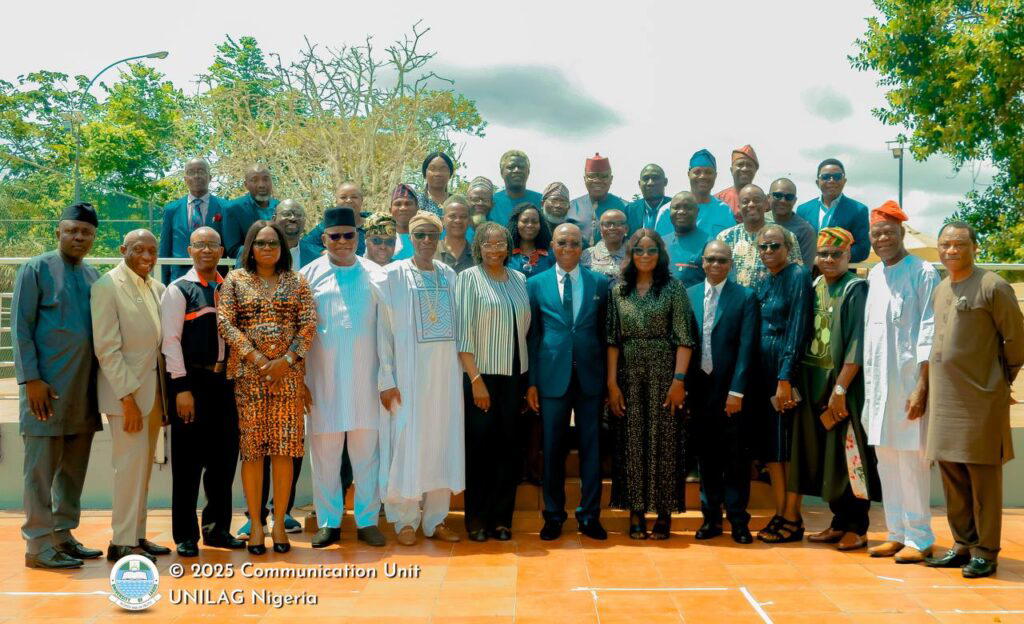
The Governing Council of the University of Lagos, UNILAG, has held a retreat with the management of the institution during which recommendations and action points to move it to the next level were arrived at.
The retreat, which held in Epe, Lagos State, was led by the Chairman of the Council, Chief Wole Olanipekun, SAN. In attendance were council members and the management team led by the Vice Chancellor, Prof. Folasade Ogunsola.
In a statement by the Registrar, Mrs. V. Abosede Wickliffe, who is also the Secretary to Council, the retreat, themed “UNILAG Beyond Today: Unlocking Value, Optimizing Assets & Location, and Shaping the Future”, was chaired by Chief Olanipekun.
“The retreat aimed to: Unlock the university’s full potential by identifying untapped value across academic, financial, and infrastructural assets. Optimize the utilization of the University’s resources, including land, real estate, intellectual capital, and partnerships.
Explore innovative funding models to enhance the University’s financial sustainability beyond traditional government allocations.
“Advance the University’s digital transformation in line with global trends in Artificial Intelligence (AI) and higher education technology. Strengthen governance, transparency, and procurement processes to improve institutional efficiency. Develop an actionable roadmap to achieve strategic growth, academic excellence, and global competitiveness.”
Prof. Folasade T. Ogunsola presented an overview of UNILAG’s current status, highlighting strengths and challenges. She also spoke on rankings, research excellence, experiential learning, programme accreditations, admissions, open distance learning, and global partnerships.
The keynote speaker, HRM Oba Prof. Akin Owosekun, Owosekun II, Asotun of Isotun, Ijesaland, and renowned Higher Education Consultant, in his presentation titled: “UNILAG Beyond Today,” recommended that the university pursue financial growth through property development, applied research and development via reverse engineering, and the exploration of solid mineral resources.
The retreat made the following key observations: While UNILAG remains a leader in Nigerian higher education, sustained innovation and revenue diversification are essential for future success. There is a need to unlock the untapped potential of UNILAG’s strategic location in the Lagos metropolis and its lagoon waterfront.
The University’s waterfront holds immense opportunities within the Blue Economy and ecotourism sectors. Achieving financial independence is crucial for the University’s development and operational efficiency.
University funding models have evolved significantly, and there is a direct correlation between funding strategies and educational quality.
A future-ready UNILAG must explore alternative and sustainable funding models.
There is an apparent mis-classification of universities under Ministries, Departments, and Agencies (MDAs), which requires urgent correction. Access to research grants and donations within the Treasury Single Account (TSA) framework remains restricted and should be reviewed.
Private sector involvement is critical to enhancing the quality of higher education through funding, expertise, and technology.
Quality leadership and good governance are essential for sustainable university administration. The University should leverage its Lagos location to attract partnerships, industry linkages, and strategic investments.
UNILAG must optimize its real estate assets through a coordinated and entrepreneurial approach.
There is an urgent need to embrace digital learning and integrate AI into academic and administrative processes.
Human capital development must align with global trends through targeted training and capacity-building initiatives.
The following recommendations were made: Rethinking Funding Models for Nigerian Universities. Grant universities full autonomy in academic, administrative, and financial matters.
Diversify revenue sources through Public-Private Partnerships (PPPs), alumni contributions, and other innovative strategies. Maximize the value of endowment funds to support research and infrastructure. Continuously enhance financial accountability and operational cost-efficiency.
Disclaimer
Comments expressed here do not reflect the opinions of Vanguard newspapers or any employee thereof.