…as Experts Call for Stronger Workplace Policies
By Favour Ulebor
ABUJA—Stakeholders have demanded urgent legal reform and the enforcement of stricter workplace policies to address the rising cases of sexual harassment across Nigeria.
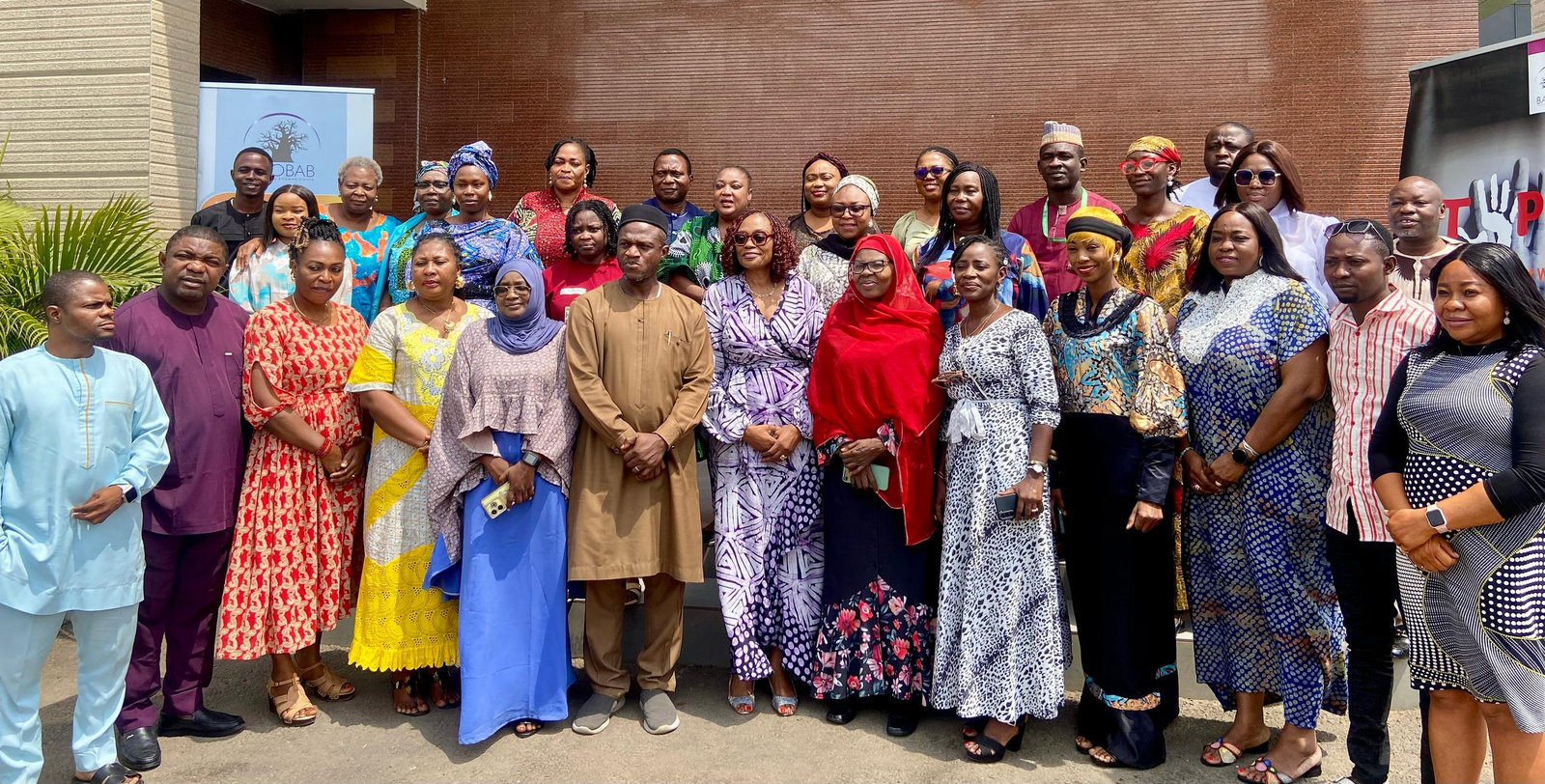
This position was reached at a one-day roundtable organized by BAOBAB for Women’s Human Rights, with support from the African Women’s Development Fund.
The event, themed “Creating Safe and Supportive Workplace Environments for Women and Girls,” was held in Abuja and brought together government officials, civil society actors, academics, and the media.
In her remarks, the Executive Director of BAOBAB, Bunmi Dipo-Salami, said the time has come for Nigerians to stop reacting emotionally to sexual harassment allegations and begin asking critical questions about the legal frameworks in place.
She stressed that although Nigeria has ratified several international treaties, including the ILO Convention and Maputo Protocol, they remain ineffective due to lack of domestication.
She said “We’ve not been hearing that this is beyond Senator Natasha. The question should be: what laws are in place? What mechanisms exist within the National Assembly to address sexual harassment?
“We cannot use them if they are not domesticated. These instruments remain on the shelves, while citizens suffer abuse in workplaces—whether in schools, offices, homes, or informal sectors,” she added.
Joining the conversation, Programmes Manager, Gender Mobile Initiative, Maryam Mukhtar, acknowledged that her organisation has continued to complement the government’s efforts in tackling sexual harassment.
However, she lamented that Nigeria is still far behind globally.
“For me, it is sad that at this point, we’re still having this conversation and struggling to put these things in place. There are countries that have gone way past this. They are even training Artificial Intelligence to detect threats before they happen, and we’re here begging legislators to pay attention to these things.
“There is no need for conversations to ‘prove’ that it happened—we know that it happened. They are just in denial.” She said.
Also speaking, Gender Activist and Consultant at BAOBAB, Ene Ede, pointed out that repeated incidents of harassment—particularly within the National Assembly—signify a breakdown of national ethics and values.
She said, “In the National Assembly as a pillar of democracy, they will make sexist jokes, and they don’t see anything wrong with it. There is no decorum. It shows that the value system is being depleted.
“If you look at Section 24 of our constitution, the national values are stated clearly. This is not even about patriotism now. These ethics have been thrown away. It is very unethical, even by professional and cultural standards.”
Ede emphasized that while legal frameworks are essential, they are powerless without proper conduct.
“Sex can be a good thing—but only when done appropriately, without bullying, coercion, or enticement,” she added.
Programme Director at BAOBAB, Anne Lawal, noted that unsafe workplaces not only endanger women but also threaten national economic growth.
She stressed that women make up 49.4% of Nigeria’s population, and exclusion from safe workspaces cuts off a large portion of the nation’s productive force.
The roundtable concluded with recommendations such as the amendment of existing laws, creation of robust reporting mechanisms, institutional accountability, installation of CCTV in high-risk workplaces, and increased public awareness.
Stakeholders pledged to continue pushing for reforms that would create safe, supportive workspaces for all Nigerians.
Disclaimer
Comments expressed here do not reflect the opinions of Vanguard newspapers or any employee thereof.