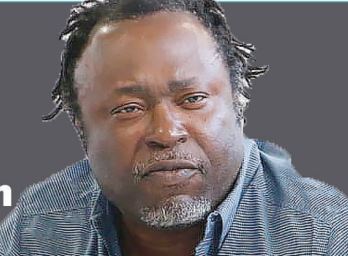
Obi Nwakanma
My youth was impacted by the years when Ibrahim Badamasi Babangida was at the helm of affairs in Nigeria. I was admitted to the university the very year he led a counter-coup against the fumbling administration of the other coup plotter, Muhammadu Buhari. Both men had disrupted what I still think of as a happy childhood, which for my generation ended on December 31, 1983. I had failed to enter the University of Nigeria Law School at Enugu that year, in spite of what everybody thought was an extremely high score at JAMB.
Let us just say my score would have very easily admitted me to then the University of Ife, which I had chosen as my second choice of university in the 1983 Joint Admissions and Matriculation Board exam. But the University of Nigeria Law program was always, in those years, sanguine about admissions to its Law and Medical Schools. They were very easily the most difficult programs to apply for in any Nigerian university, and they were extremely selective.
All the bright boys from the best schools in the East of Nigeria competed for the very limited places at Nsukka. So, competition was bruising. Worried about my prospects, my father, one day, came back from his office clutching a set of application forms for HSC, one for King’s College, Lagos, and the other for the Government College Umuahia. I refused to submit those applications. I wanted the Federal School of Arts and Science at Victoria Island, Lagos, or the one at Aba, where many of my friends who did not scale the Uni Matric that year were headed. I had heard lovely things about those places. It was more my style.
I did not want to return to Umuahia, where I had quite literally escaped censure just by whiskers, under the redoubtable James E. Nworgu as principal, who had told my scandalized father that if care was not taken, I might end up a “Highway man.” I confess I was restless and a little bored with school. But Mr. Nworgu was exaggerating. My father took it far more seriously than he should. I never heard the last of it for as long as he lived. Then also, I did not want to go to King’s. In short, I did not want to return to an all-boys boarding school. I wanted a bit of feminine grace in my life. If for nothing, to shave off the crude edges of my socialization in an all-boys boarding school.
Those were my chief worries in that period: girls. The future seemed otherwise assured. We were, after all, being groomed, from what everybody was telling us, as the “leaders of tomorrow” in Nigeria. There were, of course, signs that Nigeria was in trouble. Still, it was not trouble that could not be managed or overcome. Nigerians still felt confident about their nation. President Shagari had just been elected to his second term and inaugurated that October. It was a very contested electoral result. The elections had been heavily rigged. Leading to that 1983 election was the issue of the declining economy of Nigeria. Oil receipts were in jeopardy because of the “oil glut” that began in 1980. From 1981, the slump in the global economy had hit the Shagari government very hard.
The government had introduced the “Austerity measures” which had cut financial expenditures, and public access to imported goods, and the economy had spiraled into deep recession. Yes, the four years of the Second Republic had been complicated by incredible corruption, fraud, an elite plundering of the state, for which the now late Onyeka Onwenu made a very poignant and apt documentary: “Nigeria, a Squandering of Riches.” Even so, as William Graf wrote, in the aftermath of the military coup of 31 December, 1983, which overthrew the second republic: “the second Shagari regime had… begun to take more consistent measures to deal with the economic crisis and indeed had submitted a potent budget to the National Assembly only a few days before the coup…” Shagari, basically, had rejected the overtures of the IMF, and was mustering against the corruption and waste that characterized his first term. He had assembled a very serious team for his second term. But at the threshold of that new year, Muhammadu Buhari and Ibrahim Babangida led a coup d’etat which ousted the democratically elected and constitutionally established government of Nigeria. That, in the first place, is treason and should have no statute of limitation.
It is needless at this point to do an exhaustive analysis of the Buhari tenure as military tyrant from January 1, 1984 to August 1985, which had been parlayed into a myth, much after the fact, and which a Nigerian population, poorly conditioned, prone to the outcomes and shenanigans of an agglutinated elite, and prone to memory loss, and a distinct tendency to suffer the Stockholm syndrome, swallowed, leading to the re-election of Buhari as a civilian president of Nigeria years later. Those who sold the man years later to Nigerians packaged a lie and marketed a grand larceny, which made Buhari out to be this incorruptible, patriotic, disciplined ex-General of a disciplined Nigerian Armed Forces. They covered up the dumb General who could not pass his exams and who was the product of a very corrupt system of preferment that had basically hobbled the Nigerian state. But three critical things need to be noted about Buhari’s military regime: first, he humiliated and dehumanized Nigerians.
I still feel this sense of outrage, and I am triggered every time the image of soldiers whipping Nigerians on the streets to fall in line crosses my mind.
Buhari introduced this sense of brutality and disrespect for the Nigerian by armed personnel under the guise of the so-called War Against Indiscipline. What I remember of that period was of heavily armed soldiers manning roadblocks and sternly demanding “roger,” or forcing people down to be humiliated under one guise or the other. Civil servants – including very senior bureaucrats – were locked out of their offices, whipped, and forced to sit on the floor by subalterns for “indiscipline.” Secondly, that regime destroyed the idea of the Nigerian military as a force of national unity, because it introduced and enforced a particularist, regional interest – the deep nepotism which Buhari once again replayed as a Civilian president, years later. Third, it was a very corrupt regime. A kakistocracy. And let us be clear: Ibrahim Badamasi Babangida was a key part of that regime and was always part of its brutality and infamy. He was Buhari’s Chief of Army Staff. Under that powerful arrangement, Buhari and Idiagbon ran the administrative state, while Babangida held the troops. In the culmination of the internal rift inside that military regime, Babangida moved and overthrew Buhari in August 1985.
I remember that day clearly: I was holidaying at Idah and getting ready to return to the University of Jos. I did begin this column by suggesting that Babangida, the gap-toothed General and former Head of State of Nigeria, was the semaphore of my youth in Nigeria. As undergraduates in the Nigerian universities in the 1980s, we were victims of his policies. Under Babangida, the quality of life of Nigerians was radically degraded. I have told this story a few times about returning one holiday in 1986 from the university and was sitting at breakfast with my father. The bread was still supplied fresh and warm from the Ovuike bakeries. What was missing was jam, and I asked for it. I was nearly kicked out of the dining table by my enraged father for being stupid, insensitive, and thoughtless under the circumstance. I was asking for jam. Was I so blind to the situation in the country? I was actually not.
The universities were the battlegrounds for what was happening to Nigeria under Ibrahim Babangida: the first was the Ango-Must-Go riots which started with the killing of students by armed soldiers at ABU, Zaria in 1986, following the protests against Babangida’s surreptitious agreements with the IMF which a vast number of Nigerians had rejected. In 1988 was the riots were from the anger against the withdrawal of petrol subsidy. Then the anti-SAP riots of 1989. Then, the execution of Mamman Vasta. The killing of my friend and classmate Billy Giwa’s dad, the journalist Dele Giwa, brought the brutality too close for comfort. Then, the 1990 Orkar coup and its blood offerings.
On and on and on, the social, economic, and political engineering of the Babangida years, marked by deceit, extreme corruption, waste, and perfidy such as Nigerians had never experienced before. Those were the years of “settlement”: the policy of bribery-or-death. Those were the years that laid the foundation for the final waste of Nigeria.
It culminated in the mess called the June 12, 1993 election, and Babangida’s confused and utterly undignified “stepping aside.” Babangida has lived under the sad penumbra of that event since 1993. Ibrahim Badamasi Babangida’s stepping out from the shadows, in the twilight of the General, this past week, with the showering of billions on him, at the launch of his memoir at Abuja by the jackals and the oligarchs he created, is nothing short of an attempt to embezzle history. It would be quite amusing if it were not so tragic.
Disclaimer
Comments expressed here do not reflect the opinions of Vanguard newspapers or any employee thereof.