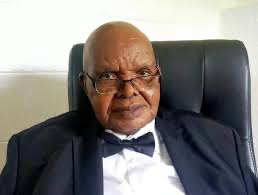
The late Professor Bethwell Allan Ogot remains one of Africa’s foremost historians, whose pioneering scholarship significantly reshaped the study of African history. Ogot, a champion of nationalist historiography, was instrumental in shifting historical narratives from Eurocentric perspectives to African-centered interpretations, emphasizing the role of oral traditions and indigenous knowledge in reconstructing Africa’s past.
At a recent memorial lecture titled Bethwell Ogot: Historian and Service to Africa, held as part of The Toyin Falola Interviews series, eminent historians and scholars paid tribute to Ogot’s immense contributions to academia. The event, which was livestreamed across multiple platforms, featured reflections from distinguished intellectuals such as Professor Toyin Falola, Professor Mary Nyangweso of East Carolina University, Professor Maurice Nyamanga Amutabi of the Technical University of Kenya, Professor Eunice Kamaara, Director of The African Character Initiation Program, and Professor Fred Muyia Nafukho, Vice Provost for Academic Personnel at the University of Washington, Seattle.
During his keynote address, Professor Falola underscored Ogot’s enduring impact on African historiography. “He was a leading force in the Africanization of history, ensuring that our stories were told on our own terms,” Falola remarked. “His scholarly contributions went beyond documenting history; he actively participated in the decolonization of African knowledge production.”
Ogot’s extensive research delved into diverse historical themes, from Kenya’s precolonial and colonial past to nationalist movements and postcolonial development. His work with UNESCO’s General History of Africa project marked a significant turning point in African historiography, advocating for the inclusion of indigenous sources and oral traditions as valid historical records. His influence as a historian extended beyond Kenya, shaping historical discourse across the continent.
Professor Maurice Amutabi described Ogot as an “academic Moses” who paved the way for generations of African scholars. “He was a visionary who reconstructed African history, proving that our past was rich, dynamic, and worthy of academic study. His mentorship was unparalleled; he nurtured numerous historians who have continued his legacy,” Amutabi stated.
Ogot’s role as a mentor was also highlighted by Professor Nyangweso, who reflected on his guidance and encouragement. “His impact on Kenyan and African scholars is immeasurable. He shaped minds, opened doors, and provided the intellectual foundation for many of us in the field,” she said. “His autobiography, My Footprints in the Sands of Time, serves as a powerful call for future scholars to continue building on his work.”
Professor Fred Muyia Nafukho praised Ogot’s interdisciplinary approach to scholarship, noting that his academic journey included studies in mathematics, philosophy, and history. “Long before the importance of interdisciplinary research was widely recognized, Professor Ogot embraced it. He believed that history could not be studied in isolation but must be examined through multiple lenses to address the complexities of African societies,” Nafukho stated.
His ability to weave historical narratives with economic, political, and social insights made his work influential in policy discussions on African development. As the founder of the Historical Association of Kenya, Ogot played a crucial role in institutionalizing African history studies, ensuring that young scholars had platforms to engage in historical inquiry from an African perspective.
Professor Eunice Kamaara reminisced about meeting Ogot at a Historical Association of Kenya conference in the early 1990s. “He had a remarkable way of nurturing young scholars. When I presented my first academic paper, I braced myself for harsh criticism, but instead, he offered words of affirmation. That moment defined my academic journey,” Kamaara shared.
Beyond his academic contributions, Ogot’s work influenced national and continental policy discussions. He was deeply involved in efforts to document African resistance movements, particularly the Mau Mau uprising, and his scholarship has shaped the way Kenya and the broader African community understand their histories.
Professor Nyangweso aptly summarized Ogot’s legacy: “He illuminated Africa’s past in ways that challenged long-standing misrepresentations. His research brought to light the complexity and richness of our history, and for that, we are forever grateful.”
As scholars continue to engage with his work, Ogot’s legacy remains firmly entrenched in African historiography. His influence stretches far beyond his written works, living on in the generations of historians he mentored and in the ongoing efforts to decolonize African historical studies.
The Toyin Falola Interviews has once again provided a platform for celebrating Africa’s intellectual giants, ensuring that the contributions of scholars like Bethwell Ogot continue to inspire and guide future generations.
Disclaimer
Comments expressed here do not reflect the opinions of Vanguard newspapers or any employee thereof.