By Ayobami Okerinde
Illegal, unreported, and unregulated (IUU) fishing continues to pose a significant threat to maritime security and marine ecosystems in West Africa, particularly in the Gulf of Guinea, one of the world’s most affected regions. The practice not only damages ocean biodiversity but also disrupts global supply chains, jeopardizes food security, and undermines local economies.
West Africa’s vulnerability to IUU fishing is driven by a combination of economic, political, and environmental challenges. As global fish stocks decline and fishing fleets grow, many vessels move into remote waters where regulation enforcement is minimal or non-existent. With growing global demand for seafood, some operators resort to illegal practices to cut costs, putting legal fishermen at a severe disadvantage.
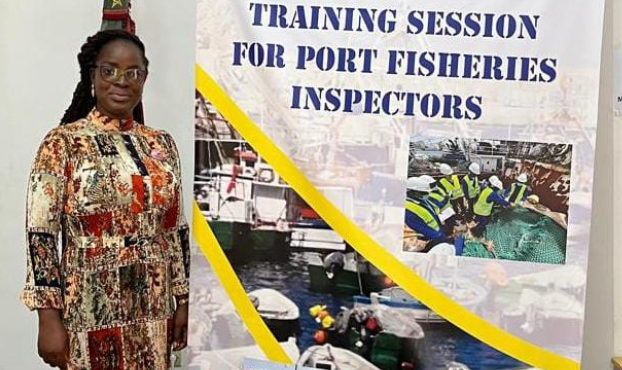
In response, various regional and national efforts are underway to address the growing issue. Ruth Funmilola Hungevu, Nigeria’s Principal Fisheries Officer and team lead of the Lagos Vessel Monitoring Center, is playing a key role in coordinating initiatives aimed at protecting both the environment and the livelihoods of local fishermen.
The consequences of IUU fishing in West Africa are far-reaching. The practice accelerates the depletion of fish stocks, which threatens marine biodiversity and deepens the risk of overfishing. Economically, IUU fishing costs West African countries millions of dollars annually in lost revenue. It also threatens food security in local fishing communities, whose livelihoods depend on sustainable fishing practices. Furthermore, IUU fishing often results in environmental damage, including habitat destruction and the wasteful discarding of marine life.
To combat IUU fishing, several initiatives have been launched. The Fisheries Committee for the Eastern Central Atlantic (CECAF) and the West Africa Task Force are working towards sustainable fisheries management across the region. These groups are also focused on preventing the trade of illegally caught fish. National governments have introduced stricter legislation to tackle IUU fishing and ensure violators are held accountable. Meanwhile, international cooperation remains crucial in tackling the issue globally. Strengthened monitoring, control, and surveillance (MCS) systems are also being implemented to better detect and prevent illegal activities at sea.
Despite these efforts, several challenges persist. Many West African countries struggle with limited resources for enforcement, and corruption within both local and regional governments hampers progress. Greater international collaboration and information-sharing are needed to address the global scale of IUU fishing. Additionally, supporting sustainable small-scale fisheries will help mitigate the economic vulnerability of local communities affected by illegal fishing practices.
While the fight against IUU fishing in West Africa is far from over, efforts are beginning to yield results, and regional cooperation is paving the way for long-term solutions to protect the region’s vital marine resources.
Disclaimer
Comments expressed here do not reflect the opinions of Vanguard newspapers or any employee thereof.