
By Esther Onyegbula
Agriculture remains a cornerstone of Nigeria’s economy, employing millions and contributing significantly to the country’s GDP. According to PwC’s report on the Current State of Nigeria Agriculture and Agribusiness Sector, Africa’s food import bill stood at about $35 billion in 2016 and is projected to rise to $110 billion by 2025. Furthermore, Africa’s agribusiness sector is expected to reach $1 trillion by 2025, driven by the continent’s rapidly growing middle class. Yet, the sector faces mounting challenges—from unpredictable weather patterns to inefficient resource use and low crop yields. These issues threaten the livelihoods of smallholder and commercial farmers alike.
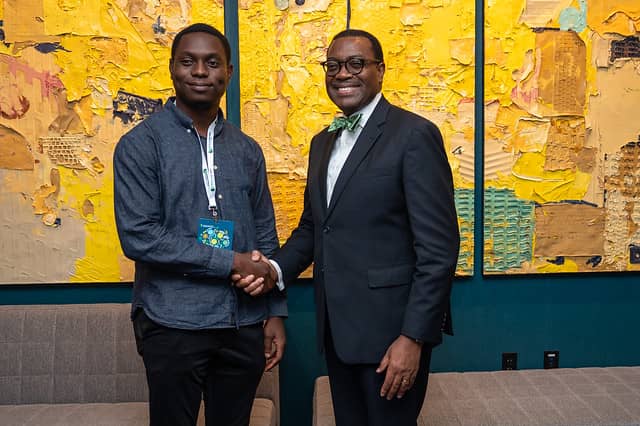
Amid these challenges, Timilehin Ayanlade, a Nigerian AI expert at Iowa State University, is developing multimodal AI models and data-driven approaches to address fundamental problems in agriculture, such as yield prediction, resource optimization, and crop disease detection. His innovative methods offer a sustainable path forward for Nigeria’s agricultural sector.
UNDERSTANDING CYBER-AGRICULTURE
Cyber-agricultural systems (CAS) offer innovative solutions to the continent’s pressing food security challenges. These systems integrate advanced technologies, such as AI, data analytics, and digital tools, into farming. CAS works by gathering data from farms—such as soil quality, weather patterns, and crop health—and analyzing it to provide actionable insights that help farmers make informed decisions. For instance, a cyber-agricultural system could send a smallholder farmer in Oyo State a text message advising on the best time to water their crops or warning them about an impending pest outbreak.
According to Ayanlade, cyber-agriculture provides transformative solutions to the challenges millions of Nigerian farmers face annually. “Farmers constantly grapple with uncertainties: Will the rain come on time? Will pests ruin their crops before harvest? Will their produce be enough to sustain their families? Despite their hard work, they remain vulnerable to forces beyond their control. But what if technology could change that?” he asks.
This innovative, data-driven approach to farming delivers precise recommendations for critical decisions, such as the optimal amount of water or fertilizer required and the best times for planting and harvesting. The result is a system that enhances farming efficiency, minimizes waste, and boosts yields, ultimately making agriculture more productive and sustainable. “It’s a game-changer,” Ayanlade emphasizes, “bringing predictability and resilience to a sector long defined by uncertainty.”
Timilehin Ayanlade continues to be at the forefront of this technological revolution, representing Nigeria on global platforms such as the 2023 World Food Prize’s African Agriculture Dialogue, where he champions the potential of AI to transform farming practices in Africa. His extensive work with agro-processing firms and as a research engineer at Fifth-Echelon Integrated Limited solidifies his reputation as a leading advocate for modernizing agriculture through technology.
BENEFITS FOR NIGERIAN FARMERS
Ayanlade is also advocating for the adoption of cyber-agriculture within Nigeria’s Special Agro-Industrial Processing Zones (SAPZs), an initiative led by the African Development Bank to boost agricultural value chains. SAPZs aim to transform agriculture into a profitable and sustainable business by creating hubs for production, processing, and value addition.
Through AI-driven solutions, cyber-agricultural systems (CAS) can achieve three key functions within SAPZs:
- Streamlining Operations: Automation and data integration improve coordination across the entire value chain, from production to processing and distribution.
- Empowering Smallholder Farmers (SHFs): Affordable and accessible AI tools enable smallholders to participate in SAPZs, increasing inclusivity and profitability.
- Enhancing Decision-Making: Data collected from farming activities within SAPZs can inform policies and operational strategies, ensuring the zones remain effective and adaptive.
For Nigeria, where farming is still largely traditional, CAS benefits farmers by bridging the gap between subsistence agriculture and modern, efficient practices. The ability to monitor farm conditions—such as detecting early signs of water stress, pest infestations, or nutrient deficiencies—can mean the difference between a good harvest and a failed one.
Beyond individual farms, Ayanlade emphasizes the role of cyber-agriculture in fostering inclusivity. By making affordable and scalable AI tools accessible, smallholder farmers—who comprise more than 80% of Nigeria’s farming population and account for 90% of the country’s agricultural produce—can fully participate in SAPZ value chains. This approach not only increases profitability for farmers but also contributes to national food security and economic growth.
THE WAY FORWARD
While the benefits of cyber-agriculture are clear, its adoption requires collaboration among the government, private sector, and farming communities. Investments in infrastructure, digital literacy, and affordable technologies will be crucial to ensuring these tools are accessible to farmers across the country.
Timilehin Ayanlade’s vision for Nigerian agriculture is both ambitious and achievable. He envisions a future where AI and intelligent systems not only address food security challenges but also create a resilient agricultural sector capable of sustaining future generations. “Agriculture is the backbone of our economy,” Ayanlade says. “With the right tools and technologies, we can build a farming system that supports our farmers, protects our environment, and drives economic growth.”
As Nigeria continues its journey toward agricultural modernization, integrating cyber-agriculture represents a critical step forward in achieving food security, economic diversification, and sustainable development. By leveraging the expertise of innovators like Timilehin Ayanlade, Africa can connect its agricultural institutions with leading global research centers, driving innovation, improving efficiency, and creating sustainable solutions that position the continent as a leader in the world’s agricultural transformation.
Disclaimer
Comments expressed here do not reflect the opinions of Vanguard newspapers or any employee thereof.