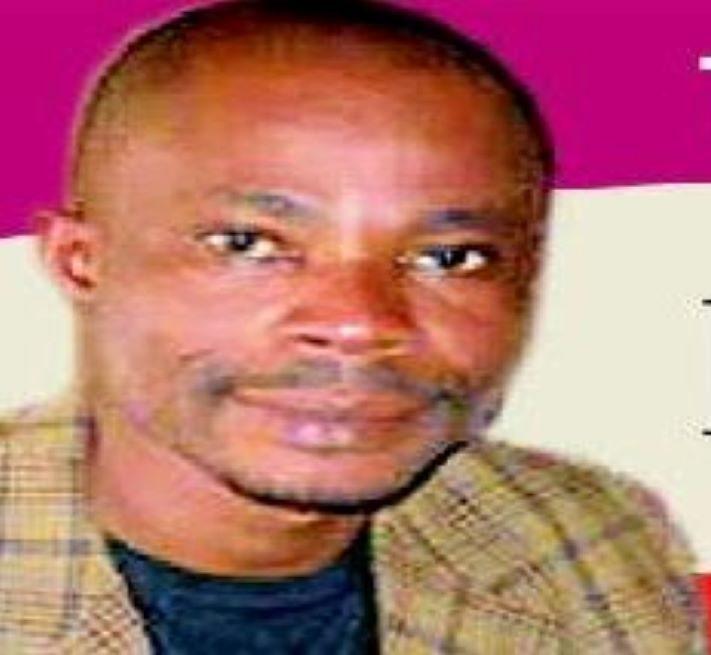
LESS than 24 hours to the planned protest against the arrest and detention of activist and Labour Party stalwart, Dele Farotimi, the authorities responsible for his detention took the wind out of the sails of the disaffected community of his supporters comprising human rights activists, professional agitators and opposition politicians, home and abroad. They arraigned him in a court in Ado-Ekiti.
He was due to appear in court yesterday, the same day that had been set aside for the protest. His arraignment must have been a short proceeding and at the end of it, Farotimi was granted bail on terms many of those sympathetic to his cause consider far from liberal. He is to provide a surety with landed property and N50 million. This, in addition to being cuffed to the court house and paraded, in the estimation of his admirers, like a common criminal, riled his supporters to no end. How could that be, they wondered, if the likes of Yahaya Bello that is alleged to have misappropriated billions of naira could stroll with majestic ease into the court after many weeks of playing hide and seek with operatives of the Economic and Financial Crimes Commission?
Farotimi had been charged to court on allegations of criminal defamation and cyber stalking of one of the power houses of Nigeria’s legal system, revered lawyer, Chief Afe Babalola. A Senior Advocate of Nigeria and entrepreneur, Chief Babalola has in recent years stepped back from the active practice of law to devote time to the Afe Babalola University, Ado-Ekiti, ABUAD, that he established and named after himself in his natal home. ABUAD is carving a niche for itself as one of the leading universities, public or private, in Nigeria today. While legal practice might have given Chief Babalola fame, that fame has been cemented by the legacy of quality education that he has been providing the children of Nigerians rich enough to afford the relatively high fees of ABUAD in the last one and a half decades.
The honour of running such a fast-growing university together with a stellar legal career that has spanned six decades was what was put at stake and ruthlessly savaged by the yet-to-be-substantiated claims of Farotimi in his book, Nigeria and Its Criminal Justice System. The self-published book made its way into the market in virtual silence in July. Now, the sensation of its controversial claims has taken it straight up to the bestseller list in a matter of days. Farotimi accused Chief Babalola of criminal perversion of justice. In a manner that has become his trademark from his many appearances in the media, especially his numerous interviews since he made that risky transition from an activist to a spokesperson of a political party (I suspect he won’t agree he is a politician), he absolutely flung mud in every direction, sparing nothing and nobody.
From the lowest rung of the judicial ladder, through the magistrate, high court, and the appellate courts to the grandfather of them all, the Supreme Court, he left nothing standing. All of them stood accused, were found guilty and fell under Farotimi’s withering pronouncements that took on the quality of a decree. All of this followed a ten-year-old legal dispute over a landed property between two families and the Lagos State government. Both Afe Babalola and Dele Farotimi were counsels on different sides of the dispute.
Babalola who came into the fray after his clients had lost at the lower courts, triumphed at the Supreme Court. This was where matters took a bizarre turn. Contrary to the reaction of our learned compatriots in such circumstances, Farotimi felt that his loss at this stage was at the instance of Babalola who he accused of procuring favourable judgement, thereby denying him justice. His were not general remarks, randomly aimed at nameless groups. No, they were remarks directed at specific individuals and groups with names and verifiable dates and days they committed the alleged infractions.
These are very weighty claims to make about any man, more so a man who has become a near-oracle in a profession that sets so much store by hierarchy, rectitude and respect of superiors. It lays bare the reputation he has built over six decades of courtroom jostling. They would still have been earth-shaking claims had Farotimi made them with a store house of evidence and authoritative commentaries from the weekly series of the Nigerian Law Report among other legal literatures from Nigeria and elsewhere. But in this instance and so far, his allegations which he obviously meant to be taken as truth claims have been backed with nothing beyond the evidence of his own words. Is he hoping to write another book where he can provide his evidence or he wants to make the provision of that a courtroom affair? Only he can tell.
As far as these allegations stand today, however, he could have been speaking to a group of free newspaper readers engaged in their kind of morning banter and argument with generous support of ogogoro by the road side or, say, under the Ikeja Bridge Roundabout. He could be speaking the truth, who knows. But where is the evidence? It is the burden of evidence that compels us to be careful of what we say even if true. Otherwise, our world would be upended if anyone could just say anything they have in mind. Farotimi probably wanted no more than to show his disdain for a respected individual he does not care two straws about. To bear a legal lion like Babalola in his den, poking a finger in his eye and twisting his tail might well be the object of Farotimi’s action rather than the necessity of offering evidence.
But even that undermines his authority as the intelligent man that he is, not to mention his standing as a trained lawyer. He has for some time now been treading a thin line between political critique and blatant disrespect of individuals and state institutions. He is too free with words and insults that he dispenses as if it is the only way he could demonstrate his supposed fearlessness. This is unnecessary.
As for Chief Babalola’s alleged use of state institutions against Farotimi, I’ll look at this next week. It is sufficient for now to say that Dele Farotimi went for broke, breaching all rules of legal engagement with his allegations. It was a manifestation of complete lack of trust in and rejection of the country’s legal institution. It is a level of frustration many appear to share today about many of our state institutions but one we must all pray not to reach. For this reason, Farotimi deserves our understanding if not our exoneration.
Disclaimer
Comments expressed here do not reflect the opinions of Vanguard newspapers or any employee thereof.