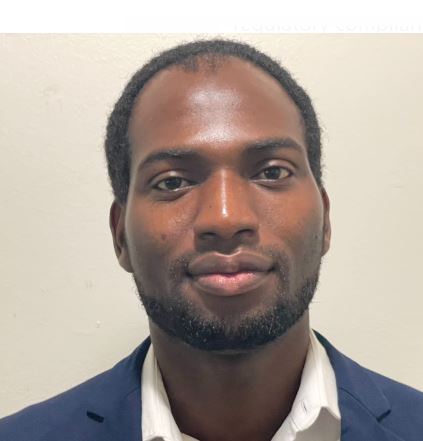
By Ayo Onikoyi
Dr. Ajibade, a Nigerian-born linguist, researcher, and Yoruba instructor is revolutionizing the teaching of Yoruba at Indiana University Bloomington and beyond.
Through his innovative psycholinguistic research on the phonology of heritage and L2 Yoruba learners, Dr. Ajibade is shedding light on how language acquisition processes are influenced by native language, cultural background, and learning environments. His work not only advances theoretical understanding in phonology but also provides practical tools for developing tailored teaching strategies that address the unique needs of diverse learner groups.
Dr. Ajibade’s doctoral research at the Indiana University Bloomington Department of Linguistics examined the influence of birthplace and upbringing on the phonological acquisition of Yoruba among heritage speakers in the United States. Supported by grants from the National Federation of Modern Language Teachers and the National Council of Less Commonly Taught Languages, the Indiana University Graduate and Professional Students Government, and the Indiana University Department of Linguistics, his work is pioneering and groundbreaking in the field of heritage language acquisition. He is the first researcher to focus on heritage Yoruba speakers- individuals born into Yoruba families in the United States, and his findings challenge existing theories in heritage phonological acquisition. At the recently concluded 49th Annual Boston University Conference on Language Development (BUCLD) (held November 7-10, 2024), he presented his study, “Heritage perceptual phonological advantage over non-native listeners is not a universal phenomenon.” Through his study of native Yoruba listeners, native English listeners, and heritage Yoruba speakers, Dr. Ajibade provided results that challenged the assumption that heritage speakers universally possess a phonological advantage over non-native listeners. Professor Silvina Montrul, a leading researcher in heritage language acquisition, praised Dr. Ajibade’s work as innovative, pioneering, and groundbreaking during her plenary address at the conference.
Dr. Ajibade also presented his research titled, “Native phonological effects and the perceptual salience of CV transitions in intervocalic labial-velar stops” at the 29th Mid-Continental Phonetics and Phonology Conference (MidPhon 29) at the University of Illinois Urbana-Champaign. Showing evidence from native Yoruba and native English speakers, this work shows how native language experience and phonetic properties influence how one distinguishes consonants, further solidifying his reputation as a leading voice in Yoruba phonological acquisition. Dr. Ajibade has also presented his work at other conferences such as the Annual Conference on African Linguistics (ACAL), the Annual Conference of the African Language Teachers Association (ALTA), the National Council of Less Commonly Taught Languages Annual Conference, and others.
Dr. Ajibade’s passion for Yoruba linguistics, language, and culture began during his undergraduate studies at the University of Ibadan in Nigeria. Fascinated by the complexities of language acquisition, he embarked on an ambitious project: An annotated Equivalence Yoruba Translation of Chinua Achebe’s Things Fall Apart. Despite skepticism from professors who believed the project was too extensive for undergraduates, he and a colleague completed it successfully, earning accolades and setting a precedent for ambitious projects within the department.
This early achievement paved the way for his future endeavors in research and teaching. His dedication earned him the prestigious Fulbright Foreign Language Teaching Assistant Award, allowing him to teach Yoruba at Indiana University Bloomington. Following the completion of the one-year program, he pursued graduate studies at the same institution, where he has since become a vital part of the African Studies Program.
Through his innovative, research-driven, and culturally enriching approach, Dr. Ajibade is making Yoruba more accessible and engaging for a diverse range of students. This dynamic method has led to a remarkable surge in enrollment for Yoruba language courses at Indiana University Bloomington. Students seeking to connect with their Yoruba heritage, explore the rich culture, or study a less commonly taught language are increasingly drawn to his inspiring classes.
Dr. Ajibade’s reputation extends beyond Indiana University. On August 20, 2022, he led a webinar for the American Association of Yoruba Teachers (AATY) on increasing student engagement in Yoruba classes. His insights into interactive teaching methods were well-received by Yoruba instructors around the globe. He also co-presented a paper entitled “Enhancing Engagement in African Language Classes: Strategies for Fun and Effective Learning” at the 2024 African Language Teachers Association (ALTA) conference held in Bloomington, Indiana. Attendees praised his practical approach to teaching, with many expressing intentions to implement his strategies in their own classrooms. “Matthew’s presentation was enlightening,” commented Oluwafunke Ogunya, a conference attendee who teaches Yoruba at Howard University, Washington DC. “His methods for incorporating technology and cultural elements into language instruction are exactly what we need to revitalize interest in African languages.”
Recognizing the crucial role of technology in modern education, Dr. Ajibade integrates digital tools into his curriculum. He has provided training to fellow African language instructors at Indiana University Bloomington on utilizing technology to enhance language teaching. Additionally, he has been invited to speak in courses designed to train future language instructors. His expertise extends to emerging technologies; his invited essay on AI-generated imagery in African language pedagogy is set to appear in the 2024 edition of Ulimi, the annual magazine of the National African Language Resource Center (NALRC).
Dr. Ajibade’s contributions are multifaceted, offering new perspectives in linguistic research and practical applications in language pedagogy. His studies on heritage Yoruba phonology not only challenge previous findings but also open avenues for exploring other African languages. By developing tailored pedagogical materials, he addresses the unique needs of both heritage speakers and second-language learners of Yoruba and other African languages.
“Imagine being born into a Yoruba family in the United States or migrating as a child,” Dr. Ajibade explained. “You may have a partial acquisition of Yoruba from your parents but become dominant in English upon starting school. As an adult, you might feel something is missing and decide to reconnect with your roots by enrolling in a Yoruba class. However, you find yourself between a native speaker and a second-language learner, creating challenges for both you and the instructor.” He emphasizes the importance of research in developing effective teaching methods that cater to heritage and L2 learners. “Without proper research and pedagogical strategies, Yoruba language classes can become chaotic,” he said. “It is crucial to understand the differences between heritage and L2 learners to prepare materials that meet both groups’ needs.”
Looking ahead, Dr. Ajibade plans to continue his research in heritage and L2 phonological theory and acquisition, develop instructional materials for Yoruba learners, support Nigerian immigrants in the United States, and engage in community services that promote Yoruba language and culture.
Beyond academia, Dr. Ajibade is actively involved in community initiatives aimed at preserving and promoting Yoruba culture. He has created medical materials for the Indiana University Student Outreach Clinic. He also collaborates with cultural organizations, offers workshops, and participates in events that celebrate Nigerian heritage. His efforts contribute to a richer cultural tapestry within the university and the broader community.
Dr. Matthew Ajibade’s dedication to linguistic excellence and cultural education is making a lasting impact at Indiana University Bloomington and beyond. Through innovative teaching, groundbreaking research, and community engagement, he is not only revitalizing interest in the Yoruba language but also fostering a deeper understanding of cultural identity among students.
“Language is more than a means of communication; it’s a vessel of culture and identity,” Dr. Ajibade remarked. “By teaching Yoruba and conducting research, I aim to bridge gaps, enrich lives, and inspire others to explore the beauty of our linguistic diversity.”
Disclaimer
Comments expressed here do not reflect the opinions of Vanguard newspapers or any employee thereof.