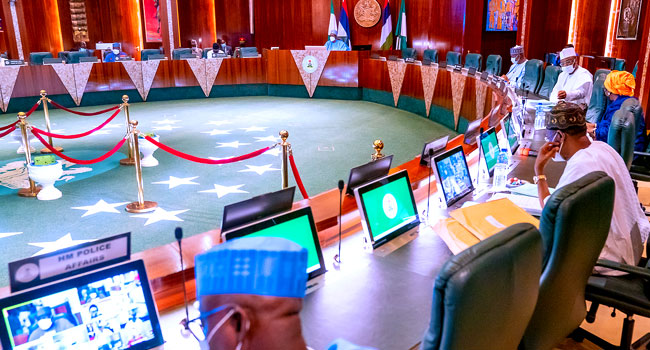
President Bola Tinubu is taking a commendable step towards addressing a 45-year-old anomaly we inherited from the defunct Shehu Shagari regime. Last week, he approved a major policy shift aimed at upgrading the status of Ministers of State.
From now on, Ministers designated as such will no longer need to live under the shadows of their cabinet member colleagues in the same ministry who have been enjoying the moniker of “substantive Minister”. Under this practice, Permanent Secretaries took files to the “substantive Ministers” bypassing the Ministers of State.
Many Minister of State appointees have borne their second class status with fortitude, while others grumbled but did not speak out for fear of being sanctioned. Festus Keyamo, the current Minister of Aviation and Aerospace Development, carried this burden as Minister of State for the Niger Delta and later Minister of State for Labour and Employment.
However, at the valedictory sitting of the cabinet of former President Muhammadu Buhari, Keyamo spoke out, arguing that the position of Minister of State was “unconstitutional”. Indeed, there is no provision in the 1999 Constitution (As Amended) for Minister of State. Rather, the President is mandated to appoint “at least, one Minister” from each State of the Federation.
Because of the large number of states (37 including the FCT) which outnumber the existing ministries, presidents have tended to designate the second Minister posted to any Ministry as “Minister of State”. They are usually seen as “junior” Ministers. This is an aberration, as it connotes that some states are allocated inferior positions. There is no constitutional basis for this assumption.
The float of mind that foisted this culture was an obvious carry-over from our Parliamentary past when we had official Junior Ministers. It could also have been influenced by the constitutional imperative of positioning the Vice President and the Deputy Governor in the shadows of the President and Governor, respectively. We now have an opportunity to correct the aberration.
This measure by Tinubu will afford all Ministers full control and accountability over the areas they are assigned to oversee. It will also afford the President the opportunity to properly assess the performances of his Ministers. It will restore the concept of equality of states in the President’s cabinet. The President should go further and re-designate the Minister of State with a more appropriate nomenclature.
What matters the most, however, is how all this impacts on the people. The Ministers are appointees of the President, while the President is the chief servant of the people. All of them are maintained with the taxpayer’s money.
While the President enjoys full constitutional discretions to appoint, reshuffle and sack members of his cabinet, the people should also be given the opportunity to voice their opinions on ministerial performance through adequate information.
Disclaimer
Comments expressed here do not reflect the opinions of Vanguard newspapers or any employee thereof.