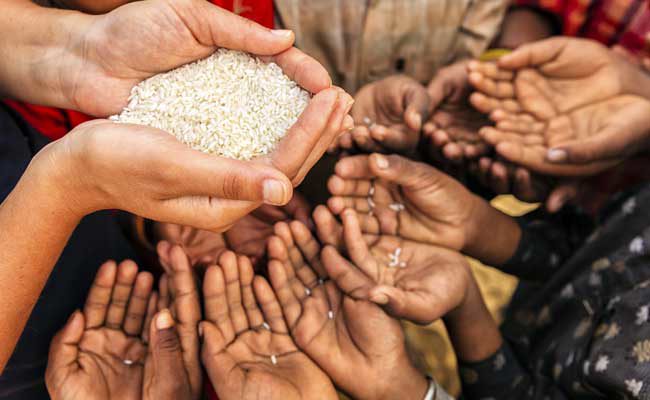
File photo used to illustrate hunger
By Gabriel Ewepu
ABUJA- FOLLOWING the predicted hunger crisis that would hit 33.1 million Nigerians in 2025, according to the Cadre Harmonise Report recently released, stakeholders in the agricultural space, Monday, called on the Federal, State and Local Governments to urgently put in measures to avert the 2025 hunger crisis.
The stakeholders spoke extensively on how the government at all levels including development partners should holistically address the issues the report presented that would trigger the hunger crisis, therefore, it is urgent to act proactively with lasting measures to mitigate the impact instead of distributing rice as palliative to Nigerians that would suffer the brunt.
Building more resilient, sustainable, and equitable food systems – ActionAid
While expressing concern about the report, the Country Director, ActionAid Nigeria, AAN, Andrew Mamedu, told Vanguard that the way out of the impending 2025 hunger crisis is to ensure the government builds more resilient, sustainable and equitable food systems.
“According to the Cadre Harmonisé report, food insecurity in Nigeria is primarily driven by climate-related challenges, insecurity, inflation, and limited access to essential agricultural inputs. The report stresses the need for strategic interventions to address these factors. In response, ActionAid Nigeria calls on the government, donors, and development partners to take several key steps.
“First, empowering smallholder farmers through agroecology is essential. Agroecological practices, which enhance soil health, conserve water, and support biodiversity, are critical in building resilience among farming communities. Given that women make up the majority of smallholder farmers in Nigeria, promoting agroecology can uplift food production while simultaneously protecting the environment. ActionAid’s experience demonstrates that agroecology is a sustainable solution to the challenges faced by rural communities.
“Second, expanding access to agricultural inputs and financial support is crucial. The report points to inflation and shortages of key agricultural inputs, which have significantly hindered productivity. ActionAid Nigeria advocates for increased subsidies on essential inputs like seeds, organic fertilizers, and farming equipment. Additionally, accessible credit facilities for smallholder farmers must be prioritized to ensure they are not priced out of production.
“Third, enhancing climate adaptation and early warning systems is a critical need. Climate change poses a significant threat to food security, as highlighted by the Cadre Harmonisé report. To mitigate its impact, the government should prioritize the development of early warning systems and invest in climate-resilient infrastructure. Development partners should support these efforts, funding initiatives that protect vulnerable communities from the increasing frequency and intensity of extreme weather events, which are exacerbating food insecurity.
“Another important intervention is the strengthening of food storage and distribution infrastructure. The report highlights that post-harvest losses are a major contributor to food shortages. Building efficient rural storage facilities would help reduce these losses and make food available throughout the year. Additionally, establishing robust distribution networks is crucial to ensuring that food reaches the areas most in need, particularly during times of crisis.
Finally, expanding social safety nets is essential in the short term. The Cadre Harmonisé report emphasizes the need to protect the most vulnerable populations from acute hunger. Social protection programs, including food assistance and cash transfers, can mitigate the worst impacts of the crisis and support nutrition, especially for women, children, and the elderly.”
However, he (Mamedu) counselled that, “The findings of the Cadre Harmonisé report should serve as a wake-up call for the Tinubu administration and state governments. Political will is essential to avoid the anticipated food crisis. ActionAid Nigeria believes that political will can be demonstrated in several key ways.”
Tackle insecurity, eliminate middlemen activities – EA Daniels Farm
The Chief Executive Officer, CEO, EA Daniels Farm, Engr Daniel Ijeh, in his assertion on what the government should do to tackle the 2025 hunger crisis, said, “The federal, State, and local governments should create a partnership with the banks to see how they can avert the predicted hunger crisis that would hit over 33 million Nigerians in 2025.
“The planning stage on this issue should have been completed by now, implementation should have been what is remaining so that by December, people would swing into action for massive food production in the dry season and that would have helped but nothing has been done, and so it is going to be a hard nut to crack.
“On the issue of insecurity in terms of food production to mitigate the predicted hunger crisis that would affect over 33 million Nigerians, there is the need for the Government to holistically assess the situation, how it affects the people, and how insecurity is affecting food production.
“If they are to help eliminate this insecurity, I doubt in all honesty if the Federal Government can do that except local governments, communities and state governments mediate in the fight against insecurity, I think they would have been able to arrest it in totality if local, State governments and communities step in to solve this problem. So insecurity is going to contribute hugely to next year’s hunger.
“Also he said to mitigate the predicted hunger crisis in 2025, there is the need for farmers to directly have access to farm inputs from the government or donors instead of passing it through politicians and middlemen who divert and sell them, leaving the farmers stranded and frustrated.”
Disclaimer
Comments expressed here do not reflect the opinions of Vanguard newspapers or any employee thereof.