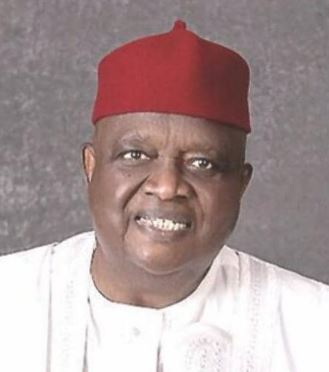
Iwuanyanwu
By Victor Ahiuma-Young
Former Minister of Labour and Employment, Senator Chris Ngige, has paid tribute to the late Chief Emmanuel Iwuanyanwu, former President-General of Ohaneze Ndigbo, who was interred on Friday.
Reflecting on the life and contributions of the elder statesman, Ngige described Iwuanyanwu as a peacemaker, bridge-builder, successful entrepreneur, philanthropist, and, above all, a devoted advocate for his people.
In a heartfelt letter to Mr. Jide Iwuanyanwu and the family of the deceased, titled “Tribute to Late Chief Emmanuel Iwuanyanwu (Ahaejiagamba Ndigbo),” Ngige revealed that he accepted the role of Chairman of the Ohaneze Ndigbo Skills and Youth Development Committee because of Iwuanyanwu’s deep commitment to his community.
Ngige recounted his first meeting with Iwuanyanwu in 1982 during the burial of his maternal uncle, Simon Adawai (a.k.a. Igwe), in Nnobi, Anambra State. He also reflected on their encounters at various Ohaneze Ndigbo meetings during the 1990s, Iwuanyanwu’s ambition to become President of Nigeria, and his desire for an Igbo president.
In his three-page letter, Ngige stated, “Much has been said about Chief Iwuanyanwu, but his philanthropy, kind-heartedness towards all Nigerians, and his courage and love for the Igbos were prodigious. His Iwuanyanwu Foundation consistently provided support and assistance to people without discrimination based on tribe or religion.”
He noted that Iwuanyanwu accepted the leadership of Ohaneze Ndigbo Worldwide after the passing of another Igbo patriot, Prof. George Obiozor, with the aim of fulfilling the original mission set forth by the organization’s founding fathers, including Dr. Akanu Ibiam and Dr. Nnamdi Azikiwe.
“Within months of assuming office, Chief Iwuanyanwu elevated the organization to new heights, engaging with the seven Igbo states: Abia, Anambra, Enugu, Ebonyi, Imo, Rivers, and Delta. He resolved internal disputes within many chapters across Nigeria and also restructured Ohaneze branches in the United Kingdom and the United States,” Ngige added.
He highlighted that the Ohaneze National Executive Committee (NEC), under Iwuanyanwu’s leadership, appointed him as Chairman of the Skills and Youth Development Committee—an appointment he accepted due to Iwuanyanwu’s passion for the Igbo people. The committee had developed action programs that were awaiting implementation before Iwuanyanwu’s untimely passing.
Describing Iwuanyanwu as a bridge builder, Ngige praised his ability to leverage political and business connections to foster relationships with groups such as Afenifere and the Northern Elders Forum, all aimed at safeguarding the interests of Ndigbo across Nigeria.
While acknowledging the inevitability of death, Ngige lamented that Iwuanyanwu’s passing left a significant void that would be challenging to fill. He reminisced about Iwuanyanwu’s earlier life as Captain and later Major in the Biafran Corps of Army Engineers, recalling how his troops would refuse to engage in battle without his presence due to his inspiring leadership.
“We assure Ahaejiagamba that the troops he leaves behind will continue the necessary political battles to secure equity and justice for our people, ensuring their rightful place in the Nigerian nation,” Ngige concluded.
The former minister extended his condolences to the Iwuanyanwu family, the government and people of Imo State, Ohaneze Worldwide, the Igbo nation, and Nigeria as a whole.
Disclaimer
Comments expressed here do not reflect the opinions of Vanguard newspapers or any employee thereof.