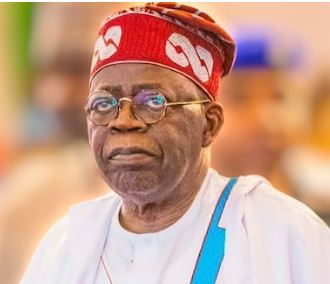
President Tinubu
By Nwafor Sunday
President Bola Tinubu has reinforced his commitment to a comprehensive legislative process for the proposed tax reform bills currently before the National Assembly.
The President’s stance follows a recommendation from the National Economic Council (NEC) to withdraw the bills for further consultation. Instead, Tinubu advocates allowing the legislative process to proceed, thereby ensuring thorough stakeholder engagement and refining the bills through public hearings.
The National Economic Council, chaired by Vice President Kashim Shettima and comprising the 36 State Governors, advised that the tax bills be recalled to allow more consultation. However, President Tinubu praised the NEC members for their input and emphasized that any concerns could be addressed through legislative debate and public contributions.
President Tinubu stated that withdrawing the bills is unnecessary, as the legislative process itself encourages adjustments and diverse viewpoints through public hearings. He underscored that stakeholder engagement remains open and that he welcomes additional consultations to improve the bills in line with Nigeria’s evolving economic needs.
Extensive Work and Consultation Led to the Tax Reform Bills
The four bills presented to the National Assembly stem from over a year of work by the Presidential Committee on Tax and Fiscal Policy Reform, which Tinubu established in August 2023. The committee sought insights from a broad spectrum of Nigerian society, including trade groups, professional organizations, government agencies, and business leaders across Nigeria’s geopolitical zones. This approach helped shape reform measures that address critical economic and tax issues.
The President reiterated that the overarching goal of the proposed tax reforms is to position Nigeria’s economy for productivity and resilience, making it more attractive for investment while enhancing government revenue through streamlined tax operations.
Highlights of the Tax Reform Bills
The proposed reforms, aimed at modernizing Nigeria’s tax framework, comprise four key bills:
The Nigeria Tax Bill seeks to eliminate multiple taxation and simplify tax obligations to enhance Nigeria’s competitiveness and foster a more business-friendly environment.
The Nigeria Tax Administration Bill (NTAB) aims to harmonize tax processes across federal, state, and local levels, easing compliance and improving revenue collection across the country.
The Nigeria Revenue Service (Establishment) Bill proposes renaming and restructuring the Federal Inland Revenue Service as the Nigeria Revenue Service (NRS) to reflect its role as the national revenue body.
The Joint Revenue Board Establishment Bill intends to replace the existing Joint Tax Board with a new Joint Revenue Board. It would also establish an Office of the Tax Ombudsman to protect taxpayer interests and facilitate dispute resolution.
These bills seek to streamline the complex landscape of Nigeria’s tax system by consolidating multiple taxes, such as Company Income Tax, Personal Income Tax, VAT, and others, into a unified structure. This unification aims to reduce administrative overlap, improve transparency, and boost efficiency in tax administration.
Supporting National Development Through Reformed Taxation
President Tinubu’s commitment to this reform underscores his belief that the new tax structure will better support Nigeria’s economic agenda. He highlighted the importance of consolidating various taxes into a cohesive system, which he argues is essential for national development and efficiency.
Bayo Onanuga, Special Adviser to the President on Information & Strategy, remarked that the proposed reforms reflect Tinubu’s vision of a simplified tax environment that supports businesses while generating revenue critical for Nigeria’s growth.
In closing, President Tinubu reassured that he would continue respecting the NEC’s recommendations on economic matters and expressed confidence that the legislative process would result in a fair and effective tax system that aligns with global best practices.
Disclaimer
Comments expressed here do not reflect the opinions of Vanguard newspapers or any employee thereof.