By CHRIS AGBEDO
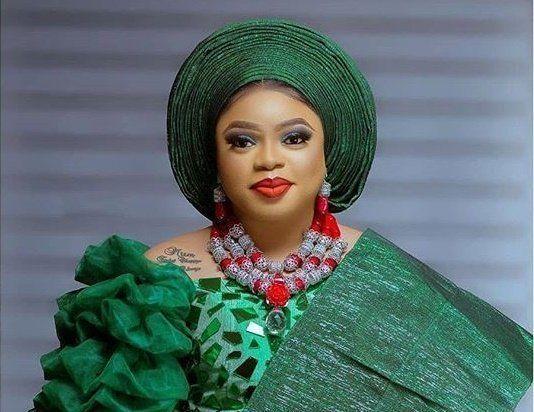
Once again, the spectacle that is Nigeria continues to unfold, and at the centre of it all currently is none other than the controversial social media fad, Idris Okuneye, widely known as Bobrisky. As the news reports from Vanguard newspaperS indicate, Bobrisky has been rushed to the Police Hospital in Falomo, Lagos, after complaining of breast pains while being held in custody by the Nigeria Police Force. His peculiar situation has become yet another episode in Nigeria’s ongoing ‘cruise’, a term Nigerians have coined to describe the often absurd, comedic, and sometimes tragic theatre that is their daily reality.
For many, this latest Bobrisky incident is just the latest act in a much larger national farce, one that stretches from the chambers of the National Assembly down to the country’s borders at Seme. After spending a night in detention, Bobrisky’s complaint of breast pains has not only stirred the police to arrange a hasty ambulance ride to the hospital but has also raised eyebrows as to whether this is just a convenient decoy. Behind this hospital dash lies the impending transfer of the cross-dresser to the Special Fraud Unit, SFU, signaling that this story is far from over.
It is a remarkable reflection of the times that a figure like Bobrisky has become the subject of national attention, from controversies surrounding his gender identity to accusations of fraud and criminal activity. What is even more astonishing is the level of difficulty displayed by security agencies over the terms of how to refer to him ‘he’ or ‘she’. In a nation grappling with far more pressing issues such as poverty, unemployment, insecurity, and a deteriorating economy, Bobrisky has somehow managed to steal centre stage, dominating headlines.
The Correctional Centre’s ‘VIP’ treatment, police hospital, the ambulance ride, and the armed escorts all seem to be part of a carefully crafted performance with a full complement of dramaturgy and theatricality. Such has been the terrific ‘Ben Johnson’ speed with which the Bobrisky hurricane was sweeping and tearing away few weeks ago. This followed VeryDarkMan’s release of an audio message (purportedly recorded by Bobrisky) into social media space that even threatened the integrity of the family of Mr. Femi Falana, SAN but for the latter’s swift legal step taken to stem the corrosive tide.
But is Bobrisky really the problem? Or is the real issue the fact that Nigeria, in all its complexity, often appears to be on autopilot, cruising from one bizarre episode to the next with little pause for serious reflection? In recent weeks, we have seen an ad hoc Committee of the House of Representatives fret over audio recordings of Bobrisky’s alleged conversations, as though the entire nation hinged on the social media escapades of its influencers. It has been such a surreal scene, as if the very fate of the country now hangs in the balance over social media spats and the theatrics of internet influencers.
The situation escalated to a new level of absurdity when one of the central figures in this circus, VeryDarkMan, another social media personality arrived at the National Assembly Complex in a bizarre display of fetishism and drama. Armed with his so-called ‘talisman’, he appeared to engage in what could only be described as a carefully choreographed display of abracadabra, ostensibly summoning all the mystical powers as if it were a courtroom testimony. That scene, unfolding in the nation’s legislative halls, highlighted the bizarre intersection between entertainment, politics, and public perception.
One might be forgiven for wondering how we got here. How has Nigeria, a country facing existential challenges, from widespread insecurity to economic downturn, come to a point where its lawmakers are embroiled in the antics of internet influencers and their so-called talismans? It is a testament to how easily public discourse can be hijacked by trivialities, especially in a society where media-driven personalities wield as much influence as elected officials.
This obsession with avoidable distractions speaks volumes about the disconnect between the country’s leadership and its citizenry. While millions of Nigerians struggle to make ends meet, deal with inflation, and grapple with bare demands of survival, their representatives have fixated on a circus that would be laughable were it not so tragic. In a country where citizens reel listlessly from after-effects of negative economic indicators, one might expect a more responsive and pro-active approach to the art of governance. Yet, the Mickey Mouse of a Bobrisky saga, frivolous as it is piddling, has taken precedence in our national discourse.
The implications of this spectacle are deeper than they appear on the surface. It reflects a wider cultural phenomenon in Nigeria, the merging of entertainment and politics in a way that has blurred the line between governance and lousy pastime. In a country with a deeply religious and spiritual populace, it is no surprise that figures like VeryDarkMan can leverage fetishism and occult symbolism to capture attention. But what does it say about the state of our institutions when such antics are allowed to play out within the vicinity of the hallowed halls of the National Assembly? More than just a momentary lapse in judgement, this spectacle symbolises a broader national distraction. Social media influencers like Bobrisky, whose lifestyles and public personas challenge societal norms, have become a focal point for public and governmental attention. Yet, while lawmakers fixate on these distractions, the real problems – corruption, poverty, and systemic failure – are left unaddressed.
There is a deeper irony here: the National Assembly, which should be tackling the root causes of Nigeria’s malaise, has instead become an unwitting participant in the very circus it ought to regulate. This blurring of lines between entertainment and governance is a symptom of a deeper structural dysfunction. By engaging in these distractions, our lawmakers inadvertently expose their own inadequacies and their reluctance to address the serious issues that plague the country. As this cruise continues to unfold, it is perhaps worth asking: what does this mean for Nigeria’s future? Can a country afford to be so easily swayed by the ephemeral, while ignoring the fundamental challenges that threaten its survival? The Bobrisky saga, complete with fetish rituals, talismans, and social media outrage, is a reflection of how far we have strayed from the path of meaningful governance.
Meanwhile law enforcement agencies, including the Economic and Financial Crimes Commission, EFCC, and Nigerian Correctional Services, have found themselves caught in the web of accusations and counter-accusations over complicity in the withdrawal of criminal charges against the cross-dresser and preferential VIP treatment for its ‘guest’ respectively.
And now, the Nigeria Immigration Service, NIS, has been drawn into the ‘cruise’ as well, apprehending Bobrisky at Seme border while attempting to flee the country. The subsequent drama over his breast pains and emergency medical treatment introduces another layer of complexity to this convoluted tale.
One is left to wonder whether Nigeria’s institutions are truly equipped to handle the unique challenges of modern celebrity culture, where the line between reality and farce is getting increasingly fuzzier and fuzzier by the day.
Bobrisky’s saga also reveals the contradictions at the heart of Nigerian society. While many mock his antics, labelling him as a distraction from the serious issues facing the country, his ability to dominate headlines underscores the country’s collective appetite for spectacle.
In many ways, Bobrisky embodies the ‘Naija cruise’ culture – bold, flamboyant, controversial, always willing and ready to generate media buzz. His frequent collisions with the law, his gender-fluid persona, and his audacious lifestyle all reflect the dissonance in a nation where traditional values often clash with modernity. But let us be real at least, for once. This is more than just a laughable episode. Behind the jokes and the memes lies the deeper reality of a nation struggling to come to terms with its identity, its institutions, and its future. The Bobrisky saga, while seemingly trivial, is emblematic of a larger pattern where the ridiculous often overshadows the serious and the abnormal becomes normalised in Nigeria. The social media storm, the public spectacle, and even the police response all highlight how easily we can be swept up in a blitz of the superficial, while critical national issues are left to fester.
At the end of the day, one has no option than to simply shrug it off or laugh it off joo. After all, in a country where nearly everything seems like a joke, what other option is left? And as Nigerians love to say, ‘body no be wood.’ By the way, in today’s Nigeria, even the involuntary act of “laughing it off” is no mean feat. Amidst the unrelenting tension, stress, and pervasive hunger, managing to crack a wry smile can feel like an achievement. As the national situation spirals from one absurd episode to another, Nigerians have developed a peculiar, almost seamless coping mechanism, turning their collective hardship into humour. The Bobrisky saga, like so many others before it, is emblematic of this peculiar reality. While the nation faces existential threats driving millions into despair, the ludicrous spectacle of a cross-dresser being rushed to the hospital for breast pains becomes the centre of attention. It is the kind of absurdity that only Naija can serve a la cart. But rather than cry, Nigerians laugh; because, frankly speaking, what else is there to do?
Yet, laughing off the hardships of everyday life in Nigeria is not as easy as it sounds. With each passing day, the weight of the country’s challenges becomes heavier. Basic necessities are increasingly out of reach for many, and the political class, rather than offering solutions, often seems more intent on delivering routine comic reliefs. It takes a remarkable level of emotional resilience to maintain humour in such trying times. But behind the humour lies a deep sense of frustration. Yet, Nigerians have learned to make light of situations that would paralyze other societies with fear or despair. Laughing at the chaos becomes a means of processing it, of making the unbearable just a little more bearable. It is one sure way to reclaim agency in a country where citizens often feel powerless to change their circumstances.
Still, it is important to recognize that laughter, while a temporary relief, is not a final ‘silver bullet’ solution. As humorous as the Bobrisky’s ‘breast pain’ saga might seem, it distracts from the urgent conversations Nigeria desperately needs. How long can we afford to laugh off our problems before they become too large to ignore? Every absurd headline, every viral video, and every act of political incompetence chips away at the faith Nigerians have in their institutions. Laughing it off might offer a brief respite, but it does not address the deep systemic issues that have pushed so many to the margins, threatening to tip them over and down the rough precipice. In today’s Nigeria, humour has become a double-edged sword. It is both a testament to the resilience of the Nigerian spirit and an indictment of the system. Nigerians are strong, no doubt, but that strength is constantly tested by a system that appears more comfortable with comedy than governance.
Perhaps, at some point, Nigerians may need to decide whether they will continue to cruise along the crest of laughter, or if they will confront the serious issues that keep pushing them into survival mode. Well, let the cruise continue, and let Nigerians keep laughing off the absurdity. But the real question remains; how much longer can we afford to keep laughing? For now, Bobrisky’s ‘breasts’ may be the talk of the town, but tomorrow it could be another episode in Nigeria’s seemingly endless saga of ‘cruise’.
And so, the ‘music goes on,’ according to Shalamar, the American R&B and soul music vocal group created by Dick Griffey and Don Cornelius in 1977. Certainly, the spectacle continues, and Nigerians are left to watch in disbelief as shadows are being chased endlessly. Sadly however, the real tragedy is that this obsession with distractions only postpones the day of reckoning, when the nation’s real problems will finally have to be confronted frontally. But until then, as it is often expressed in typical in Naija parlance, ‘Naija na cruise’. So, let the cruise continue!
•Dr. Agbedo is a Professor of Sociolinguistics, University of Nigeria and public affairs analyst
Disclaimer
Comments expressed here do not reflect the opinions of Vanguard newspapers or any employee thereof.