By Chioma Obinna
All over the world, diversity, equity and inclusion has become a global agenda to bring women into the mainstream of leadership and managerial positions both in politics, private and public sector as well as eliminate all stereotypes that limit their potentials.
For centuries, Nigerian women among their counterparts all over the world have been pillars of strength, resilience, and cultural heritage. Yet, their contributions have often been overshadowed by patriarchal norms. In recent decades, a growing movement has emerged, empowering women to challenge the status quo and demand their rightful place in society.
Before now, persistent inequalities continue to limit women’s opportunities and hinder national development.
But for the World Bank Group among other corporate organisation’s like Nestle, where women hold about 46.4 percent of key positions, accelerating gender equality is an urgent imperative.
With the world experiencing an unprecedented set of crises with disproportionately negative impacts on women and girls, experts say women empowerment is the only effective factor that can change the narrative.
Women’s empowerment is enshrined in Sustainable Development Goal 5 and it is also a critical component of the World Bank Gender Strategy 2024-2030.
Challenges face by women
But women in Nigeria continues to face challenges
Also in the views of the Executive Director, MAMA Centre, Chioma Kanu, promoting women’s economic justice and rights and closing gender gaps across spheres are key to achieving Sustainable Development Goals.
A recent Nigeria Labour Force Statistics Report released in February 2024, showed that the unemployment rate by sex among Nigerian women was 6.0 per cent. It further showed that the labour participation rate among women is 78.2 per cent, still lower than their men counterpart.
Despite significant strides towards gender equality, Nigerian women continue to face numerous challenges that hinder their full potential. Societal norms and economic disparities often limit their opportunities, confining many to traditional roles as homemakers. While some women have broken through these barriers and achieved remarkable success, systemic inequalities persist, particularly in rural areas where women are often engaged in subsistence farming, facing limited access to resources and education.
Recognising the important role of the women in their families and the society at large, corporate organisations like Nestle has made women empowerment both in their business and value chain their business.
Like the adage “Charity begins at home”, Nestle has been working to balance the gender makeup of their workforce and leadership as, the proportion of women in managerial positions keep increasing, even in the most senior executive posts.
“I may be the first female Head of Operations for Nestlé, but I’m not the last one”, says Stephanie Pullings-Hart, Head of Operations at Nestlé, a member of the executive board. She is one of the 46.4 percent women in leadership position. Nestle’s transparency in gender reporting and women’s equality advancement in the workplace earned it Bloomberg Gender Equality Index for the fifth consecutive year.
However, outside its wall, and in Nigeria, Nestle continued to make women empowerment a reality through the introduction of a series of programmes such as “Nestle Nigeria’s Empowering Rural Women in Nigeria” designed to educate and empower women to be financially and economically independent.
The programme also helps rural women to scale up their retail businesses and sustain the new level up to three times the size of their existing businesses through training, mentorship, and grants in the form of Nestlé products that contributes significantly to the wellbeing of Nigerians.
Statistics available to Vanguard showed that between 2021 when the programme was launched till date, over 332 women have been empowered nationwide.
Findings have also showing that with the launch of this programme, more Nigerian women are breaking barriers and succeeding in their small and medium business.
A case in point is elated Mrs. Oghenetega Delight, Jombo stores, one of the beneficiaries from Port Harcourt.
According to Oghenetega who won the best-performing beneficiary position, she recorded a business growth of 675 per cent within six months of joining the programme.
She also stated she has sustained a monthly turnover of over N547,623.67 all thanks to Nestle Nigeria’s Empowering Rural Women in Nigeria.
However, since its launch, the programme has expanded its reach to various regions across Nigeria, including: Abuja, South-West (Oshogbo, Ede, and Ijesha. In Enugu state it is being carried out in Nsikan, and Obolo-afor. In South-South, Port harcourt, In North East, it is in Bauchi, and Lagos it is being implemented in Ikorodu, and Sagamu. One thing common about the areas of implementation is that they are rural communities where the people that needs the assistance lives.
What it is
According to Nestle, the programme is designed to allow beneficiaries receive grants valued at 300 per cent of their monthly sales in the form of Nestlé products, business training and a three-month mentorship programme.
Again, every beneficiary is linked to a mentor for one-on-one coaching for three months and 80 per cent of beneficiaries have reported an increase of 200 per cent in their business growth within three months of joining the programme.
Indeed, the programme has significantly impacted the lives of many women in Nigeria and so far the programme has been taken to all part of the country.
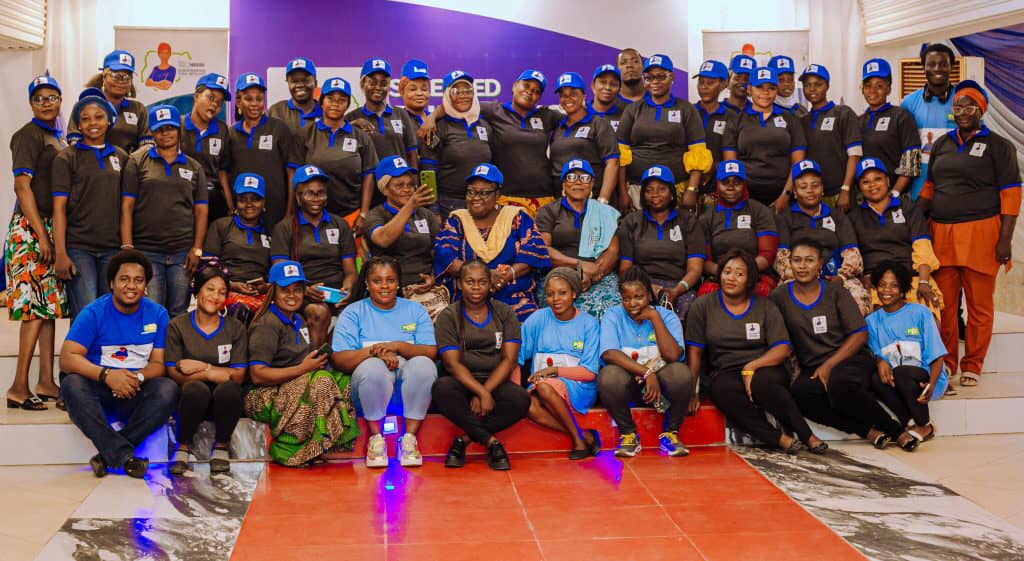
In June and September 2022, 50 women from Port Harcourt, South-South and Bauchi State were inducted into the programme.
In November, the programme was launched in Oshogbo, Ede and Ilesha Osun State and 50 women were inducted.
Also by May 2023, additional 32 women were inducted at Ikorodu, Lagos State and September, the same year, another set of 50 women from Sagamu were trained and empowered.
Still maintaining consistence, earlier this year, (February) it was launched in Nsukka and Obolo-Afor, areas in Enugu State and additional 50 women were inducted, raising the total number of beneficiaries to 332.
Speaking during the induction of the 32 beneficiaries inducted in Ikorodu area of Lagos, Nestlé Nigeria’s Commercial Manager, Mr. Khaled Ramadan expressed satisfaction with the success of the programme.
“We are delighted by the opportunity to include 32 more today. With this addition, 282 women across five geopolitical zones of Nigeria now have a unique opportunity to scale up their businesses by 300 per cent.
“We are confident that the new beneficiaries will also transform their businesses, making the best use of the support Nestlé is providing through training, mentorship and grants in form of Nestlé products.”
He said creating shared value within the communities is key in the way they do business.
“At Nestlé, we strive to make a positive impact on society while ensuring the sustainability of our business.The Rural Women Empowerment Programme is not a one-time event but an ongoing process of value creation. The stories and testimonials from previous beneficiaries, particularly 100 per cent to 200 per cent business growth within three months of joining the programme, encourage us to do more.
“Onboarding women from Sagamu, one of our host communities, is a significant milestone in our commitment to empowerment and sustainable development and we are proud to have an opportunity to make a tangible difference in their lives”.
“Through this project, Nestlé continues to help solve the challenge of poverty by empowering rural women across Nigerian communities, lifting them off the poverty spectrum and improving their livelihoods. We are delighted to be project partners for the training and mentoring on this credible initiative,” he stated.
Speaking representative of the implementation partner for Nestlé Empowering Rural Women in Nigeria Project, the Head, Partnerships at Straplan Advisory Ltd, Mr. Phranklin Audu, said they were thrilled by the impact of the project on rural communities so far.
“Over 80 percent of the beneficiaries have seen their incomes grow and can support their families better.”
Citing example with one of the beneficiaries, Blessing Abayi, a single mother from Bauchi, he explained that Blessing used to struggle with paying her children’s school fees, but after three months in the program, for the first time, she paid the fees in full and on time.
Also commenting on the programme, Nestlé’s Corporate Communications and Public Affairs Manager, Mrs Victoria Uwadoka, said the company was dedicated to fostering sustainable communities by improving household incomes and that one of the key initiatives driving the commitment was the “Empowering Rural Women in Nigeria” project.
She said the programme aligned with Nestlé’s broader strategy of Creating Shared Value, which involves addressing societal needs while simultaneously advancing the company’s business goals
Testimonies of beneficiaries
However testimonies abounds from the success of the inclusion Nestlé Empowering Rural Women in Nigeria project.
“I am so happy that Nestlé chose me to benefit from this programme. It is a wonderful opportunity,” Mrs. Olubunmi Adeoye.
Filled with joy, she said the project has changed her entire life and put her on a pedestal of success.
“I have not seen any empowerment like this before. I know I am going to the next level,” another beneficiary, Mrs. Bukola Ajala stated.
”I am very happy and I do not know how to express myself for being one of the 50 women chosen to participate in this empowerment by Nestlé.
“The free goods and training we received today will be particularly helpful in taking my business to the next level. I thank Nestlé for everything they have done for me and my family,” Mrs. Clementina Irandi said among other beneficiaries.
Royal endorsement
At the event, the Akarigbo of Remoland, Oba Babatunde Adewale Ajayi, expressed his commendation for Nestlé’s “Empowering Rural Women in Nigeria” programme.
Represented by Kabiesi Odofin Soyindo, the royal figure acknowledged the positive impact of the initiative on the community of Sagamu.
He praised Nestlé for its sustainable approach to corporate social responsibility and urged the beneficiaries to utilise the grants and training provided to them effectively to expand their businesses
Disclaimer
Comments expressed here do not reflect the opinions of Vanguard newspapers or any employee thereof.