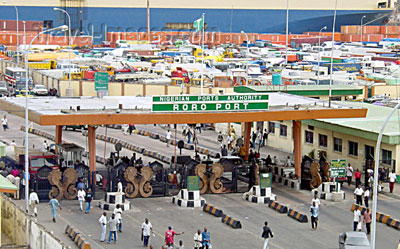
FACED with shocking revelations about how it lost N37.2 billion as a result of import waivers that were granted to importers of raw materials in 2011 and the discovery that beneficiaries of Export Expansion Grant now use proceeds of the grant to bring into the country finished products, Nigeria’s Federal Government, recently suspend the waiver policy. But it is believed that the last has not been heard about the abuse of the waiver policy. CHARLES KUMOLU reports.
THE leader of the team was the Chairman of the Federal Inland Revenue Service, FIRS Mrs. Ifueko Omoigui-Okauru. And the mission was a courtsey call-a practice common with agencies and parastals at all levels of government.
Even though the venue was the National Assembly Complex Abuja, the outcome of the visit was not expected to make headlines, given such visits are common in the green chambers. But the alarm raised by the host Alhaji Amini Tambuwal, Speaker of the House of Representatives, about economic leakages in governance, has made that September 2011 visit an unavoidable reference point when discussing economic shortfalls in Nigeria.
In a manner different from public office holders in the country, Tambuwal regretted that incessant grant of import duty waivers coupled with shortening of the import ban list are causing huge losses of revenue.
Stop arbitrary tax waivers
To this end, he asked the federal government to stop arbitrary tax waivers given to certain companies, saying this had further reduced the revenue base of the country.

“I call on the executive to stop granting waivers because according to reports the Federal Government has been granting a lot of waivers to some companies. We have to review our waiver granting policy. We have too much budget deficits, how do we bridge this gap while you are busy granting waivers?
Recently, I received information that a lot of waivers was granted to some companies in this country, I believe we must review our waivers’ granting policies because we have in the past budget with high deficit,” he stated.
That criticism of the waiver policy, did not raise the curtains on the manner the waiver regime had been managed by past and present government, as concerned stakeholders had in the past spoken against this practice.
For example, then Minister of Finance, Shamsudeen Usman had in 2007, lamented that waivers and tax concessions had been abused between 2000 and 2007.
Nevertheless, that this recent alarm came from a public office holder, who by virtue of his position, belongs to the group that benefits from the practice, is an indication that the calm surrounding the policy has become increasingly uneasy.
Those who visit the president at nights
Another public officer, who had also heightened the waiver debate lately, is the Minister of Finance and Coordinating Minister of the Economy Dr. Ngozi Okonjo-Iweala.
“All those who usually go to see the President at night will no longer be allowed to do so. If they have any proposal, it must be presented to the Economic Team. We are also going to hold a retreat with the private sector to discuss policy inconsistencies caused by the pressure they exert on the government,” she stated at a seminar titled “Beyond the Banking Reforms” convened by Thisday Newspaper.
With the position of Iweala and Tambwuwal setting the tone for the recent wave of public criticisms against the policy, not a few were surprised about the eventual reported stoppage of the practice.
While stopping the practice, the Federal Government fummed that waiver had been subjected to abuse by some importers. The decision to stop granting import waivers was reached after it was discovered that in 2011 alone, a colossal N37.2 billion was lost as a result of import waivers that were granted to importers of raw materials in that year alone. Nigeria Customs Service records have shown that the nation lost N276.9 billion between 2000 and 2008
Customs excise act of 1995
However, import waivers according to Qfinance, a reference book created by the Qatar Financial Centre Authority, QFCA, are, “Tax exemptions for companies setting up businesses and waiver of import/export duties on equipment used within the business.”
Findings revealed that waiver granting policy had been in existence in Nigeria for ages, particularly as a means of fostering businesses with potential for value chain development. Specifically, the 1995 Customs Excise Consolidation Act granted the president the powers to grant waivers.
Explaining the powers of the president in this regard, a stakeholder in the maritime industry, President of the National Council of Managing Directors of Licensed Customs Agents (NCMDLCA) Mr. Lucky Amiwero told VanguardFeatures,VF that, “Waiver issue has been addressed by the custom excise act of 1995.
You have in that provision, section 11. 1, which gave the president the powers therein to impose or remove any import on excise duty. Then B gave the President the power over all the schedules because we have eight schedules, then C gave him the power to delete any part of the schedules.
These provisions goes further to section 12, which gave certain powers in reducing any duty on any goods by the minister himself. This is section 12.1. Then Section 16 of that provision is allowed any body to bring in cargo which are under Schedule 3, because schedule 1,2,3 are for trade.
Under that schedule it is allowed. That is the truth about it. And the government has the right to bring in goods under that premise.”
In addition Amiwero said, “the issue of reduction, imposition has to do with the president and the minister of finance. On the policy issue you have certain provisions. That is why act 16 of the Customs and excise Act of 1997 comes in. It gave concession.
We have concession waiver, we have total waiver and we have exemptions. Exemption is under schedule 2. When you put all these together, you discover that it is only the government that can regulate. If the government stops it, Schedule 2 is an international convention and it has about 10 commodities that are allowed to be imported into the country without duties.
that has to do with optional items, technical organisations items and personal effects are under that schedule 2. Under that schedule, it is allowable by law to bring in the items without duty. So you cannot cancel that waiver. Those areas that government have looked at and agreed to suspend waiver, can only be done if the government has a restrictive waiver policy.
Cotonou convention
But there are still conventions and multilateral trades, that allows technical aids goods top come in.We have some goods that are under Cotonou convention, which are under schedule 2. The aides are going to local assemblers and manufacturers.”
While the powers of the president in this regard, is not in dispute, the manner in which the powers are being exercised have been described as indiscriminate. Hence, many are of the opinion that such presidential import waivers has cost the three tiers of government billions of naira in the wake of dwindling reserves and rising debt profile.
Even though, waivers have been reportedly suspended in 2012 following presidential orders, VF, gathered that not a few want the policy reviewed in order to address the issue of political waiver, which is regarded as the major source of tax evasion.
“Those waivers that are killing the economy are those ones that involve bringing of finished goods into the country. They are given to friends of people in the corridors of power, the political waiver is the one the government is more concerned.
I think they have taken the right decision to stop that waiver. There are areas where waivers are granted to bring in finished goods like rice and iron rods into the country. People are making money from that. Most of the millionaires you see today made money through that way. So if the government is taking decision on that, it is clearly very important and supportable,” Amiwero stated.
Political waiver is responsible for economic waste
Expatiating further he said: “The truth is that there three different types of waiver, there is the political waiver, economic waiver and legal waiver. The political waiver should be stopped because it is not useful to the economy.
What we are saying is that waiver is supposed to help build the economy and create employment, and that waiver is not supposed to be stopped, they should be encouraged, because they are useful to the economy. If you don’t have local industries, you would not have employment and there would not be economic growth.
“ Therefore, the economic waiver that encourages growth should be retained. The statutes waivers are there and they are conventions which can not be removed because they are internationally accepted. We have some of these laws which are meant to grow the local industry.”
Also speaking, a Comptroller of Nigeria Customs Service in one of the Lagos Commands, who claimed anonymity, told VF that the government ‘s decision to stop waiver in 2012 is good, but expressed fears that the directive could still be abused by those, who gave the order.
“The question you would ask is, who grants the waiver? Is it not the government? We are public servants and are mandated by the law to obey instructions from the government. So, we don’t grant waivers, the government does that and we implement their order.
So customs should be spared of the blame of revenue loss through waiver system. I challenge you to go to the records, you will discover that the leakages in customs revenue because of waiver was caused by what you called political waiver,” he sated.
Accordingly, this position is also a reminder of the reported revenue loss of N6.6bn on dutiable value of N71.8bn in 2010, due to exemptions, concessions and waivers granted some organisations by Apapa Customs Command in 2010. The figure accounts for about 4.6 per cent of the total revenue collected between January and October 2010.
In a statement issued by the Public Relations Officer, Mr. Timo Bomodi, the Command recorded over 1 million metric tons of goods including processed natural rubber, cocoa beans, cocoa cake, cocoa butter, frozen fish prawns and fish cutlets. The exported items were monosodium glutamate, gum arabic, aluminum ingots, sesame seeds, finished leather and cigarettes. The value was N192,727,450,111.00.
However, the Secretary General of Association Nigerian Licensed Customs Agent, ANCLA, Mr. Cele Okpara told VF that he is not against the removal of waiver, adding that such directive should be done in manner that would not hurt local industries.
Nigerians would pay more for good
He also regretted that the recent reported suspension of waivers is not comprehensive.
“It is not comprehensive. But what we need to know is the items that they removed waivers on, can Nigeria manufacture them? Can Nigeria get the materials needed for manufacturing them? If Nigeria can not do that, it means people will have to pay more for such goods.
Although they have their reasons for doing that, which I think is to improve the economy, but it should be comprehensive in order to improve local industries. Just like the way they removed subsidy to grow the economy, this one is also expected to grow the economy, but you know that Nigeria is a homogeneous economy,” he maintained.
Also speaking on the matter an Economist and the President of South-East/South-South Professionals of Nigeria,SESSP, Chief. Emeka Ugwu-Oji said: “Waiver is like a tool for setting economic policies. you want to use it to complement certain goals that you want to achieve.
You want to have some industries like the steel rolling mill for instance. Once it is not working, waiver comes in when you are thinking of what to do get the steel rolling mill working. And an investor says, I can’t do this because of the cost involved.
But if there are incentives like waiving of duties, the investor can embark on the project and you can have the steel rolling mill now beneficial to the economy, which wouldn’t have happened if there is no waiver. The mistake we make is to use things the way they are not supposed to be used. For example, the rice imports in Nigeria. That is very wrong and not the right way to use waiver. ”
Way forward
When asked how the barrage criticisms trailing the waiver granting policy could be addressed he said, “The challenge is that the government should ensure that the waiver policy is used for something beneficial to the economy. It should be used in cases where it is established that if there was no waivers, something beneficial to the economy would not be done.
The government should avoid those, who make money at the expense of the waiver policy. Hopefully that is what Okonjo-Iweala is trying to do. She is putting things that would minimise abuses. But I will be surprised if you say that government has stopped waiver.
It wouldn’t make sense to me because the waiver did not fall out from the sky, because it is used as an instrument to encourage certain actions that would not take place if the waiver was not there. What I am saying is that there are many instruments of economic growth and waiver is one of them.”
Amiwero also shared this opinion, enthused: “If you say you want to stop waiver on locally manufactured products, it would not be good. If you look at our industries today, they are running under serious challenges. The companies face multiple problems like multiple tax, power problems and other challenges.
So when you put them together and compare with countries that have basic infrastructures, you will realise that waiver is still needed for our local industries. For instance, in Ghana we still have waivers, these waivers are not even controlled by their president, it is controlled by the commissioner of customs.
So waiver is every where, we have it in America and most of them are under subsidies. They are found in agricultural products, shipping and other products. But the major issue on waiver in Nigeria, is how do you manage it for the benefit of the local economy and the country at large.”
Continuing, he added: “If the government is saying that importers are abusing the waiver, it is not importers that are giving the waivers, it is the government that is doing that. The truth is that there three different types of waiver, there is the political waiver, economic waiver and legal waiver.
The political waiver should be stopped because it is not useful to the economy. What we are saying is that waiver is supposed to help build the economy and create employment, and that waiver is not supposed to be stopped, they should be encouraged, because they are useful to the economy.
If you don’t have local industries, you would not have employment and there would not be economic growth. Therefore, the economic waiver that encourages growth should be retained. The statutes waivers are there and they are conventions which cannot be removed because they are internationally accepted. We have some of these laws which are meant to grow the local industry.”
The Ghana experiment
Although Amiwero told this reporter that the Ghanian Customs Commissioner, handles waiver issuse in the country, a Ghana Trade Policies: Exemptions from Import Duty report, stated thus: “About 40 percent of imports officially cleared through Customs in Ghana are exempted from import duties.
This does not include imports which enter at zero statutory rates, and under some kind of concessionary rates. The wide use of exemptions raises procedural, incentive and revenue issues. The procedural issues relate to the transparency of policy processes and to the monitoring of their implementation.
Exemptions can be granted in Ghana under a number of different authorities, under terms and conditions that are often poorly specified. The processes of granting exemption privileges invite rent-seeking and abuse. Inadequate monitoring and control systems aggravate these problems.”
The report also said, “ In these circumstances, exemptions have many unintended effects, and often fail to meet their main objectives. More transparent, less costly and more effective alternatives to exemptions are often available.
The most effective and transparent means would be for the government to identify the specific activities that they deem worthy of support and to provide direct budgetary subsidies. But the most effective method can be determined only after a careful examination on a case by case basis. Exemptions are granted under a number of different government programs.
The statutory basis for many of these exemptions is provided in Parts A and B of the Third
Schedule of the Customs, Excise and Preventive Service (Management) (Duties, Rates and Other Taxes) Act, 1994 (Act 476).”
Disclaimer
Comments expressed here do not reflect the opinions of Vanguard newspapers or any employee thereof.