By FELIX AMADI
President Bola Ahmed Tinubu on July 25, 2024 positivity touched the hearts of South-Easterners when he signed into law, the South-East Development Commission, SEDC, Bill, 2023. This development no doubt is a very stimulating embrace between the South-Easterners, the ruling APC government and the President himself. The apparent joy stems from the objectives of the Commission as widely publicised, which are: to rehabilitate and upgrade existing infrastructure, conceive, plan and implement projects according to set rules for the sustainable development of the South-East Zone of Nigeria.
It also points to a clear departure from the politics of the SMALL-DOT region pronouncement by former President Muhammadu Buhari. The people of the South- East states of Anambra, Abia, Enugu, Ebonyi and Imo are indeed grateful to the President, the South- East Caucus at the National Assembly and thankful to Benjamin Kalu (Deputy Speaker, House of Representatives) who sponsored the bill. South- Easterners expect a success story at the Commission.
Given the current Nigeria socio-political and economic travails which can jaundice both the set rules and the consistency and or adequacy of funding by the Federal Government, prayers are perhaps being offered for the Almighty to arm-twist any contrary force that would attempt to rock this South-East rescue boat. Such prayer and positive thoughts must never be limited to sustaining the enabling Federal Government response as the South- East side of the coin carries a greater burden of expectations, uncertainties and challenges. These challenges are common knowledge and are easily decipherable from the experiences of such existing comparative institutions as NDDC or OMPADEC before it.
To the said institutions, the Federal Government played its roles of budgetary funding sufficiently successfully, but internal leadership struggles, political interferences, lack of transparency, poor accountability in resources management, etc., systematically reduced their abilities to deliver on core mandates. SDIC(Social Development Integrated Centre), a non-governmental organisation, in collaboration with MacArthur Foundation had in a 2020 forensic audit corroborated this fact when it reviewed NDDC budgetary funding and programmes vis-à-vis results. Its citizen’s report scored NDDC low, notwithstanding its budgetary allocations and the possible extraneous support from IOCs, etc.
More specifically, MacArthur Foundation and associates in the said forensic audit report stated that 87% of projects implemented by NDDC between 2001 and 2019 were abandoned and that in the 2020 fiscal year, 47% of the projects announced were tracked as non- existent, 22% were abandoned, 4% were ongoing and only 26% were completed. By a simple extrapolation of current trends in our country, this trajectory could be worse for SEDC if there are no conscious South-East efforts from the outset to checkmate acts inimical to the mission of the Commission, otherwise, it would be another chapter of frustration, pain and regrets for the long suffering South-Easterners.
The people’s further claim of federal marginalisation would then become very laughable. Moving forward and given the essentiality of the success of SEDC to the economic and social well-being of the South-East, it becomes pertinent to embark on some periscopic inquiry concerning its future. To this end, I ask : Who will save the South-East from a predictable bad breath from the belch of hawks and self-serving politicians who may have focused on the Commission as a new prey? Are the Governors of the South-East states able to build an important consensus necessary in taking uniform steps for the common good? What will motivate the incoming management and staff of SEDC to shun corruption that has become the bane of our treasured public institutions? Who will promote the buy-in of the organised private sector? Would there be independent professional eggheads to patriotically support plans to achieve the much needed sustainable goals that Easterners now look up to from the SEDC? Would the local media be courageous enough to report anomalies and malfeasances? There are certainly more posers.
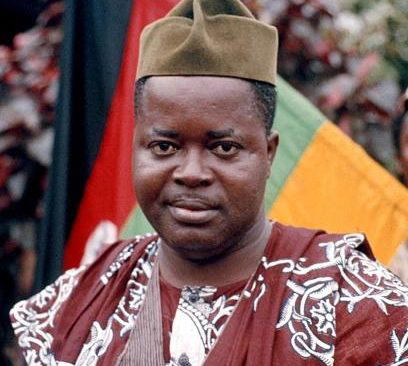
The answers to the above issues may perhaps be found in a comparative circumstance of history. For many Easterners conversant with the contemporary history of Eastern-Nigeria, their dream of SEDC is for it to achieve a replication of the growth and development experienced under the premiership of the late Dr Michael Iheonukara Okpara of the then Eastern Region. It’s noteworthy that the foundation of Okpara’s vision and mission in office was the Eastern Nigeria Development Corporation, ENDC, whose objectives to drive economic growth and development in the area conforms with the objectives of the SEDC put forward by the Tinubu administration. Okparanomics refers to the economic strategy of the then Eastern Region. It was a very high riding economic growth vehicle because Okpara’s vision and mission were in clear intercourse with the set objectives of the ENDC. He never played politics with the economic growth and development of Eastern Nigeria. To his credit, Eastern Nigeria economy was by 1964 rated the fastest growing in the world and attracted to itself many foreign groups on economic understudy missions.
In achieving and sustaining this feat, M. I. Okpara worked with a determined team of selfless men and women who prioritised economic growth and development for the region in order to safeguard and promote the future of upcoming generations. Besides his cabinet ministers, there were key advisers like Sir Louis Philippe Odumegwu-Ojukwu and Dr Pius Okigbo who sharpened his economic and industrialisation policies. After more than 60 years and by the dictates of nature, Dr M I Okpara, his cabinet team and advisers, the ENDC and its 1962-68 Development Plan, the laudable programmes and achievements are now part of a people’s proud history.
Today, we have the SEDC as a new compass to navigate the ocean of social and economic reconstruction and uplift of the South-East after more than half a century of wilderness experiences of the once spotlight horizon. Juxtaposing SEDC with the long defunct ENDC in the hope of harnessing the immense goodwill of the latter would require answers to some critical questions.
I therefore ask: Who will lead a new squad of socio-economic researchers, technocrats and turnaround experts the way M I Okpara did during his era? Who will draw the new macroeconomic contour lines that simulated sustainable growth patterns the way Pius Okigbo did with the Eastern Nigeria Development Plan, (1962-1968)? Who will step into the shoes of the great man of brain, financial muscle and goodwill, Louis Philippe Odumegwu-Ojukwu, who was for the East an industrialisation thinker and literally the passport for foreign investments to the Eastern Region ? Who will bring back the order and honour Alvan Ikoku gave to the education of our children in the past?
Which clergy will shift attention from pulpit collections to preach God, politics and social change the way Akanu Ibiam did?
I acknowledge many other contributors not mentioned here whose individual efforts made the golden years that defined Okparanomics in Eastern Nigeria and whose strategic role must be positively undertaken if the current dispensation will achieve its envisioned goals. In locating the SEDC in the old shoes of ENDC, the first step would be to remain grateful to President Tinubu who created the new highway to economic growth and prosperity for the South-East. The second would be for South-East Governors to hold together in fraternal tenacity on South-East development irrespective of political interests and leanings .
The Imo State Governor, Hope Uzodinma, has the capacity to galvanise and drive this. A carefully crafted development plan with clear time boundaries for South-East development to which the Governors would be signatories is considered fundamental. The third would be to deploy the zone’s rich supply of technocrats accordingly in the key sectoral areas of technology, agriculture, power, education, transport , health, industry and tourism. A South-East renaissance research institute owned and funded by the five states would greatly offer springboard support to the Commission. The research institute would be expected to associate with various professional bodies for the purpose of sharing critical information.
Fourth, would be for the zones endowed entrepreneurs who have been fighting solo battles to begin to coalesce in new collaborative structures that guarantee regional and global connectivity, competitiveness and relevance. The fifth would be for the Governors and traditional rulers to work out and implement a South-East security plan that engenders operational confidence to investors and residents. Considering the prevailing circumstances in the social, political and economic environment of Nigeria, some people will tend to certify SEDC as a daydream.
Some would perceive it as an effort to take attention off apparent governance realities in Nigeria and the South-East in particular. Yet some others would see it as a Greek gift from an ultra-capitalist ruling class designed to further satisfy their selfish ends. These pessimists I classify as victims of those prejudices weighing down the Nigerian dream. Were those who asked, “if anything good could come from Nazareth ” not humbled by the reality of Jesus Christ coming from that chequered city?
The potentiality of the SEDC as a social and economic game-changer is certainly not lost to South-Easterners despite pockets of cynicism. With Okparanomics at the back of their minds, they will earnestly work for the uplift of the zone’s economic status notwithstanding obvious challenges. This goal would be achieved with the added patriotic efforts of the South-East local and diaspora citizens as development partners.
*Felix O Amadi is a multi-disciplinary consultant and member BOT, APC Professionals Forum.
Disclaimer
Comments expressed here do not reflect the opinions of Vanguard newspapers or any employee thereof.