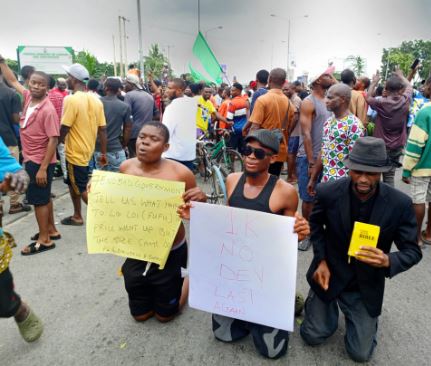
Nigeria’s hunger protest, which erupted on August 1, 2024, was a manifestation of deep-seated frustrations among its citizens.
The protest was driven by multiple factors, including the high cost of living, a recent fuel price hike, worsening economic conditions, and dissatisfaction with government policies.
Protesters rallied under the hashtag #EndBadGovernance, demanding not just economic relief but also transparency, accountability, and good governance.
Day 1-2: Mobilization and Early Reactions
On August 1, 2024, protesters took to the streets in major cities across Nigeria. The initial turnout was significant, with citizens from various walks of life participating. The early days witnessed peaceful demonstrations, with chants and placards highlighting the economic hardships faced by many Nigerians.
Day 3-5: Escalation and Government Clampdown
By the third day, the protest had gained momentum and spread to more regions. However, this period also marked the beginning of the government’s heavy-handed response. Security forces began dispersing crowds, leading to several arrests and reports of excessive force.
The appearance of Russian flags at some protest sites fueled concerns about foreign influence, and calls for regime change emerged, prompting the government to label such demands as treasonous.
Day 6-7: Violence and Human Rights Abuses
The middle of the protest saw a surge in violence. Clashes between security forces and protesters became more frequent, and allegations of human rights abuses, including beatings, tear-gassing, and shooting of protesters, surfaced. The unrest led to instances of looting and arson, further complicating the situation.
Day 8-9: Calls for Dialogue Amidst Continued Unrest
As the protest continued, there were growing calls from civil society and international bodies for productive dialogue.
Despite the ongoing violence, some government officials began to advocate for peaceful protests within designated areas. However, the damage had been done, and the public’s trust in the government’s willingness to address their grievances was severely eroded.
Day 10: Conclusion and Aftermath
The protest officially ended on August 10, 2024. While the streets gradually cleared, the underlying issues remained unaddressed. The protest succeeded in bringing international attention to Nigeria’s economic and political challenges, but the violence and controversial demands, such as regime change, overshadowed its core message.
The government’s response, criticized for its heavy-handed approach, left many questioning the prospects for meaningful reform.
Comparative Analysis: Hunger Protest vs EndSARS Protest
The hunger protest of 2024 shared some similarities with the #EndSARS movement of 2020 but also had distinct differences.
Triggering Issues: #EndSARS was sparked by police brutality, focusing specifically on the disbandment of the Special Anti-Robbery Squad (SARS). In contrast, the hunger protest was driven by broader economic grievances.
Demands: While #EndSARS demanded police reform and accountability, the hunger protest included calls for economic relief, good governance, and regime change.
Participation: #EndSARS saw significant involvement from youth and celebrities, whereas the hunger protest included a more diverse demographic, such as women and the elderly.
Government Response: The government’s initial response to #EndSARS was somewhat conciliatory but turned violent later on. In the hunger protest, the government’s response in Abuja and several parts of the country was forceful from the beginning.
Foreign Involvement: The hunger protest was characterized by the unexplained appearance of Russian flags, a stark contrast to the absence of such flags in #EndSARS.
Level of Violence: Both protests encountered violence, but the hunger protest witnessed more widespread looting and arson, particularly in the North, a region that remained detached during #EndSARS.
Geographic Scope: #EndSARS was more urban-centric and lasted for 17 days, while the hunger protest had a broader geographic impact.
Conclusion: A Mixed Outcome
The hunger protest in Nigeria highlighted the pressing economic and governance issues facing the country. While it succeeded in drawing attention to these challenges, the protest’s success was limited by the violence and controversial elements that accompanied it. Compared to #EndSARS, the hunger protest had a broader scope but faced a more immediate and severe government crackdown.
Moving forward, the key lesson for both the government and citizens is the need for open dialogue and peaceful engagement to address the nation’s deep-rooted issues.
Disclaimer
Comments expressed here do not reflect the opinions of Vanguard newspapers or any employee thereof.