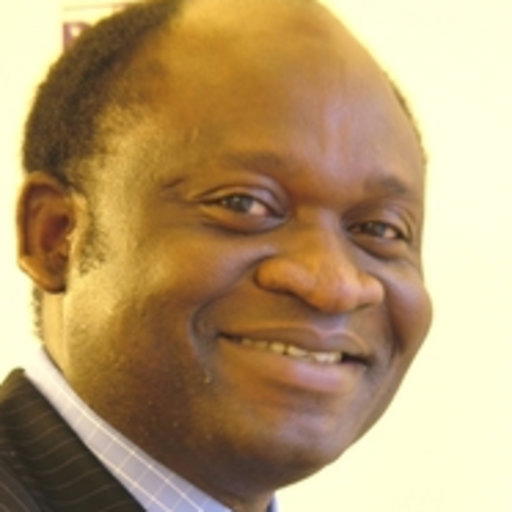
Olu Fasan
There is no shortage of talent in Nigeria. Yet, the country is so badly governed. Why? The answer is two-fold. First, the Constitution allows predatory politicians to gain power without a popular mandate and to capture the entire public realm. Second, Nigeria lacks a critical mass of patriots who can mount an effective rearguard action against bad governance.
Take the first. Nigeria’s Constitution does not require a government of, by and for the people. Rather, it allows any self-interested politician to win a narrow victory through wedge issues and allows a determined government to do what it will without let or hindrance.
Bola Tinubu deployed a divisive Muslim-Muslim ticket and a self-serving Yoruba lokan/emi lokan strategy. Yet, he only secured 37 per cent of the vote, meaning that 63 per cent of the electorate rejected him. Of course, he and his supporters will say he met the constitutional requirements. But unless a government genuinely reflects the democratic will through a popular mandate, it lacks true legitimacy and can’t assert the common purpose.
Sadly, however shallow the mandate or legitimacy of a president, the Constitution gives him unfettered powers to rule like an emperor and imposes a duty on the governed to obey. That’s why, despite inflicting untold misery on ordinary Nigerians, Tinubu’s semi-autocratic government wants to repress the #EndBadGoveranceinNigeria protests. Yet, in 2012, the same Tinubu spearheaded the #OccupyNigeria protests that forced the Jonathan administration to reverse the withdrawal of the fuel subsidy.
In any country, good governance requires guardrails: a feisty press, a vibrant civil society, an unbound judiciary, an enlightened and demanding citizenry and vigilant pillars of integrity. But Nigeria lacks robust institutions of checks and balances; it lacks powerful countervailing forces against arrogant executive action. Yet, if any country badly needs people who can speak truth to power, it is Nigeria.
The ancient philosopher Cicero said that “those who govern a country should be the best and the brightest of the land.” Plato said only “those with the most intelligence should rule.” Socrates advocated rule by “philosopher-king” because a ruler must combine political power with moral and intellectual power. Of course, in Nigeria, rulers are not philosophers and philosophers are not rulers; in fact, philosophers do not wish for political power. Yet, they must be upholders of differing values; they must be voices of reason, wisdom and courage.
This column exists to speak truth to power and to proffer ideas on the way forward. Nigeria’s rulers won’t be my fan, but I take pleasure in the endorsements of the philosophers. In 2016, I received an email from Chief Philip Asiodu, one of Nigeria’s best-ever bureaucrats, who commended an article I wrote on why Nigeria must learn the lessons of economic history. His words: “I agree with you, and we need more of such pieces. Congratulations.” Three years later, on April 27, 2019, the great constitutional lawyer Professor Ben Nwabueze wrote an article in this newspaper in which he quoted me, saying: “As Olu Fasan said in the Vanguard of 28 March 2019, corrupt practices or rigging, in all its variegated forms, breaches ‘the fundamental doctrine of consent of the governed’, which deprives the ‘emergent government the legitimacy and moral right to govern.’” Then, last year, in an interview with Sunday Sun, Col. Abubakar Dangiwa Umar (rtd), the esteemed former military governor of old Kaduna State, referred to me as “The must-read columnist, Prof Olu Fasan”, and went on to quote me.
I recounted the above to pay tribute to great Nigerian thinkers and statesmen. Take Chief Emeka Anyaoku, a man with intellectual heft who draws on his rich experience as the Commonwealth Secretary-General for ten years to intervene on how to move Nigeria forward. What about Chief Afe Babalola who, at 94, writes weekly ideational columns, the latest of which is a multi-part article titled “Democracy and the people’s role”? In 2019, ahead of the presidential election, Dr Christoper Kolade, Chief Asiodu and a few other elder statesmen came together under the auspices of “Burdened Elders” to warn that “the nation is bleeding profusely and approaching a frontier it had never seen before.” That’s what philosophers do: they use their moral and intellectual standing to warn and to guide.
So, kudos to Nigeria’s elder statesmen. But their interventions are few and far between and lack a critical mass. Nigeria needs a permanent National Council of Elders and Statesmen, a non-partisan body that will act as the conscience of the nation. Great patriots, your country needs you! Don’t leave Nigeria’s future to the politicians!
Warm felicitations to Yemi Akeju at 70
Fellow Nigerians, please join me in celebrating a patriot and a trailblazer, Mr Samuel Yemi Akeju, who turns 70 this Saturday, August 3. Since I first met Akeju in the early-1980s, he has been my stalwart cheerleader, but this is about his great contributions to Nigeria.
After leaving Nigeria Airways as a senior manager in the mid-1980s, Akeju plunged into the world of business. His company, Interprods, revolutionised currency sorting processes in the banking sector when it introduced note-counting and coin-packaging machines in Nigerian banks, including the CBN, as the sole agent of De La Rue and CASE-ICC, British manufacturers of bank notes and coins respectively.
Years later, in 1990, Akeju established the Nigeria Media Merit Award, NMMA. A stickler for excellence, he left no stone unturned. I followed him to a meeting with the organisers of the British Press Awards, now called the Press Awards, held annually since 1963, where he picked their brains. I also accompanied him to meetings in London with Alhaji Babatunde Jose, the doyen of Nigerian journalism, to discuss the initiative. Alhaji Jose later became the first chairman of the NMMA Board. When he died in 2008, another giant of the industry, Alhaji Alade Odunewu succeeded him. Akeju leaves the technical aspects of the awards entirely to media experts, describing himself only as Chief Administrator, while his company, Ideas Communications, provides administrative support. Little wonder the NMMA has run annually since the early 1990s and remains the most prestigious media awards in Nigeria.
In 2015, Akeju became the 14th President and Chairman of Council of the Institute of Directors Nigeria. As president, he energetically drove the agenda to secure a charter status for the institute. It is a fitting tribute to the current and past presidents of IoD Nigeria, now CIoD Nigeria, that the institute received a charter status in 2023.
A quiet achiever, Akeju has made huge contributions to business development, corporate governance and media excellence in Nigeria. Happy birthday, SYA!
Disclaimer
Comments expressed here do not reflect the opinions of Vanguard newspapers or any employee thereof.