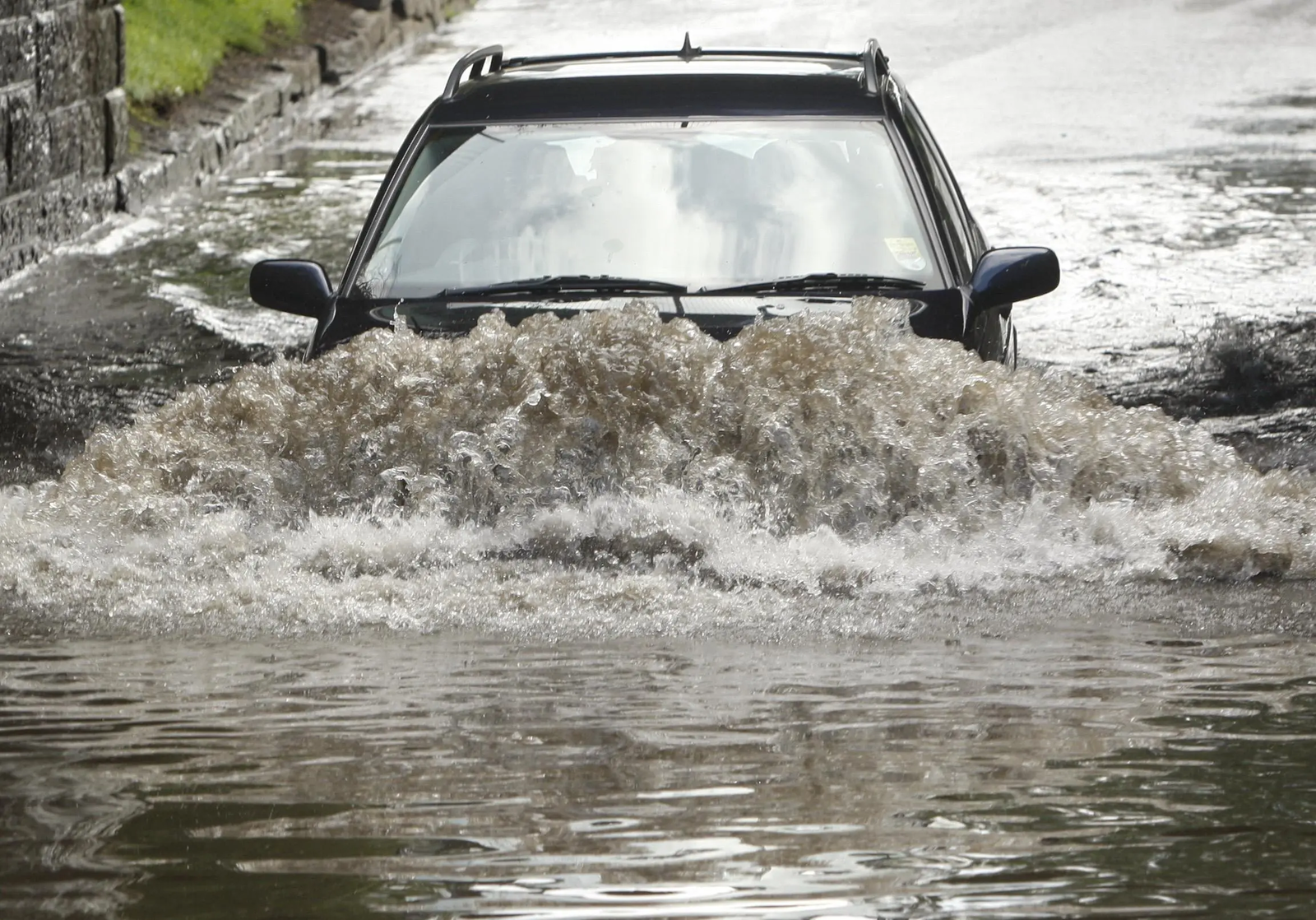
Driving in the rain can be very stressful and dangerous because it’s hard to see the road and conditions can be bad. You have to be careful to avoid getting stuck or crashing your car.
Driving in the rain is often unavoidable, especially when you need to get back home from work or an event. However, it’s crucial to follow safety tips during these times. Increased rain can heighten the risk of accidents.
Here are six essential safety tips to help you if you must drive in flood conditions.
Avoid speeding
When driving in heavy rain, it’s crucial to maintain a safe speed. Many common dangers associated with heavy rain, such as hydroplaning, become more likely when you exceed the speed limit.
Lowering your driving speed enhances safety by allowing you to react more effectively to sudden changes in road and weather conditions.
Check your wipers
Many Nigerian drivers neglect to check their wipers until it starts raining, which is quite unsafe. Wipers are crucial as they clear water from the windshield, ensuring visibility.
It’s important to regularly check that all your wipers are functioning well and in good condition.
If the rain is so heavy that it impairs your vision to the point where driving becomes dangerous, find a safe place to pull off the road.
Turn on your lights
Always ensure that your vehicle’s lights are turned on when driving in heavy rain. This increases your car’s visibility to others and helps prevent accidents by making your position known to other drivers.
Don’t charge into ditches at high speed
Driving at high speed into ditches can lead to your car getting stuck, water entering the engine, and potentially splashing pedestrians.
Moreover, the presence of deep water can pose a potential hazard since you can’t accurately gauge the depth of the ditch.
Also, you must not be distracted, shun pressing cell phones, and be ready to make quick decisions at a moment’s notice.
Keep your distance
Because heavy rains reduce traction, it’s important to increase the distance between your vehicle and the one ahead of you.
Driving at a safe, slow, and steady speed gives you more time to react if the car in front of you stops suddenly or changes lanes abruptly.
Do not attempt to start your car if it stops
If your vehicle stops in a flood, do not try to start the engine. Instead, remove the battery completely and arrange for a tow.
Attempting to start the engine can cause serious damage, resulting in expensive repairs. Removing the battery helps prevent electrical short circuits and minimizes damage to electronic control units.
Disclaimer
Comments expressed here do not reflect the opinions of Vanguard newspapers or any employee thereof.