By Prisca Sam-Duru
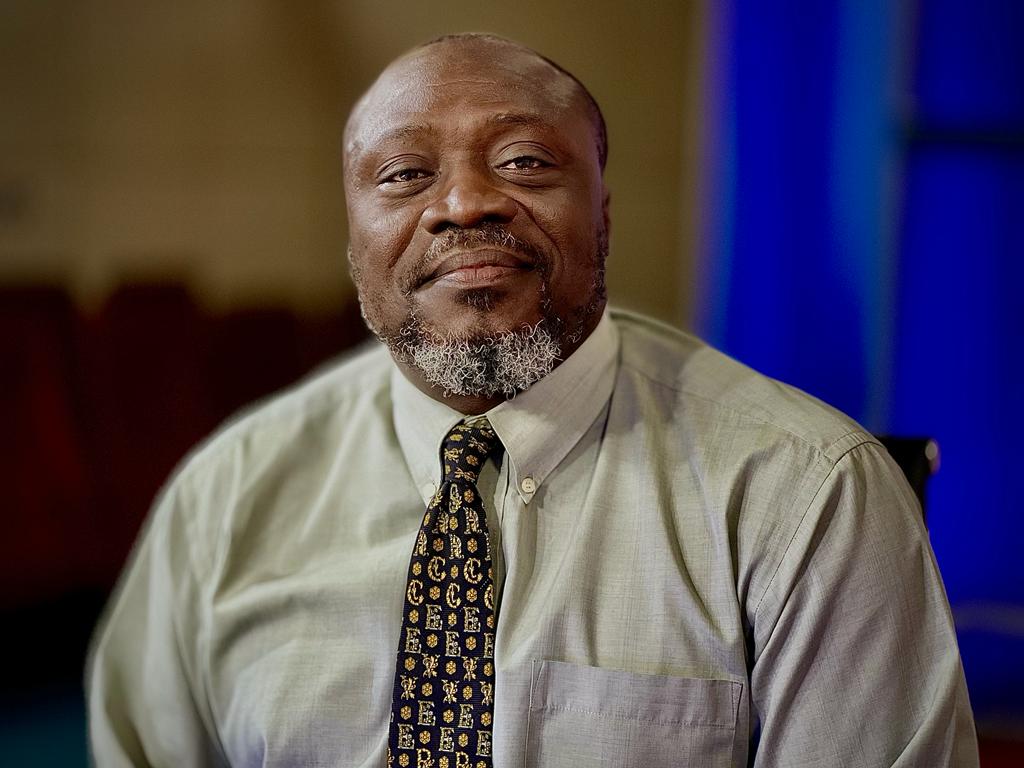
Spokesman for the Presidential Candidate of the African Democratic Congress (ADC), Dumebi Kachikwu’s 2023 Campaign Organisation, Adeniyi Taiwo Kunnu is a multitalented communicator, public affairs analyst and academic. In this interview, Kunnu talks about social media, challenges of misinformation and fake news, how he ensures accuracy and objectivity in his reporting, and much more. Excerpts.
Can you share your journey as a celebrated broadcaster and versatile communicator?
It was close to two decades ago when I first joined the services of the Federal Radio Corporation of Nigeria (FRCN) in Ikoyi, Lagos. Before my entry into the public broadcast platform of Nigeria, I had written as a contributor to a number of magazines and been on television a couple of times as well. I had always been a radio connoisseur even if it was not wine; radio felt like the red liquid in a bottle and I poured out often to drink from the glass. As I was listening to the radio on that fateful day and I heard about open auditions for presenters which were scheduled to be held at the BH – Broadcasting House as we called it – I went there on the day of the audition. I will not forget that I was number 18 on a list of 118 persons who came for auditions. The manager for Metro FM who auditioned me then was Mr. Alaoma Nwaogbe while Mrs. Ndidi Osaka was the General Manager of Metro FM back then. Notably, Mr. Abiodun Atoyebi of blessed memory, whose alias was Atila, was the Director of Lagos Operations who hired me and 12 others who succeeded after the auditions. As they say, the rest is history.
What drives your passion in this noble profession?
God made me realize my gifts early and I nourished my interest along the same lines. Interest coupled with unfazed passion are core motivations for my embrace of journalism. If I am not in government, I can always bring attention to germane issues in political leadership. That’s the picture that had always pervaded my mental space. From my childhood, I have been using words to provide clarity. In my pre-teen years at Gospel Believers Mission in Marine Beach, Lagos, I was always answering questions, participating in drama, and winning prizes. In my teenage years at Deeper Life Bible Church, Owujobi, Cassidy in Okokomaiko, I was a consistent prize winner in church quizzes. At Lagos State University, LASU, Ojo, I was the best debater in the Department of English. As the former National vice-president of the Students of English and Literature in Nigeria, it was the words uttered at the conference in Ife, OAU, that birthed my being unopposed. Even when I was appointed spokesperson to a presidential candidate of a political party, it has always been about words for solutions.
So, it is a reality of my duty to proffer solutions through words. Concerning engaging various topics and issues, it is the sustained passion and daring to do journalism differently. In these times, journalism has been given different meanings because almost all adults seem to have a platform or the other. So, it is the cutting-edge knowledge of the issues, knack for research, being deliberate and intent on giving value, knowing and drawing the lines of familiarity between politicians and myself, while reminding that I have a duty to keep power mongers and transient holders in check for the ultimate good of my people, my country, my continent, and the world.
Is there any particular story or interview that has had a significant impact on you personally and professionally?
Yes and yes. The African-American Neurosurgeon Benjamin Carson rubbed off on me a great deal. I have read three of his books but the one entitled ‘Gifted Hands’ seems to leave me with a lot of reflections. Here was a man whose mother raised him alone with his brother; a man who had anger issues; man who almost killed someone because of his anger issues, but relied on God and the book of proverbs in the bible to be guided. Ultimately, a man who conducted a near-impossible surgery with the help of God. I said I realized my gifts early and I believe the story of Dr, Carson resonated with me upon his realization of a God factor in his life and career.
Dr Carson at some point in his life had been a local champion at school, but when he left his locality and moved away from home for further studies, he realized he must be better than the best to have a say. That means excellence. He strove to excel when the need arose, he never relented on his oars, he saw a challenge and dug deeper to break through. His determination transcends the laxity associated with mediocrity. This is a real elixir for me. Notably and in the midst of it all, his humanity remains intact. To me, the God factor, the importance of continuous learning for greater heights, and the human face towards fellow humans.
What style or approach do you employ when reporting on different topics or engaging with diverse audiences?
The first is general knowledge of the issues, while the second would be specific knowledge of an area of focus. For instance, having an idea or knowledge of education is important, but when reporting, writing, or talking about children in kindergarten; pupils in primary schools, students in secondary schools, and undergraduates at the university level, then angles are created and must be taken cognizance of. At the juncture of discussing university education, one focuses on lecturers and their students, especially sex and money for marks, avoiding cultism and not forgetting strike actions. Also, I do thorough knowledge through reading and research, followed by the listening/reading or recipients of such information being doled out.
In this age of social media and instant news consumption, how do you ensure accuracy and objectivity in your reporting?
If you asked this question ten years ago my answer would have been, if you don’t know, leave it out. These days the response has to be, if you don’t know, find out. Social media as one of the agencies of information in these times has a lot of limitations for those who only need to have data on their phones, alongside the many unknown followers and there is wildfire on social media. In proper journalism, facts are checked, queries are responded to, chasms are closed and gaps are covered because journalists themselves are gods in their rights.
Accuracy is ensured by thoroughly cross-checking facts, while objectivity is to report all sides of a story or it would turn out as a watery opinion without substance. I must also recommend training on the use of smartphones from primary four in all schools across Nigeria, as this will help evolve a culture of responsible social media use.
So, how do you navigate through the challenges of misinformation and fake news?
Taking responsibility for what one disseminates. The consciousness of ethical practice in the noble profession of journalism is important. Avoidance of yellow-page journalism with a twenty-foot pole and top of it all is the decision to do right no matter whose ox is gored. On the side of government is legislation that carries fines and I mean heavy fines for those individuals and organizations that deliberately subvert correct information because their god is their belly.
Are you conscious about inclusivity and diversity in your reporting?
Acceptance of diversity in our world is fundamental to the health of humanhood without borders. I have a quadruple of suggestions in that regard. The first is to educate oneself. Myopia is not only a defective eye problem but also a mind that is shriveled being malnourished from lack of learning. A skewed worldview affects the human mind and prevents enriched perspectives. I deliberately seek knowledge. The next is to avoid stereotypes. If one is educated or armed with knowledge enough, there will not be room for basking in the delirium of aligning with stereotypical postures. Since I am speaking as a journalist, I seek diverse sources as well and make sure that I use inclusive language while speaking or writing especially while giving attention to under-reported stories.
How do you ensure the representation of various voices and perspectives, particularly those that are often marginalised or underrepresented?
Again the consciousness of the human angle comes here, as this requires thoughtful practice and intentional effort. The first step for me is to ascertain through research, the historical and social factors that contribute to marginalization. Things do not just happen and people do not just become marginalised, therefore I seek to know who and why because there is a what. This seeking to find means I must be involved in active outreach. Journalism is a huge task, and without relentless effort, then one should forget the impact. I also must check my biases.
Africa has values that are different from those of her Western counterparts, I must therefore do well to not allow my socio-cultural plus political biases to render redundant the priority of ethical reporting, and this I pinch myself into repeated reminding. Important here for me is also my collaboration with communities for the diversification of my sources.
Disclaimer
Comments expressed here do not reflect the opinions of Vanguard newspapers or any employee thereof.