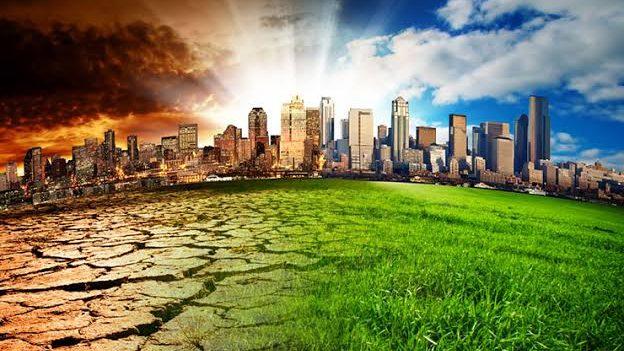
File image
By Krakrafaa Bestman
Since after the ice age, which is mostly referred to as Holocene (Angus, 2020), human activities have constantly reshaped the global environment in a way that it can no longer be ignored. To this end, geologists and environmentalists alike have continued to argue about the name of the era Anthropocene, which is basically an era where human activities are the significant cause of the global environmental change. Despite scholars debating about the name, many notable institutions have gone ahead to embrace it. For example, in 2011, The Economist declared in its front page Welcome to the Anthropocene, thereafter in 2013, several arts exhibitions in Berlin also presented The Anthropocene project (Malhi, 2017).
Considering the available scientific evidence with respect to these changes caused by human activities, it is obvious that we have entered a new era where human activities have caused a colossal and irreversible damage to the ecosystem. In terms of climate change due to human activities, Kulp and Strauss (2019) noted that the emission of carbon dioxide has changed the global mean sea level from 1116 cm in the twentieth century. In another study, Florides and Christodoulides (2009) observed that since 1812, the concentration of CO2 in northern hemispheric has shown three levels of maximum concentration in 1825, 1857 and 1942 with that of 1942 reaching more than 400ppm.
Other noticeable changes are Arctic Sea ice retreat, increases in heavy rainfall and flooding, droughts, permafrost melt, and loss of glaciers (Solomon, Plattner, Knutti, & Friedlingstein, 2009). The carbon dioxide emitted not only remains in the atmosphere, however, about 80% of it is mixed in the ocean thus changing the chemistry of the ocean (Solomon, Plattner, Knutti, & Friedlingstein, 2009).
The severity of this human-induced climate change is not only on the magnitude of the change, but also has the potential for irreversibility. In fact, considering the magnitude of the damage, it will be almost impossible to reverse the change even for over 1000 years (Solomon, Plattner, Knutti, & Friedlingstein, 2009). From the foregoing evidence, it is obvious that the level of carbon dioxide emission has increased compared to previous centuries and it has negatively impacted the earth. In the light of the above, it is obvious that the earth is changing, and that the change is due to human activities. Obviously, we are in a new era and the term ‘Anthropocene’ is coined to represent the era where human activities are the causes of the major changes of the earth (Malhi, 2017) is a reality.
Look back, it is obvious that from the beginning of the industrial revolution, humans have resorted to perceive the lithosphere, hydrosphere, atmosphere, and the biosphere as a resource base without any thought of sustainability. This has led to gross misuse of the natural capital to the point where the natural resources have lost their reproductive ability to sustain the needs of humanity.
The major human activities that led to this ecological deficit are the emission of greenhouse gasses (GHGs) and waste. The continual emission of GHGs has led to deforestation, sea water rise, loss of biodiversity, droughts, loss of aquatic life, loss of glaciers, flooding and changing the chemistry of the ocean (Solomon, Plattner, Knutti, & Friedlingstein, 2009). Worst till, humans could not also manage the waste they have generated which has its own toll on the environment.
The impact of the waste generated has led to the destruction of the ecosystem (Ramesh, Paramasivan, Akshay, & Jarin, 2022) and consequently significantly impacted the biodiversity of the environment.
The impact of the various human activities such as production of goods and nonrenewable electricity generation on the environment has raised several concerns for environmentalists and scholars alike. In this context, scholars have developed several concepts to evaluate the impact of human activities on the environment. One of such concepts is the Impact, Population, Affluence, and Technology (IPAT). IPAT was conceptualized to evaluate the impact of human activities such as Population, affluence, and technology (Ehrlich & EHRLICH, 2008).
Assessing the population impact on the environment (I) from the perspective of IPAT with respect to electricity generation reveals that a population increase will lead to a corresponding increase in the electricity produced. This is because humanity in our contemporary society depend on electricity for their daily needs, in addition to production of goods, and services. It therefore implies that the quantity of electricity produced will depend on the population size, more especially in affluent societies where the individuals depend solely on electricity for their day-to-day activities.
Knowing that the electricity generated more especially nonrenewable has a direct impact on the environmental due to carbon dioxide, sulfur dioxide, and nitrogen oxides emitted into the atmosphere. It thus reveals that as the population increases there would be a corresponding increase in the emission of these gases due to the increase in the electricity consumed so also the environmental impact. The emission of these dangerous gases has been linked to greenhouse effect, climate change, and acid rain, which results to negative environmental impact such as rise in sea level, deforestation, destruction of ecosystem.
Zagheni and Billari (2007) noted that population has an implication to carbon dioxide emission, and it has a negative environmental impact. It is also likely that a population decrease might lead to less utilization of electricity and consequently also reduce the magnitude of the environmental impact. Additionally, as the population increases it creates the need for more land use, also, the requirements for more resources such as food, water, and other manufactured items, all these have an implication to electricity production, thereby increasing the use of electricity, which leads to several environmental consequences (Bill, 2016).
The premise that population has a direct implication to electricity production and usage assumes that the entire population has the means to purchase electricity, which in most cases might not be likely.
This introduces another important element in the IPAT concept, which is affluence.
In terms of affluence as a factor in the IPAT concept, it is obvious that individuals that are affluent will have the tendencies to utilize more electrical devices and that will increase their electricity and production appetite. For example, affluence lifestyle is associated electric cars, heating, cooking, washing, lighting, diverse home appliances for large houses, which leads to higher electricity consumption and the associated environmental impact as mentioned earlier. In a study conducted by Kennedy et al., (2009), they found that personal income significantly influenced the amount of electricity consumed by an individual.
Obviously as the consumption pattern of the individual increases due to the affluence, it also increases the electricity consumption and the associated environmental impact of producing the electricity. In a study conducted by Shang, Hu, Fan, Song, and Su (2023), they observed that population has a significant impact on the environment because of the livelihood. Although an affluent lifestyle has a direct relationship with energy consumption, however, it is also likely that an affluent population might have a better understanding of sustainability and consequently may utilize renewable energy bulbs for lighting, also apply reasonable consumption habits and lifestyle that might reduce their electricity consumption.
Notwithstanding, their affinity for produced goods still has its tool on the environment.
Assessing the environmental impact of technology from the context of IPAT revealed that the technology utilized in the electricity generation has different degrees of impact on the environment. For example, in terms of the carbon dioxide emission, it has been reported that the utilization of fossil fuel emit more GHGs into the atmosphere when compared with the electricity generated through nuclear power, hydropower, and geothermal.
The electricity generated by hydropower emits less greenhouse gases (Kennedy et al., 2009). Although nuclear power, hydropower, and geothermal technologies have less emission of carbon dioxide, nevertheless these technologies are not totally environmentally friendly, they also in their way degrade the environment accordingly. For example, peculiar to nuclear power plants is the issue of environmental deterioration due to the disposal of spent nuclear fuel (Kraft, 2013). Whereas hydropower and geothermal power generation technologies are associated with disruption of aquatic life and ecosystem imbalance.
Technologies such as renewable energy such as wind and solar energies are associated with insignificant emission of carbon dioxide, nevertheless, these technologies also have the tendencies to create imbalance in the ecosystem, noise population and usurp of agricultural land. It is obvious that the choice of technology has influence in the determination of the health of the environment (Marian, 2001). Using technologies such as renewable energy has the potential to significantly reduce the environmental impact of electricity production. From the three variables in the IPAT concept, it is obvious that by utilizing renewable technology, the emission of dangerous gases such as carbon dioxide, sulfur dioxide and nitrogen oxides would be minimized, which will ultimately reduce the environmental impact associated with electricity production.
The extent of the human activities on the environment may be better explained from the prisms of ecological footprint to bring to the fore the extent of the environmental damage. Ecological footprint simply reveals how much of natural resources required to sustain humanity. Simply put, how much nature capital is available to humanity and how much of the nature capital are used by humans (Rees, 1992).
In fact, ecological footprint measures natural capital assets and the waste humans generate compared to how fast nature will absorb the waste and regenerate what humans have consumed (Collins & Cooper, 2017). It is obvious that human activities such as electricity generation, production of goods have led to the emission of carbon dioxide, sulfur dioxide, nitrogen dioxide into the atmosphere thereby putting a demand on the forest to absorb the quantity of carbon dioxide. Therefore, from the ecological perspective, if the available forestland does not have the capacity to absorb the emitted carbon dioxide, it leads to excess carbon dioxide in the atmosphere which leads to climate change that causes negative environment impact such as rise in sea water levels, etc.
Whilst acid rain due to the emission of sulfur dioxide and nitrogen oxides lead to deforestation. It is obvious that from ecological footprint perspective, the carbon dioxide, sulfur dioxide and nitrogen oxides emitted during production activities and electricity generation put more demand on the carbon absorption requirement on the forest land. Whilst the sulfur dioxide and nitrogen oxides emitted causes acid rain, which causes deforestation thereby reducing the productive surface of the earth, consequently causing an ecological deficit. It is an ecological deficit because the earth has a fixed land mass, and that, the land demand to meet human consumption and waste handling requirements has become more than the productive space available.
Furthermore, it has also reduced the productivity of the area, consequently reducing the biocapacity of the natural asset. Two assessment components of ecological footprint are the measure of the productive asset area to provide the consumption and waste needs of a defined population and the biocapacity which is referred to as the ability of the productive asset to regenerate what the population has consumed (Collins & Cooper, 2017). Considering the effect of the colossal destruction caused by human action, it implies that the specific natural assets have lost their ability to regenerate themselves to meet the current and future demands thereby resulting to biocapacity deficit. This is quite an unfortunate situation.
Certainly, for every human action on the environment there is a corresponding consequence. This is in concurrence with Sir Issac Newton third law of motion which states that for every action there is an equal and opposite reaction. The ignorance associated with human action with respect to the lithosphere, atmosphere, biosphere, and hydrosphere is that these environments are created to sustain and maintain life for humanity and not to be exploited. It is also worthy to note that the environment is active, and it would surely respond accordingly to humanity. Thus, whatsoever the action of human to the environment, the environment will respond with corresponding reaction. Several scholars and environmental protagonist have continued to attribute the current climate change as a precipitate of human production greed.
Notable amongst was Carl Max. The Carl Marx provocative statement, Capitalist production only develops the technique and the degree of combination of the social process of production by simultaneously undermining the original sources of al wealth- the soil and the worker, dwells on the importance of understanding the implication of social processes of production on natural and human resources. Obviously, Carl Marxs statement raised some fundamental concerns about the sustainability of capitalist production.
First, Carl Marx implied that the social processes of production are carried out by utilizing natural capital (soil) and human capital (workers) and that without these two resources there would be no production. Second, capitalist production undermines the negative impact of the production on the natural capital (soil) and human capital (workers). Third, if capitalist production continues the path of utilizing natural and human resources without considering its adverse effect on these resources, the consequence would be an unsustainable production.
To avoid the potential extinction of human race and the natural capital, the need for sustainability became the path forward. Sustainability consists of fulfilling the needs of current generations without compromising the needs of future generations, while ensuring a balance between economic growth, and environmental care. From the definition, it thus implies we must ensure that whatsoever we extract from nature to meet our needs, we must extract and use it in manner that nature will be able to continually reproduce it for our use today and meet the needs of future generation. Obviously, sustainability is the ability of a system to sustain itself, which is to continually maintain its function or productive capacity. Thus, in terms of the way the natural resources have been utilized, it is obvious that the natural resources have been use beyond their ability to reproduce themselves to meet todays human needs and that of the future generation. Thus is an ecological deficit that requires urgent attention if the current climate changes should be abated.
To address the problem, scholars and scientists alike have adopted multi-disciplinary approach to develop several concepts, processes, and technologies. First, the need to understand the of concept energy-water-food (EWF) nexus and Life Cycle Analysis (LCA) to have a clearer view of how to ascertain the interrelatedness and interactions within the various units throughout the life cycle of the system and the associated environmental impact. Second the push for renewable energy is another factor that will bend the curve of the major exponential trend. Studies (Dicer, 2000; Ali et al., 2021) have shown that renewable energy utilization has the capacity to drastically mitigate climate change.
Third, in terms of remediating the environment, scientists and researchers alike have also proposed several geo-engineering schemes to bend the downward trend caused by the emission of GHGs. Geoengineering initiatives such as, engineering hydrogeology and geothermal energy are some of the sustainable development initiatives that have the potential to return the environment to its natural state (Fahaszy et al.,2011). Four, other have mentioned sustainability strategies such as tree planting, carbon sequestration, natural resources accounting, biofuel, forest protection, and biodiversity protection schemes, as a measure to abate the current wave of climate change.
Five, besides cities adopting and applying technologies to advert the downward trend, institutionalized efforts such as the United Nations 17 Sustainable goals, 169 targets and 232 indicators have also made tremendous impacts (United Nations, 2023), all gearing towards mitigating the dangerous trend set by the emission of GHGs in the atmosphere. Six, scholars and practitioners have also introduced the concept of circular economy as waste management and production optimization strategy to abate climate change.
For example, currently industries are adopting the concept of circular economy rather than linear economy thereby mitigating climate change (Suarez-Eiroa, Fernandez, Mendez-Martínez, & Soto-Onate, 2019). It is worthy to note that in a circular system, the waste generated becomes input to other systems thus recycling or reusing the waste thereby minimizing environmental degradation and waste generation which are associated with linear systems. It is likely that by adopting these strategies will gradually reduce the negative global trend on climate change.
*Krakrafaa Bestman, PhD writes from Abuja [email protected]
Disclaimer
Comments expressed here do not reflect the opinions of Vanguard newspapers or any employee thereof.