By Soni Daniel, Editor, Northern Region
The outgoing Chinese Ambassador to Nigeria, Mr. Cui Jianchun, has shared insights into his three-year tenure and key achievements recorded during his diplomatic mission in Nigeria.
In an interview with Vanguard Correspondent at the Chinese Embassy in Abuja, Jianchun touted the strategic initiatives and collaborative efforts, which deepened China and Nigeria’s relationship and laid a stronger foundation for future cooperation, as his main feats.
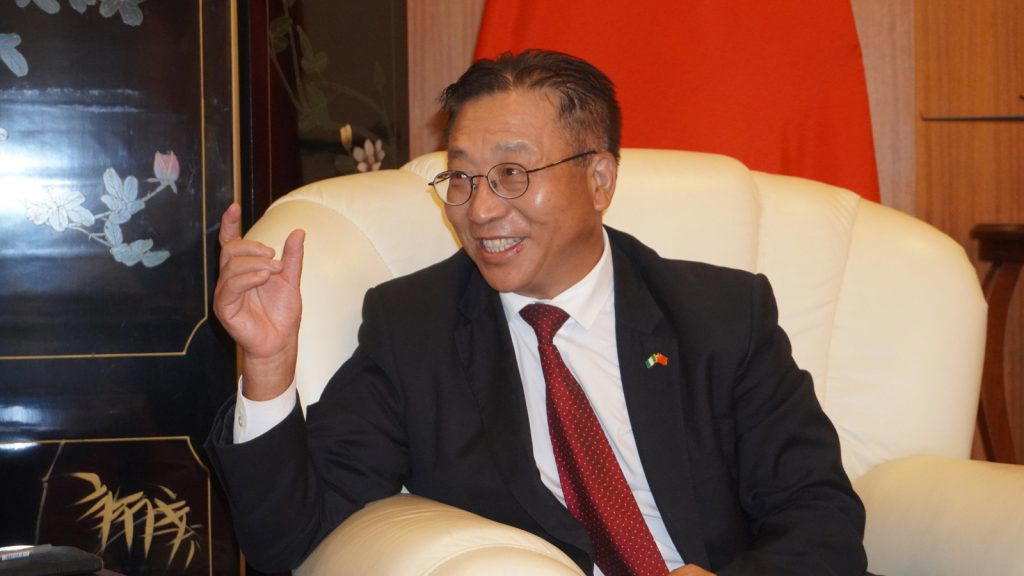
Jianchun, who served as the 14th Chinese Ambassador to Nigeria, said he was grateful for the opportunity to serve in that capacity and contribute his quota to a strong relationship between Nigeria and China.
Among other key issues, Jianchun said he was happy that the innovative “5G GDP strategy,” a visionary framework aimed at fostering Gross Development Progress and charting a strategic roadmap for the next 50 years of the China-Nigeria relationship, was birthed under his tenure.
Emphasizing the importance of long-term planning, the ambassador underscored the need for clear strategic goals to guide the partnership between the two nations.
Jianchun said: “The 5G GDP strategy, comprising five strategic goals encompassing protocol, economic cooperation, military security cooperation, and people-to-people communication, laid the foundation for enhanced collaboration between China and Nigeria”.
Jianchun highlighted the prioritised areas known as the 5-Is (Infrastructure, ICT, Industry, Investment, Import and Export) and outlined essential conditions such as security structure, speed, synergy, and supervision to facilitate mutual growth and development.
The ambassador also harped on the significance of cultural exchange in fostering mutual understanding and harmony between China and Nigeria, boasting that the sector also received a big boost under him.
Drawing on China’s rich cultural heritage spanning over 5,000 years, the diplomat said he did his best to promote cultural diversity and unity through initiatives that celebrate the shared values of both nations.
He envisioned a “Nigeria-China symphony” that embodies harmony and cooperation at various societal levels, emphasizing the importance of unity among ethnic groups and cultures.
Respondingb to questions regarding the level of cooperation between Nigeria and China in terms of Chinese companies, the Ambassador expressed satisfaction with the progress achieved during his tenure.
Notable infrastructure projects such as the Lekki Deep Sea Port, the Lagos Blue and Red Blue Line Rail, the Lagos-Ibadan Rail line, the Abuja-Kaduna Rail line, the Zungeru hydro power plant, the Agricultural Technology Demonstration Centre in Ushafa, the terminal expansion of the Lagos, Kano, Port Harcourt and Abuja airports stand as tangible outcomes of bilateral collaboration between both countries.
In the area of Information Communication Technology (ICT), Jianchun said the contributions of leading Chinese companies such as Huawei and ZTE in driving technological advancements in Nigeria. He stressed that Huawei’s training programs in 5G technology have benefitted over 30,000 Nigerians, showcasing a commitment to capacity building in ICT.
He pointed out that significant investments have also been made in key sectors such as agriculture, mining, and automotive industries, with a focus on local capacity building and technology transfer.
He also said that scholarships provided by Chinese businesses like CCECC have enabled over 200 Nigerian students to study in China, fostering knowledge exchange, job creation, and skill development.
Initiatives such as the partial financing of a transport university in Daura and a wagon plant in Kajola demonstrate a long-term vision for enhancing local capacity and reducing import reliance.
Ambassador Jianchun highlighted success stories like Skyrun, an air conditioner company utilizing locally assembled spare parts in Nigeria, and partnerships like the largest glass factory jointly managed by China and Nigeria in Lagos.
He said: “These collaborations exemplify the mutual benefits of Chinese-Nigerian partnerships and set a positive trajectory for future engagements.
“Moving forward, our goal is to collaborate not just on signing agreements but also on implementing major projects and sharing China’s development trajectory story. I believe this will be beneficial for Nigeria. We need external forces to drive the country forward, similar to the opening up of China in 1978.
“This year, China’s focus is on “New Qualitative Productive Forces,” a concept discussed during the recently concluded 2024 Two Sessions meeting in Beijing. This approach emphasizes the use of new technology, energy resources, and digital economy to drive progress and development,” the diplomat added.
Disclaimer
Comments expressed here do not reflect the opinions of Vanguard newspapers or any employee thereof.