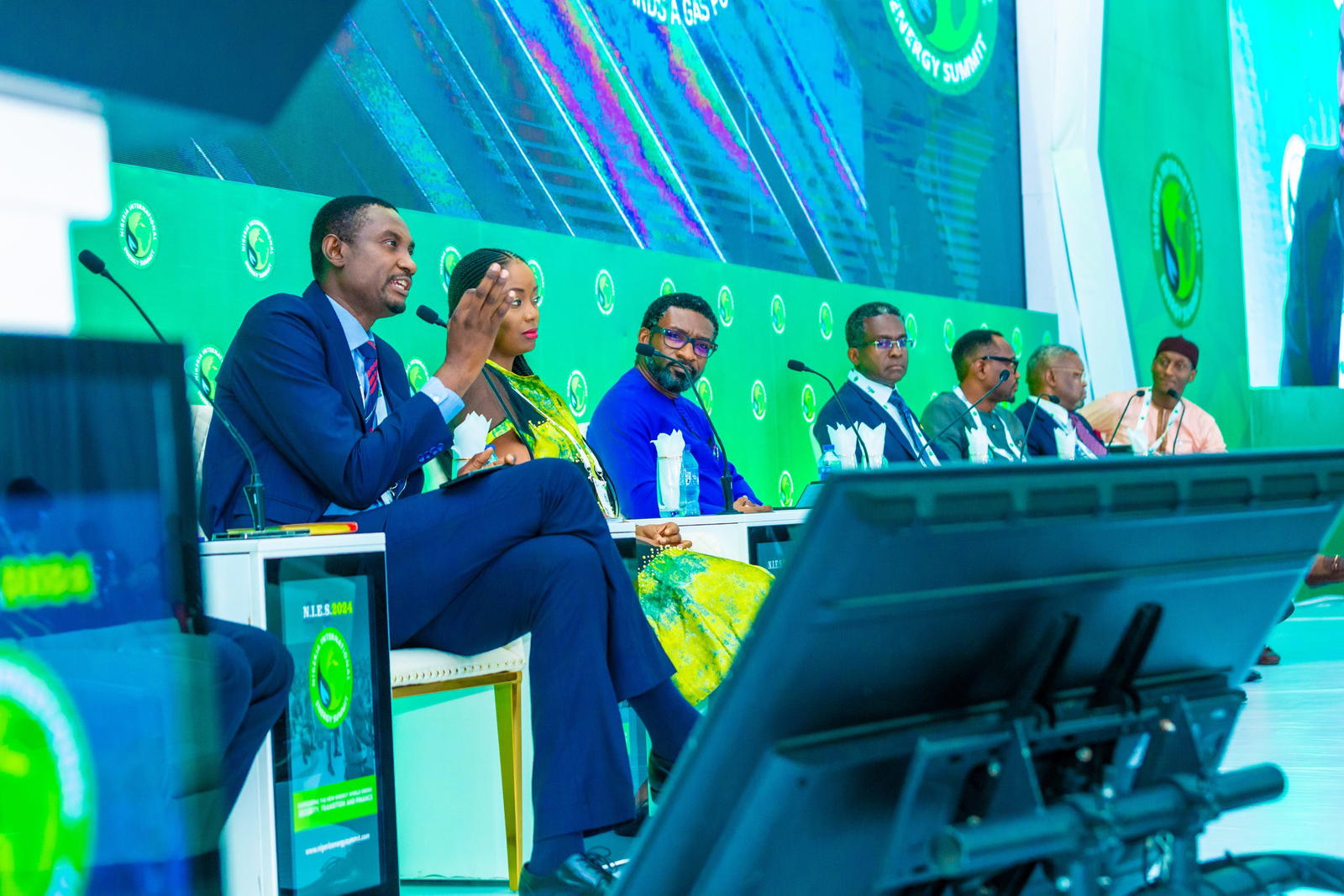
N.I.E.S 2024: from left: Managing Director, Oilserv Ltd, Engr. Nnanna Anyanwu; Ms.Chinenye Uwanaka, Managing Partner, The Firma Advisory; Mr. Ufuoma Otomewo, GM(Commercial), Nigeria LNG Ltd; Mr. Emeka Ene, Group Managing Director, OilData Inc.; and others during a panel session of Gas Stakeholders Conversation at the ongoing Nigeria International Energy Summit, N.I.E.S. 2024 Conference in Abuja.
By Ediri Ejoh
Operators in the Nigerian petroleum sector have reiterated calls for more investment toward new technology as well as access to finance as the recipe for actualization of the Federal Government’s pursuit of its gas master plan for a smooth energy transition.
This is even as speakers at the just concluded 7th Edition of the Nigeria International Energy Summit (NIES 2024) in Abuja, unanimously expressed confidence in country’s capacity to drive the African energy transition program.
Speaking in a panelists session during the conference, Chairman of Oilserv Limited, Emeka Okwuosa CON, said financial fundamentals and technological inclusion were imperative to infrastructural and gas development.
Okwuosa who was represented by the company’s Managing Director, Engr. Nnanna Anyanwu, said Oilserv has been in the vanguard of establishing the required infrastructure for the utilization of natural gas.
The Oilserve Group he said has demonstrated commitment to delivery of projects in oil and gas industry as an active player in the gas transmission and distribution network.
On the need to improve the use of technology as well as funds for energy transition, he said, “Nigeria does not exist separate from the global environment. We must realise that we are intensely competing with every other country on the adoption of technology and access to finance.”
Collaboration, synergy key to growth
He called for collaboration and synergy between local and international players so as to be able to source for the technology required to build the desired infrastructure.
Meanwhile, in his presentation on Key Initiatives and Subjects for Supporting Energy Provision, Okwuosa took a critical look at the energy sector and pointed the way forward through a slew of informed analyses on how to reposition the sector for efficiency.
According to him, “diversification of the energy mix, grid modernization and expansion, investment and financing, energy efficiency and conservation, skills development and capacity building as well as government support are components for revamping the sector and bringing the necessary investors as well as investment to the sector.”
He noted that “government has done a lot in this area, but considering the level of progress required to achieve our defined energy sufficiency objectives, we solicit more support from the government in the areas of access to FX availability, a continuously improving regulatory environment, fast-tracked administrative but well-supported approvals, and provision of frameworks for commercially-driven investments.”
Finance impede project
Part of the challenges he said is access to finance, the sore point of which is high interest rates and limited access to credit. He proposed solutions like specialized financing mechanisms and risk-sharing initiatives (Project Financing, JV and Strategic Partnerships, PE Investments, Assets-Based Financing, Vendor Financing, Bond Issuance, Export Credit Agencies, Crowdfunding and P2P Lending, and Government Support Initiatives such as tax breaks, subsidies, grants).
He added that “infrastructure gaps have been a big challenge and there is the need for investment in generation, transmission and distribution infrastructure (BOO, BOT, contracting models) to address bottlenecks and improve efficiency. There is a need to consider the gradual removal of end-user subsidies to reduce the burden on the government and promote efficiencies based on demand and supply forces.
“He also, identified security and community engagement as critical challenges, however, calling for a better community engagement, while advocating for transparent and inclusive dialogue with communities affected by energy projects to address concerns and build trust.”
On the development of autogas and CNG in Nigeria, Okwuosa said there is a need to examine the role of “autogas (LPG) and compressed natural gas (CNG) in Nigeria’s household and transportation sectors, including their potential to reduce carbon emissions, improve air quality, and enhance energy security.”
Also to be looked at according to him, are the challenges involving “Huge CAPEX (for NCG plant construction and conversion technology/equipment, Insurance/indemnity cover challenges, possible Warranty loss, adequate know-how, etc).”
On the opportunities and challenges ahead in the sector, he stressed the need to Identify key opportunities for investment growth, and job creation in Nigeria’s gas sector (Downstream, Midstream), particularly in power generation, infrastructure development, and downstream gas utilization.
According to him, “There is a need for the government to address challenges such as policy and regulatory uncertainties. This involves clear policies on gas pricing mechanisms, access to gas infrastructure, and market competition that can stimulate investment in gas exploration, production, and infrastructure development while ensuring fair market practices and consumer protection.
He, however, said with increasing global focus on climate change mitigation, Nigeria needs to develop robust policies and regulations aimed at reducing greenhouse gas emissions across various sectors, including the energy industry.
He hinted at more cybersecurity and data protection, adding that as “digitalization and technology adoption increase in the energy sector, Nigeria needs robust cybersecurity and data protection regulations to safeguard critical energy infrastructure, prevent cyber threats, encourage/safeguard effective tariff regime and gas metering and ensure the integrity of energy systems.”
He stated that in the area of Local Content Development and Empowerment, a lot has been achieved with Nigeria’s local content laws in the energy industry and through NCDMB, ” however, we would like to see more. Nigeria should encourage local ownership; and accelerate capacity building, skills transfer, and job creation to empower local communities and enhance our ability to be in control of our energy future.
“Government should continue to look for ways to address the challenging funding constraints (CAPEX financing, access to FX to service debts and run operations). Failing to achieve our objectives here could derail our energy sufficiency objectives.”
Gas devt to spurn from Nigeria, others
Also speaking, Effiong Okong of Seplat Energy said enhanced technology for decarbonisation became necessary given the growing population and its forecast, which was projected to have 400 million people by 2050.
He said the demand for gas was massive, adding that major gas growth would come from Egypt, Mozambique and Nigeria.
Okong emphasized the need to spur infrastructural development across the country’s gas pipeline project corridor for gas penetration.
He added that Seplat, operating in the upstream and midstream space, is looking at investment in the downstream sector.
According to Daere Akobo, chairman of Pana Holdings Limited, a nation cannot be developed without technology; excess technology that provides wealth is deployed.
Mr Akobo also advocated deploying advanced technology for more oil production and closing infrastructural gaps.
He lauded the chief executive of the Nigerian Upstream Petroleum Regulatory Commission, Gbenga Komolafe, on introducing a new metering policy for dispute resolution and others.
Disclaimer
Comments expressed here do not reflect the opinions of Vanguard newspapers or any employee thereof.