By Gabriel Ewepu, Abuja
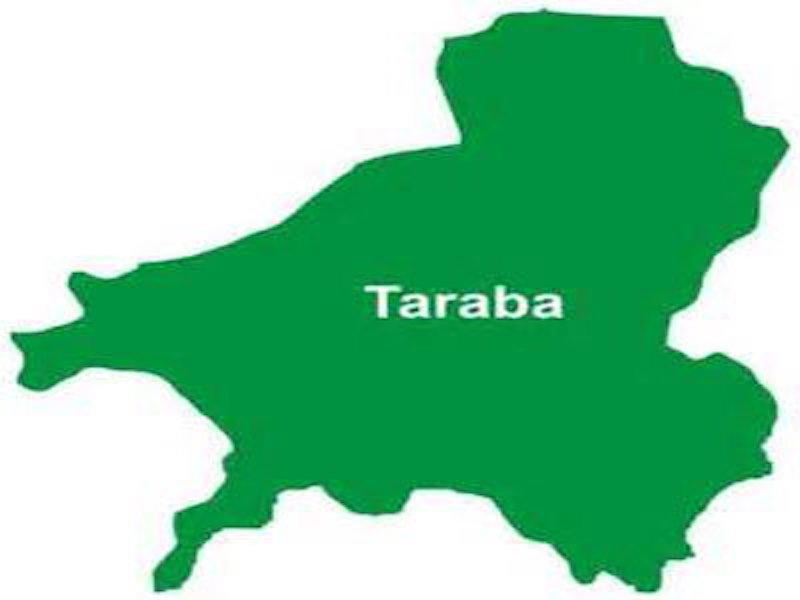
THE European Union, EU, funded PROSELL Project has benefited 42,000 Taraba households in 66 months.
This was disclosed during the PROSELL Close-Out Review Meeting and Dissemination/Knowledge Sharing Workshop PROSELL Project Closure Review Meeting held in Abuja.
The PROSELL Project was executed by Oxfam and Development Exchange Center, DEC, and the project has played a pivotal role in enhancing food security and livelihoods for over 40,000 households across 80 rural communities in Taraba State, which also 700 food reserve/grain banks built, supplying 660.93 tonnes to 16,184 households; 52,495 bags of fertilizers distributed; 4,500 individuals received livestock; 9,000 female-headed households received home gardening kits for vegetable farming; and 264 water pumps distributed to households for dry season farming.
The project which was implemented in six Local Government Areas of Taraba State including Ardo-Kola; Donga; Kurmi; Takum, Wukari, and Zing, had a comprehensive approach, encompassing knowledge transfer, asset distribution, financial inclusion services, market linkages, and social protection programmes, has led to increased productivity and improved wellbeing among beneficiaries.
The Closure Meeting evaluated the project’s accomplishments, identify challenges encountered, and explore sustainable avenues for maintaining the positive outcomes achieved during the six-year
implementation.
The key objectives include: Assessing the extent of project implementation against predetermined targets; Presenting tangible evidence of the projects impact through human stores and interactive media; Facilitating a collaborative effort among stakeholders to formulate a joint sustainability plan; Showcasing unintended successes and drawing attention to key learnings; Addressing challenges and officially launching a post-PROSELL intervention.
The Country Director, Oxfam in Nigeria,Tijani Hamza, on the sidelines of the meeting explained why Taraba State was chosen for the implementation of PROSELL Project, “Most countries have what is called poverty and inequality analysis that will show vulnerabilities of areas. So, Oxfam as an organization, we have determined that there are some areas in the country that are seen to be in terms of poverty, inequality, vulnerability to be very high, and we recognize that Taraba is part of that region that is vulnerable.
“So we chose Taraba more because our data shows us that poverty and vulnerability were very high in that area. Also, historically, we have done some work in the neighboring states where there has been some spillover to Taraba.
“So we have a broader appreciation to the extent that Taraba was one of them was one of h most vulnerable, and it is fair to say that it was also the target of that opportunity that the EU because some of the work we do is EU funded, and EU can also tell an organization that we don’t want to work in this area. So a vulnerability analysis, the need of the people became so the factor that we considered.
Meanwhile, according to Hamza, “Under the project, 35 per cent of women benefited extremely from the project.
On sustaining the Project despite the closeout, he explained that, “Actually, the closeout is also part of sustainability. Built into the project was to have like a revolving fund, where income generated from some of our activities are put into a fund.
“The sustainability plan includes, one, dealing with loose ends of this particular project, getting a new government in the State aware of where we have reached, trying to work with Civil Society Organizations to see whether there are so the models that we have done that were could be replicated in not just Taraba State but other States.”
He also added that, “If you deal with inequality and poverty in Taraba and you didn’t deal with places like Borno then we still have a problem in Nigeria.”
Also in a remark, the Country Director, Development Exchange Center, DEC, Helen Abah said, “Today, as we close the chapter on this project, we do so with a sense of accomplishment, but also with a deep sense of responsibility. The progress we have made is just the beginning, and the challenges that lie ahead are significant.
“It is now our duty to ensure that the seeds we have planted continue to grow, flourish, and bear fruit. We must foster an environment where the empowerment of individuals, the pursuit of food security, and the enhancement of agricultural activities remain at the forefront of our collective efforts.”
Meanwhile, the EU also expressed fulfilment and achievement on assessing the PROSELL Project, “We think in terms of overall achievements of the set objectives is that the project has done well. We have achieved milestones beyond what was originally foreseen or planned in the Programme.
“For instance, the Project was originally designed to cover 40,000 households as we speak today the programme has covered over 40,000 households in Taraba State.
“It will be recalled that the European Union will originally provide 5 million Euros in grant for this project to be implemented, and along the line this particular project was doubled to 10 million Euros by the European Union that more people, households, communities, and local governments could be covered in this respect.”
Disclaimer
Comments expressed here do not reflect the opinions of Vanguard newspapers or any employee thereof.