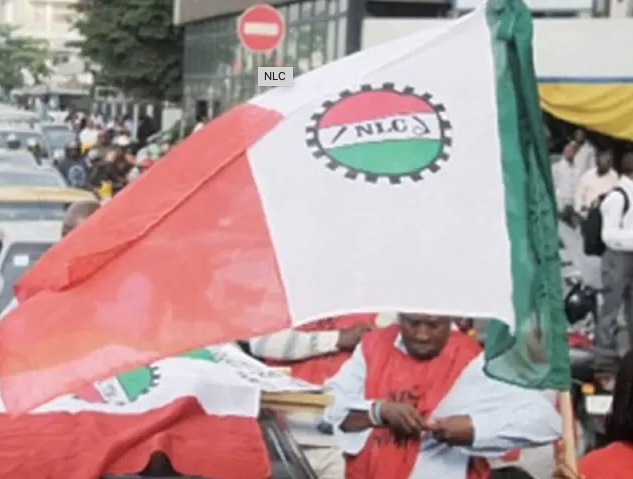
File photo
By OMOTOYE OLORODE
From Monday, continues the narrative on organised labour, the working class and the current paradigm of neo-liberal control of policies and programmes
THE siege is total and against all generational and other demographic categories!
Yes! Although the effects (and their intensities) of the siege have specific characters on different categories. It is the total character of the siege that must persuade us that in responding to the specifics of the disabilities of marginalised groups, the disabilities must be addressed only in the context of an overall economic and social transformation strategy that reject capitalism and neo-liberalism.
Having regard to the foregoing, we need to unify our perspectives on the attempts by all and sundry in bourgeois and not-so-bourgeois political and generational formations to cash in on the anger and frustration of “the youth” as a demographic category. Our position and experience on this, since the 1980s is that the interests of “the youth” and the “old” generation regarding the neoliberal siege cannot be antagonistic.
Consequently, we opine that the mutual blackmail between “the youth” and the “older generation” cannot be more than distractions. In any case, old or young, the world-views and existential condition in either category is not monolithic; they are determined by social class interests! We need to underscore the central import of the character of capitalism and capitalist exploitation in generating class divisions and intensification of poverty.
In every demographic group which is a victim of marginalisation, there is class differentiation. The large majority of the marginalised (youth, women, the physically-challenged, ethnic minorities, children, girl-child) are the poor. This clarification is essential for seeking solution to the eradication of marginalisation. The solution is the eradication of capitalism and capitalist exploitation which generates and reproduces poverty!
The main role and consequences of the responses of Nigeria’s local bourgeoisie to colonial and neo-colonial situation. We already referred to the dominant influence of imperialism and specific imperialist metropolises in the institutionalisation of underdevelopment, especially since about 1944. The role of Nigeria’s indigenous bourgeoisie had altered very little since then having arrived the current paradigm of complete neo-liberal control of policies and programmes.
It is this commitment to the same neo-liberal policies that underscore the electoral promises and actual practice in power of the mainstream political parties. The main purpose of the link up of the indigenous bourgeoisie with imperialism and its programme arises from the desire of the indigenous ruling class, and the indigenous elite generally, to profit from the head start and hegemony of the bourgeoisie of the metropolises – this is the origin of dependency which is reinforced by cultural institutions (education, religion and material culture, etc.).
This material and cultural dependence of the indigenous bourgeoisie is at once the origin of their class identity and interest and the source of intra-class competition, conflict and violence that Claude Ake (1978) identified as the result of the pre-occupation, among the bourgeoisie, with accumulation. The second consequence of bourgeois class preoccupation with accumulation is the class war against the masses of the victims of ruling class accumulation.
The basis of the unity and identity of the various segments of the ruling class is their collective dependence on imperialism and the social and economic policies that victimise the oppressed (in favour of accumulation) across the country irrespective of ethnic, sub-ethnic, religious or geo-political differences among the victims. Ruling class hegemony, liberal democracy and the weaponisation of ethnicity, sub-ethnicity, religion and region in the 2023 general elections liberal democracy had enabled two important processes in Nigeria, especially since 1999.
First, it has enabled the Nigerian ruling class to sustain its hegemony via intra-class negotiations involving largely transactional factions (which they call political parties) which subscribe to the same visions of society via similar economic and social policies. Even the alleged owners of the Labour Party could not assert the façade of the alleged differences from the other bourgeois party formations! Secondly, the electoral process enabled the bourgeoisie to negotiate an illusion with the victims of neoliberalism – the illusion that palliatives exist for the pains of neo-liberalism and which Nigerians must accept.
But beyond these two processes, the main achievement of the 2023 general elections for the Nigerian ruling class is the further deepening of the divisions among Nigerians, and especially the oppressed, via mobilisation of ethnic and confessional antipathies. The constellation of the party leaders were all thus settled on the basis of ethnicity, and religion; and all these dominated supports and rejections.
All these were not surprising as separatist groups have been promoted across the country over time although the electoral campaigns and the actual elections shifted somewhat from North/South to SouthEast/South-West! We may just add that there exists a plethora of violent sub-ethnic and intra-ethnic and intra-religious conflicts that the ruling class and the media managed to keep away from general public view but which were decisive in the 2023 elections as they always did. It is important to underscore the continuing role of various segments of the Nigeria elite in the promotion of ethnic nationalist and religious antipathies and separatism. And our understanding is that they, not the masses of the oppressed across Nigeria, are the beneficiaries of the attendant intra-class negotiations.
The elite, the middle class, the have-something-want-mores, especially and including group and individual unilateralisms that enable us to join the accumulation and power trails of the ruling class, are the beneficiaries of sinecures and political appointments in the bureaucracies, in the parastatals, the armed forces, etc.; they are beneficiaries as contractors, consultants, middle-women and middlemen and of the pillage in policies like privatisation, and general access to the levers of state power.
Some of the intelligentsia in, and outside, the academies provide and spread false and tendentious stories, half -truths and view- points; avoiding alternative narratives and actual (including easily accessible) facts, about Nigeria’s history – about the history of migrations and admixtures among our peoples; about internal wars, colonialism and brutality and betrayals inside hegemonies language groups instigated and supervised by, and for the benefit of, the ruling class. What is to be done?
Reinstating the struggle for uniting the masses, for the sovereignty of Nigeria and the working people. In the last six decades or so, the political power and the authority to formulate and implement economic and social policies had been exercised by, and in the interest of, Nigeria’s ruling class, on one hand, and international finance capital on the other.
Engineering the contrary of that (subsisting) situation is the task of Nigeria’s working people in collaboration with their allies on the left. That can safely be said to be the general perspective that unites the Nigerian left—the allies of Nigeria’s victims of neo-colonialism. And we can say that the left had struggled since colonial days to actualise working class power. Why had it not happened? We need to confront this question urgently.
Various proposals for, and summits of, left unity have failed to stop the proliferation of “small storms in small tea-cups”! We need to keep working at this unity in spite of the obviously true, but quite often dismissive, admonition that “unity cannot be mechanical”! There is, of course, the pivotal role that organised labour can, and must play in the struggle for working class power.
*Olorode, member of the Secretariat Collective, TPAP-M Campaign for Socialist transformation of Nigeria, wrote via [email protected]
Disclaimer
Comments expressed here do not reflect the opinions of Vanguard newspapers or any employee thereof.